
Why It's Rude To Slurp Soup In The US (But Not Other Countries)
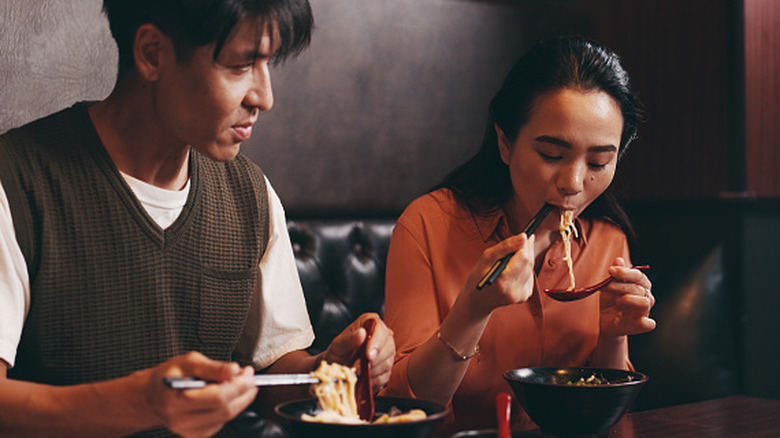
For many Americans, it may be hard to imagine anything more unwelcome during a delicious meal than the sound of someone slurping soup at the next table. Western table manners tend to emphasize unobtrusiveness, and slurping can seem like the exact opposite. But that cultural norm is by no means universal. While exaggerated eating sounds are rarely encouraged anywhere, more low-key slurping is a standard part of the dining experience and, in some cases, even complimentary to the chef.
You're most likely to encounter it in Asia, especially with noodle soups. In countries such as Japan, China, and Vietnam, the idea that slurping your noodles could be considered ill-mannered or bothersome can seem baffling – and you're bound to hear it if you visit one of Tokyo's foodie hotspots for traditional eats. And while expectations around slurping vary from country to country, this etiquette tip is one of the top things to understand before traveling to Vietnam and other Asian destinations where noodles play a prominent role in local food culture.
One common explanation for why slurping is standard in much of Asia but taboo in the West is that it often conveys appreciation to the chef. There is some truth to that idea, particularly in Japan, where audible enjoyment of a meal is not generally viewed negatively. But the reality is more nuanced, and showing appreciation is not always the main reason people slurp noodles. More often than not, the habit is rooted in practicality.
Slurping makes many noodle dishes more enjoyable
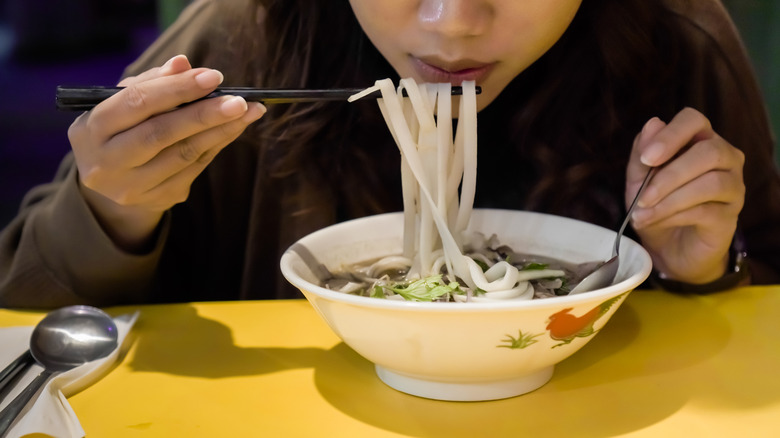
To understand why slurping is no big deal in much of Asia, it helps to consider the kinds of dishes involved: noodles served in hot broth. The texture of noodles can change quickly as soup cools, so diners often eat them quickly at the peak of their piping-hot deliciousness. Slurping solves this problem by letting air in with each bite, cooling the noodles enough to eat comfortably without waiting for the broth to cool. But since most Western cuisines don't give the diner as much incentive to slurp — you don't lose anything texturally if it takes you a little longer to eat a bowl of tomato bisque — these practical concerns aren't always intuitive to travelers.
Taste is also a factor. Some foodies insist that slurping makes noodle dishes taste better because it exposes noodles to oxygen, and it's thought that aerating food makes it more flavorful. Moreover, slurping lets you inhale the aroma of the broth before you taste it, which can enhance flavor through the way scent and taste interact, so it's entirely possible that slurping might help you better enjoy the flavors of your meal.
Thus, at its core, slurping is a way of savoring food at its best. This has come to mean that in many countries, slurping is a ubiquitous part of the restaurant experience, and people often don't think twice about it. So even if slurping would stand out back home, don't be too shy to slurp if you stop for, say, ramen in Japan's friendliest foodie city or pho in Vietnam. You may even find the meal tastes better that way.