
India's Once-Thriving Island Vacation Haven With Lovely Beaches Is Now An Abandoned Ghost Town
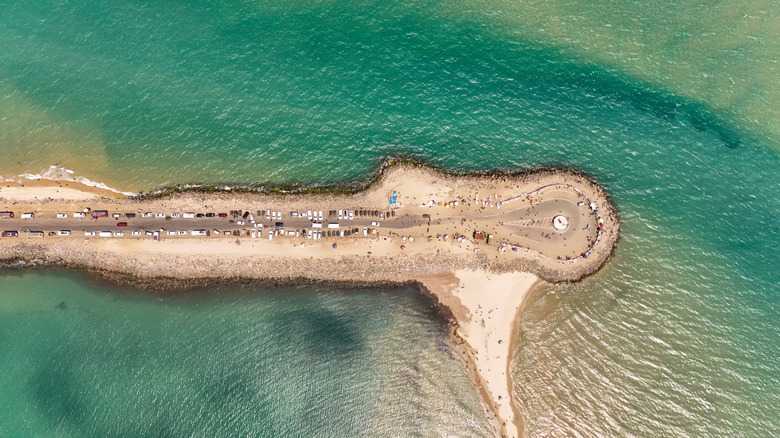
It's easy to take a thriving island for granted, especially once you step off the boat and into a cacophony of beach resorts, lively restaurants, and local tour guides jostling for your attention. Had Dhanushkodi — a serpentine strip of land jutting from Pamban Island on the southeast tip of India's Tamil Nadu coast — not succumbed to a natural disaster in 1964, this would probably be the atmosphere you'd be stepping into today.
Geography makes Dhanushkodi a shoo-in for a natural beach haven: It is bookmarked by the Bay of Bengal and the Indian Ocean, with sandy stretches running along its sinewy length into the water. It's earned its share of monikers over the years — "the last land of India" for sitting just 17 miles from neighboring Sri Lanka, and "mini Singapore" by some accounts for the thriving trade hub it once was.
It's hard to associate the empty sprawl of sand and stone with the years before the disaster struck Dhanushkodi in 1964. Despite its remote location, the coastal village enjoyed privileged access to the rest of the country. As early as 1908, Dhanushkodi was connected to Rameswaram – one of the country's holiest sites – by rail, enabling the trade of salt, cotton, firewood, rice, and other produce to flow as far as Egmore, some 360 miles north up the coast. A British-built port followed in 1914, and by 1949, sea trade had grown to accommodate the Indo-Ceylon Boat Mail service and steamers to neighboring Sri Lanka. The town had the essential infrastructure to thrive, including a post office, a hospital, and homes. But the town that once held so much promise was reduced to a handful of crumbling stone facades that managed to withstand the deadly cyclone that ripped through the island in December 1964.
The abandoned ghost town attracting tourists
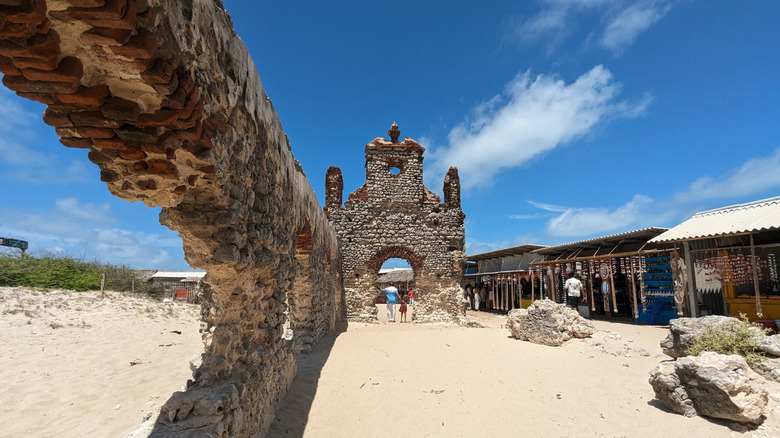
To say that the 1964 cyclone was devastating is an understatement. According to reports, the cyclone that arrived on the night of December 22 was swift and ferocious, accompanied by winds of 175 miles per hour that whipped up 50-foot waves, sweeping even the train off its rails and into the sea. By the next morning, only 3,000 of Dhanushkodi's 5,000 residents were left standing, surrounded by the cyclone's debris. The loss of its railway and civic infrastructure sealed its fate as a ghost town, with the Government of Madras declaring it "unfit for human habitation," per Times Entertainment.
Today, some 350 people continue to live in Dhanushkodi despite the lack of electricity and drinking water, according to a Times of India report. But the construction of a road between Dhanushkodi and Rameswaram, inaugurated in 2017, paved the way for tourists to rediscover the town's remnants, beaches, and sand dunes.
Word is getting out. Condé Nast Traveller hailed it as one of the 7 wonders of India for 2026, and Tamil Nadu's tourism board included Dhanushkodi as a stop in a program introducing the state's best sites to travel influencers from around the world. And because more young people are booking vacations through social media, TikToks and travel videos about its ghost town and beautiful stretches of beaches have made the once-thriving, now abandoned island a travel destination worth exploring.
Visiting the beaches of Dhanushkodi
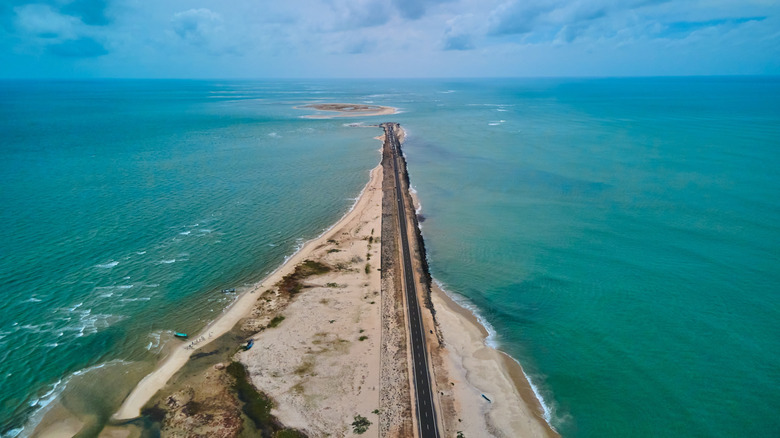
Given its tumultuous history, don't come to Dhanushkodi expecting resort-style amenities. There are roadside stalls and eateries selling seafood, snacks, and drinks, but there is still a notable lack of tourist infrastructure. Instead, prepare yourself for some rugged, wave-lashed beach landscapes along both sides of the road — an unexpected picturesque addition to your island bucket list when in India.
Dhanushkodi Beach is a 7-mile drive from Rameswaram. Wide expanses of beaches and dunes flank the narrow road on both sides, and pulling over to the side of the road for strolls along the shoreline seems to be the norm. Prepare to share the beaches with photographers and families, and in the winter, with avid birdwatchers eager to catch glimpses of migratory gulls and flamingos. The ruins of the town materialize along the way: the empty church shell, the remains of the railway tracks, and the crumbling walls of the former town's buildings. From here, it's another 10-minute drive to Arichal Munai, a sort of cul-de-sac surrounded by the meeting point of bay and ocean. A sweep of sand appears next to this endpoint, extending the island even further into the water.
Sold on exploring this abandoned beauty? Rameswaram is the default home base for Dhanushkodi visitors — it's the last major town and gateway before accessing the picturesque stretch of road and beach. The journey to Rameswaram begins at Madurai Airport, roughly three hours by road; or forego the drive for a direct train from Chennai (10.5 hours) or Madurai (under four hours) instead — brushing up on Rick Steves' train etiquette tips that can make or break your journey. Timing is everything when visiting Dhanushkodi: road access is between 6 a.m. and 5 p.m. only.