
Oregon's Artificial Lake In The Mountains Is A Scenic Haven For Fishing And Camping
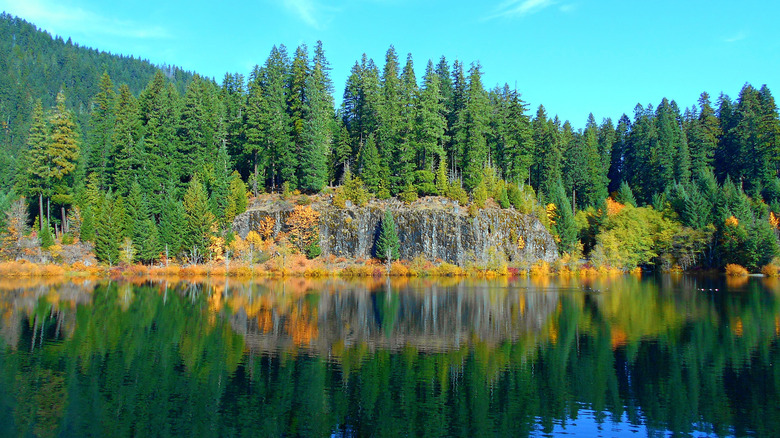
Central Oregon is known for offering a wide array of outdoor activities amidst the backdrop of towering mountains and dense forests. Carmen Reservoir is an artificial lake that encompasses all of those elements. This little lake in the Cascade Mountains near the headwaters of the McKenzie River has a reputation for outstanding trout fishing, and is surrounded by old-growth forest.
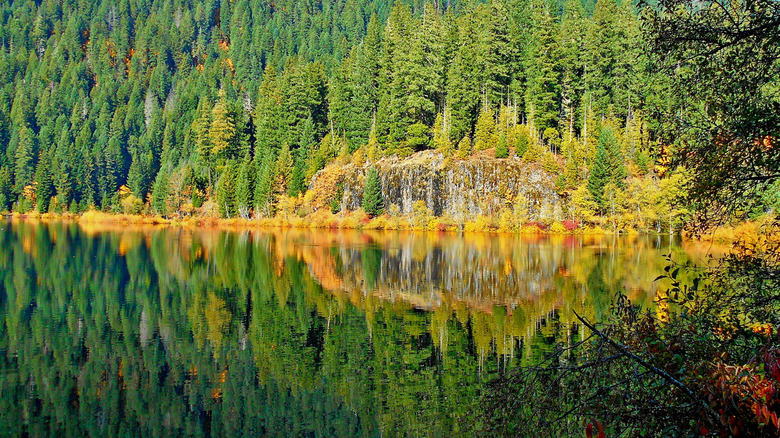
The scenery is likely the first thing you'll notice when you arrive at Carmen Reservoir. Situated in Willamette National Forest, which is popular for its plethora of recreation and beauty, this 30-acre impoundment delivers more than its size would suggest. The cold waters of the lake, which extend as deep as 25 feet in places and are clear enough to attract divers, are surrounded by rugged, rocky shorelines. Carmen Reservoir, as well as the McKenzie River which feeds it, is bracketed by a variety of trees, including cedar, fir, and hemlock. During autumn, the entire area is cloaked in vibrant fall foliage.
As of spring 2026, access to Carmen Reservoir, which was originally built in 1963 as part of a hydro-electric project, was vastly improved. After a near decade-long wait, USDA recreation sites around the lake are open once again following extensive upgrades and renovations. These sites include the Carmen Diversion Day-Use Area, Ice Cap Campground, and the Zig-Zag and Beaver Marsh trailhead areas.
Enjoy fishing and paddling at Carmen Reservoir
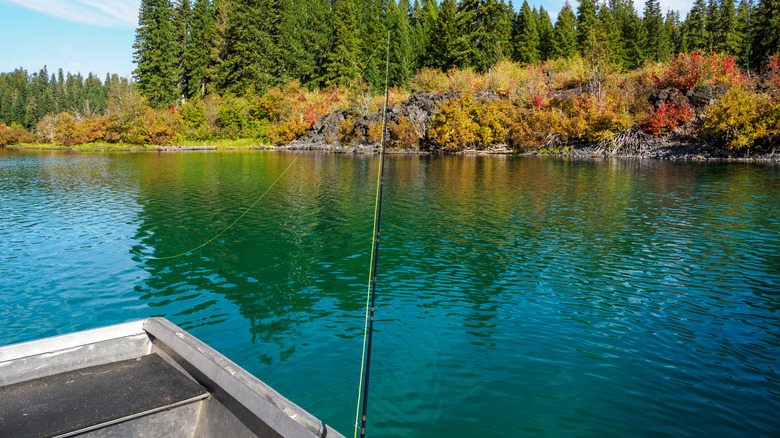
Trout fishing is typically par excellent on Carmen Reservoir. The lake has both brook and rainbow trout, as well as lake char. To help augment the natural populations, additional rainbow trout are stocked in the reservoir. While fishing is allowed all year long, the Ice Cap Creek Day Use Area, which is open from May through September, offers anglers easy access to the lake during late spring and summer. Non-motorized vessels such as canoes and kayaks can be launched from shore in the day-use area, but no motorized craft are allowed in the reservoir.
The day-use area is actually located in the Ice Cap Campground. This allows fishermen access to Ice Cap Creek, which runs beside the campground, and the McKenzie River, via the McKenzie River Trail. In addition to rainbow trout, the river is also a renowned fishery for bull trout, chinook, rainbow trout, and mountain whitefish.
In addition to fishing, both non-motorized boating and swimming are available at Ice Cap Creek Campground as well. Canoeing and kayaking on Carmen Reservoir is typically easy enough for even beginner paddlers to enjoy. Paddlers seeking a more challenging excursion can find stretches of river with whitewater both above and below the lake.
Camping beside Carmen Reservoir
Of course, Ice Cap Creek Campground doesn't just afford water access for fishermen and paddlers. It also offers an opportunity to stay overnight next to Carmen Reservoir. The campground, which is open from mid-May through early October, has 21 campsites. Roughly half of those are walk-in tent sites. The other sites can be utilized for either RV or tent camping. None of the sites have water or electric hookups, although the campground does have communal drinking water and vault toilets available. Additionally, although some sites can be reserved in advance using Recreation.gov, other sites use a scan-and-pay system and can only be booked once you are at the campground.
Once in the campground, campers will find there is plenty to do beyond just fishing and paddling. McKenzie River Trail, which follows the Caribbean-colored waters of this underrated river, runs very close to the campground and skirts the western shore of the reservoir. Blue Pool, one of America's most vibrantly blue bodies of water, is just a short distance downstream from the reservoir along the McKenzie River Trail. The popular Waterfalls Loop Trail is also nearby. Birding is yet another outdoor activity available at the campground and reservoir.
Ice Cap Campground is about 17 miles from the small town of McKenzie Bridge. Eugene, Oregon's second-largest city, is the closest major metro area, and Bend is about an hour's drive southeast. Regardless of which direction you are coming from, at least a portion of your drive will be along the McKenzie Pass-Santiam Pass Scenic Byway. This roadway is considered one of the Beaver State's most dramatic and scenic routes, with stunning views of the Cascade Mountains.