
North America's Largest High-Elevation Lake Is A National Park Beauty For Fishing, Hiking, And Boating
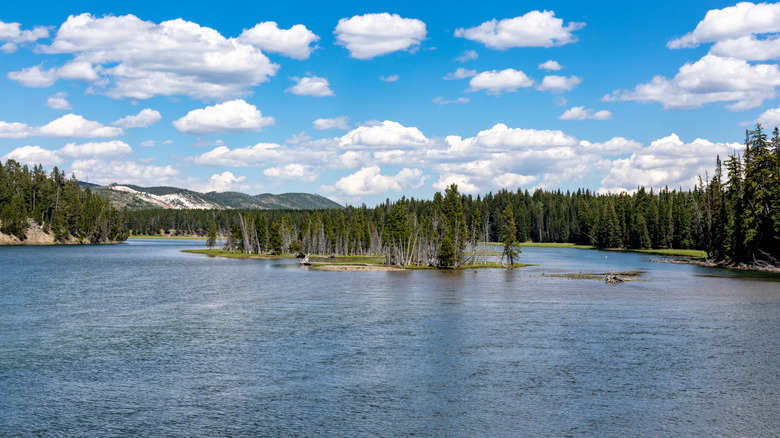
As you pull your warm-weather gear out of storage and brace for another sweltering summer day, the thought of breathtaking mountain lake scenery may sound like the perfect escape. If so, you may want to consider a trip to the largest high-elevation lake in North America. Yellowstone Lake inside Yellowstone National Park is 7,733 feet above sea level, and has 141 miles of beautiful shoreline to gaze upon. The lake itself is situated in northwestern Wyoming and is 20 miles long and 14 miles wide. It features the West Thumb Geyser Basin, stunning hiking trails, and opportunities for boating and fishing.
The lake's calm waters and mountain backdrop make it one of the most scenic spots in Yellowstone National Park. One previous visitor described it as "a serene and breathtaking spot in the park, perfect for relaxing and soaking in the natural beauty." Another wrote that "the tranquility of the area makes it perfect for anyone seeking a peaceful escape into nature." Others note that you should pack layers for the unpredictable weather.
The roads to the lake are usually open from May through October, and it's covered by the Yellowstone National Park entrance fee, which costs $20 to $35 as of this writing. You can head in for the day or stay at the Lake Yellowstone Hotel, the oldest operational hotel in the park that has been open since 1891. It, like the roads, is open from mid-May through early October, with rooms, suites, and cabins. It also has a full-service restaurant and a deli for meals. From lakeside hiking trails to unforgettable boating adventures, Yellowstone Lake delivers no shortage of ways to experience the iconic national park's natural beauty.
Explore the trails around Yellowstone Lake
There are several hikes in the Yellowstone Lake area, so you can explore the lovely scenery on foot. The Pelican Creek Nature Trail is a great starting point, especially if you're traveling with kids or if you're looking for a gentle trek. This trail spans just 0.8 miles, and is an easy one with a small, 19-foot elevation gain. There are lovely views of the lakeshore and its surrounding forest, and it's good for birding, too. Expect to spot ruddy ducks, ring-necked ducks, yellow-bellied flycatchers, and great egrets.
Another Yellowstone Lake hike on the relatively easy side is the 2.6-mile Storm Point Loop, which is also kid-friendly, with a 101-foot elevation gain. This trail has beautiful views and takes you past Indian Pond, eventually ending at the lake. However, because wildlife is common in this area, hikers should carry bear spray and stay alert while on the trail. Keep in mind that travelers should never approach animals in Yellowstone National Park. This is especially true for bears — it helps to know what to do if you see a bear while hiking, like staying calm and avoiding sudden movements.
For a more advanced hike with stunning views of the lake, try the Elephant Back Mountain Trail, which is a 3.9-mile loop with a 797-foot elevation gain. Make sure to bring snacks, water, and even some hiking poles for the steeper parts. Another challenging trek is the Avalanche Peak Trail, a 4.7-mile out-and-back route with a whopping 2,086-foot elevation gain. Alongside great lake vistas, you'll pass by gorgeous forests with wildflowers. You'll have to start early, though, as this hike takes around four hours to complete. It's also a good idea to check conditions, including temperature and approaching storms, before you set out.
Embrace waterfront fun on Yellowstone Lake
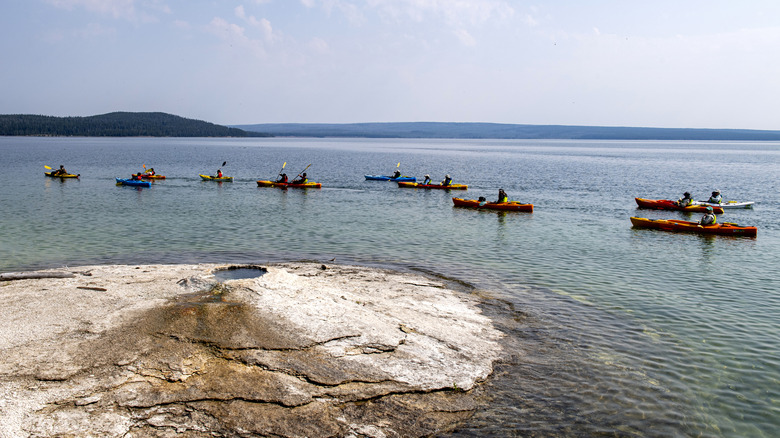
One of the best ways to see Yellowstone Lake is, of course, on the water itself. Bridge Bay Marina on the lake is the access point for motorized boats, though you can take a kayak out from Grant Village or Bridge Bay. You can rent boats from Yellowstone National Park Lodges, as well as book a guided sightseeing or fishing charter and backcountry shuttle boat services. If you'd like to do some fishing from your boat, the lake is home to the largest population of wild cutthroat trout on the continent. However, make sure you only fish in designated areas. If you have your own boat with you, it needs to pass a Yellowstone AIS inspection, and you must have a permit — this includes inflatable boats.
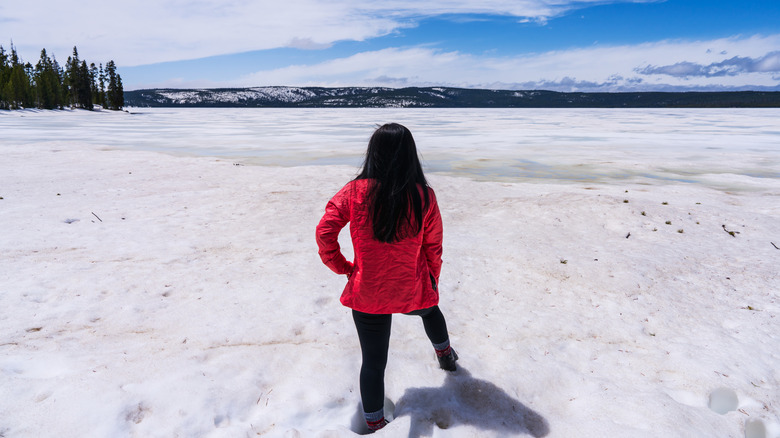
An important thing to know before visiting is that swimming in Yellowstone Lake is strongly discouraged because of the dangerously cold water temperatures. Expect the lake to be around 40 degrees Fahrenheit — the National Park Service warns that the estimated survival time in water at that temperature is between 20 and 30 minutes. Note that Yellowstone Lake often doesn't thaw until late May or early June.
Before or after your lake adventure, you can visit Grant Village, which has a visitor center, gift shops, and exhibits. Lake Village, where you'll find the Lake Yellowstone Hotel alongside the only RV campground in the park, is another option for supplies and relaxation. Yellowstone also has the most campsites among the national parks, so it's a great idea to book one of the more than 2,000 sites if you want to spend a night under the stars.