
Oregon's First DarkSky Basecamp Is A Stargazing Haven Near Painted Hills And Fossil Beds
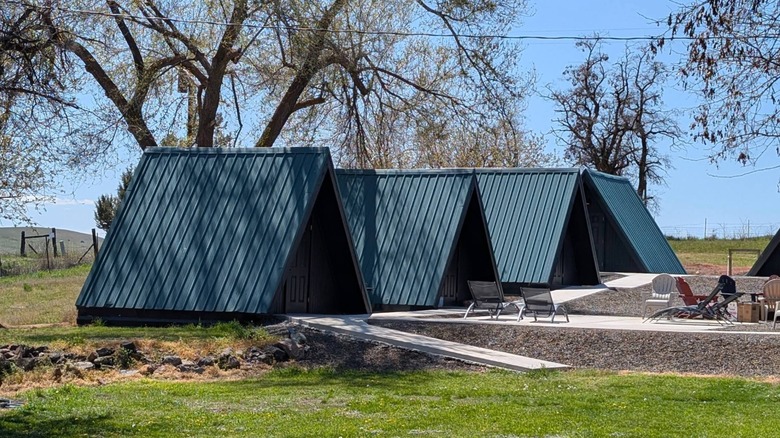
The Oregon Outback is home to the world's largest international DarkSky sanctuary. Here, 2.5 million acres of land sprawl under an unpolluted night sky. As of 2026, this region is also home to the state's first DarkSky basecamp. Antelope Base Camp offers a handful of rustic micro-cabins plus dry camping and RV hookup spots, from which you can observe the Milky Way, planets, and constellations while feeling the awe of your own place in the cosmos.
This family-run accommodation is in Antelope, a former ghost town that became Oregon's first DarkSky community. Folks of a certain age or with a penchant for Netflix documentaries ("Wild Wild Country" specifically) might remember the red outfits of the Rajneeshees, who took over Antelope in the 1980s. Well, these days, the red garb of Antelope's Rajneeshees has been replaced with red lights at the Antelope Base Camp. It's just one of several ways that this DarkSky lodging minimizes light pollution to maximize stargazing from the privacy of your own patio.
It's not all nighttime activities at the Antelope Base Camp, either. The location also makes a great jumping-off point to explore nearby fossil beds and the Painted Hills, considered one of Oregon's seven wonders. Just 20 minutes away is the Clarno Unit, one of three units of the John Day Fossil Beds National Monument, where you can see 44-million-year-old fossils of plants and animals imprinted into the rock formations of an extinct volcano range.
What you'll find at Antelope Base Camp
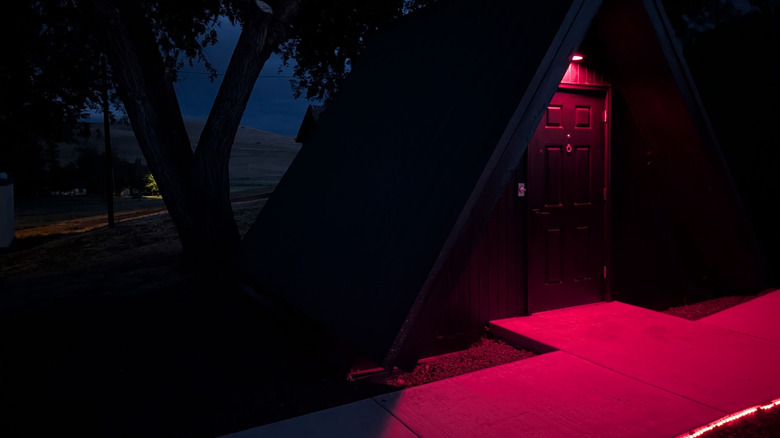
Formerly an abandoned RV park, the Antelope Base Camp is now the site of 10 minimalist but comfortable A-frame cabins that are primarily organized around stargazing. Exterior walkways are lit up by soft blue and green glow-in-the-dark pebbles, while interiors have low-level lights with dimmers to minimize wildlife disturbance. Furnished cabins include two twin beds, an armchair, a mini fridge, coffee, and books, plus heating and cooling. The cabins are winterized, so running water isn't available, but water is provided for guests. Those looking for a more affordable stay or something on the go (like motorcyclists or bikers) can book an unfurnished cabin with two twin beds. You'll have to provide your own linens and/or sleeping bag. Cabins don't have indoor plumbing, but there's a bathhouse featuring outdoor showers and four toilets.
At this time, there isn't any on-site dining, although the owners are currently working to refurbish the café in town. Until then, you can drive less than 15 minutes to the café in Shaniko, the former "wool capital of the world" that is now a revitalized ghost town. There, you can get energized for a day of exploring John Day Fossil Beds, arguably the world's best-preserved site of Cenozoic fossils. Thanks to the volcanic activity that left behind colorfully painted hills and fossil-imprinted rocks, this area of central Oregon is like a high-def photo album of the planet's geologic history over the course of millions of years. Folks interested in geology may want to check out the Thomas Condon Visitor Center, which has about 500 fossils on display, along with information that offers greater context for the area.
What to know about staying in a DarkSky location
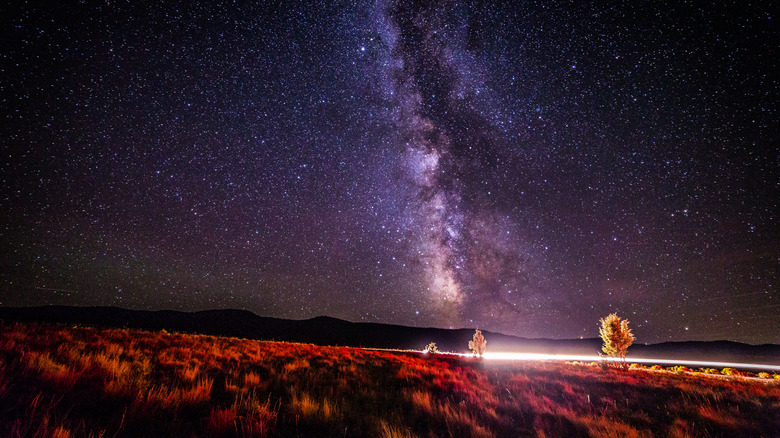
When booking a trip to Antelope Basecamp, the time of year can determine what you see in this DarkSky location. Summer is ideal for stargazing since the Milky Way's core is most visible in July and August. These are also the months of the Perseids, the meteor shower that covers the sky in shooting stars (get those wishes ready). For optimal stargazing, it's best to plan a trip around the new moon to ensure the darkest sky possible (the five nights before or after are a good range). Regardless, it's a good idea to give yourself a few days there just in case of any cloudy nights.
While Antelope Basecamp is open year-round, if your focus is stargazing and seeing sites like the Painted Hills, it's best not to go in the winter. You're likelier to have cloudy nights, and the Painted Hills might be blanketed in snow. Unless you feel like photoshopping lines of color onto the white canvas of the wintry hills, it's best to go in the summer or even spring or fall.
There are some commonly followed rules when stargazing in a DarkSky location, so you may want to come prepared. While the sky above Antelope is so clear that you can look at it with the naked eye, if you want to take photos of the night sky to make everyone back home jealous, bring a tripod and digital camera. You can set it up to take long-exposure photos at intervals, so you can sit back and relax. Constellation and stargazing apps are also a great way to orient yourself and plan your shoot. If you want some extra illumination with minimal disturbance, get a headlamp or flashlight with a red light setting.