
This Popular California Bridge Is Slowly Raising Its Tolls, And Drivers Are Starting To Notice
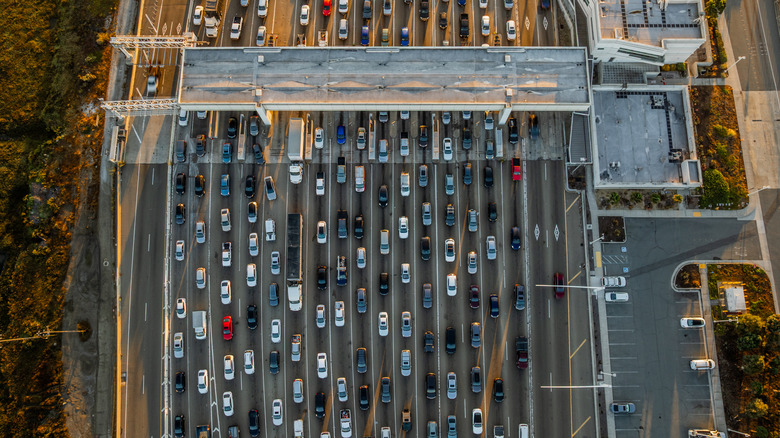
Talk of building a bridge across the Golden Gate Strait that connects San Francisco Bay with the Pacific Ocean started in the late 1800s. After years of design work and campaigning, followed by around four and a half years of construction, the bridge opened in 1937. This 1.7-mile suspension bridge, with its 746-foot-tall towers and International Orange color, has become a hallmark destination of the city. However, drivers will soon be paying more to make the journey across it. Not everyone's thrilled about the changes.
Starting on July 1, 2026, rates are going up by $0.50, according to the Golden Gate Bridge Highway & Transportation District. If you have FasTrak, the electronic toll tag option, the cost will be $10.25. For visitors, your bill comes in the mail, and you'll pay $10.50. Toll price increases have occurred every July for the past several years, and this trend won't be anytime soon. Prices are set to continue rising each July, and by 2028, the cost will be above $11, per the San Francisco Chronicle.
The increasing costs over the past couple of years have caught people's attention. In a Reddit thread about price increases on the bridge, one user wrote, "Old enough to remember when it was free, then $1, then $5. It was supposed to be FREE after it was paid off." In a different thread, a commuter posted about trying to avoid the toll but ending up with a longer drive that wasn't worth the trade-off: "I just tell myself the view of the city right after the Robin Williams tunnel is worth the price tag every morning." The Robin Williams Tunnel is in Sausalito, just north of the bridge.
Other San Francisco bridges are getting more expensive, too
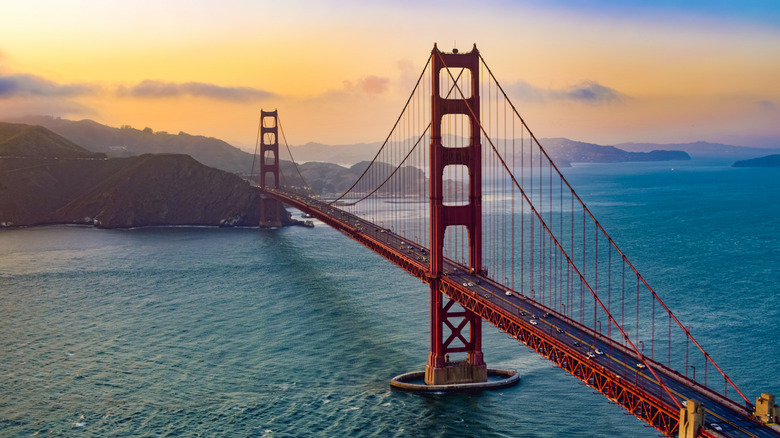
The views of San Francisco and the Marin Headlands from the Golden Gate Bridge are some of the most iconic in the world. Visiting the site is a bucket list activity for lots of West Coast travelers, so even with the toll increase, people are unlikely to be deterred. Additionally, for some commuters, this route might be the only option. Tolls on the Golden Gate Bridge are only for southbound travel, so if you're leaving San Francisco heading north, you don't have to pay. But once you cross the bridge in your car, there's no particularly convenient way to avoid the toll to come back into the city.
Millions of people cross the bridge every year. The total revenue for tolls collected on the bridge for the fiscal year of 2025 was $161,106,571, up over $5 million from the year before (via the Golden Gate Bridge Highway & Transportation District). So, if you're planning to explore California's striking coast via a Highway 1 road trip, budget a little bit more for your journey through San Francisco.
It's not just the Golden Gate Bridge that's more expensive. All the state-owned toll bridges around San Francisco are going to see prices go up by $0.50 every year until 2030. That includes the Antioch, Benicia, Carquinez, Dumbarton, Richmond-San Rafael, San Mateo, and Bay bridges, per CBS News. Also increasing prices for passengers is the Bay Area Rapid Transit (BART) system, which could be facing shut downs.