
'One Of The Most Ambitious Urban Conservation Projects In The Nation' Is New Mexico's Urban Oasis Full Of Trails
The official nickname of New Mexico is the "Land of Enchantment," and once you've visited the state and taken in its stunning natural scenery, there's no question as to why. You can even find nature in and near Albuquerque, the largest city in the state with more than half a million people. The city sprang up in the Rio Grande Valley, and the river and the bosque, the name for the forest that grows along the Rio Grande, have long provided an important habitat for all kinds of wildlife. But as the city grew bigger, some of the cottonwoods, willow trees, and other native plants suffered with urban and agricultural development, and the river was tamed to prevent it from flooding the city. However, in some places along the Rio Grande, the landscape is being renewed and opened to the community to explore via trail systems. One such place is Valle de Oro National Wildlife Refuge.
In the South Valley about a 15-minute drive from the city's airport, Albuquerque International Sunport, Valle de Oro is "one of the most ambitious urban conservation projects in the nation," according to the U.S. Fish and Wildlife Service. It was established after the land, a former dairy farm, was put up for sale in 2012, and residents banded together to raise money to purchase the property to protect it from urban expansion and open it for recreation.
The approximately 570-acre refuge was built from the ground up with a focus on restoring this land to a more natural environment that locals and visitors alike can enjoy. Some of the restoration work at the refuge has included planting cottonwood trees to expand the bosque, and seasonal flooding of parts of the refuge to help imitate the river's natural cycles.
Find wildlife and a community connection at Albuquerque's Valle de Oro National Wildlife Refuge
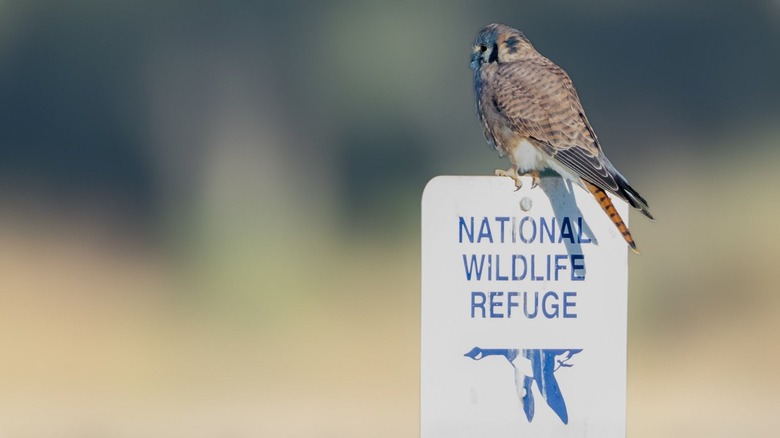
Valle de Oro National Wildlife Refuge is an oasis in Albuquerque, providing a green space for wildlife like coyotes, hawks, and hummingbirds. The refuge is a good destination for birdwatching; more than 200 species of birds have been seen at the refuge, per PBS. In the summer, you'll see nesting swallows, while fall and winter bring thousands of migrating sandhill cranes to the area. You might also spot roadrunners, the state bird of New Mexico.
It's also an oasis for humans. One of the goals in creating the refuge was to "connect people with wildlife, plants and the land by providing equitable and just ways to deepen personal relationships with nature," according to the U.S. Fish & Wildlife Service. The refuge is on the eastern side of the Rio Grande within the Mountain View neighborhood, a Chicano-majority community that has faced heavy industrialization with toxic waste sites and high poverty rates. Valle de Oro is a "model in this country for how to create these refuges for habitat, for people, and for wildlife," Gabe Vasquez, the strategy and partnership director at HECHO (Hispanics Enjoying Camping, Hunting, and the Outdoors), told The Christian Science Monitor. "In a dusty, low income neighborhood, having access to [nature] is really gold for people in those communities."
Valle de Oro holds free community events throughout the year with activities for kids and adults alike, like wind-chime making and plant talks. If you want to give back on your Albuquerque trip, the refuge hosts volunteer events, like removing invasive plants, on occasion.
Trails and stargazing at Valle de Oro National Wildlife Refuge
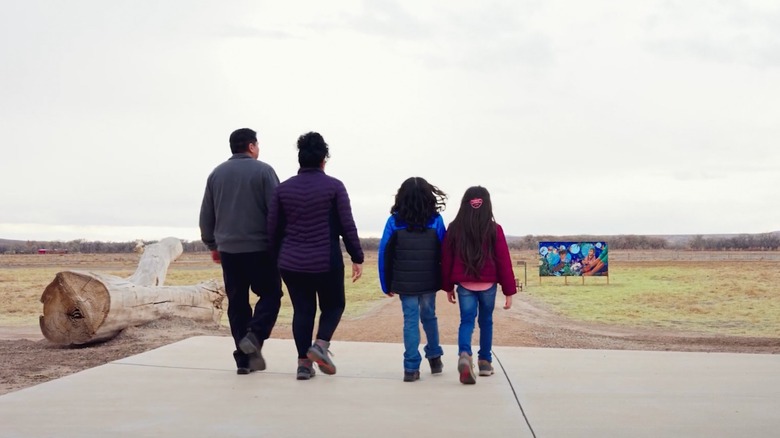
Valle de Oro National Wildlife Refuge is free to visit, and there are miles of trails to explore. Some are pedestrian only, while some are multi-use and open for jogging, biking, dog-walking, and horseback riding. The shortest trail is the Pond Loop, a quarter-mile path encircling the water near the Visitor Center, where you can get a good view of the refuge. On the 1-mile Mural Loop, you can see local artist renditions of some of the refuge's future landscapes. The longest trail is the 2.5-mile long Bosque Loop. It takes you from the Visitor Center out to the Rio Grande, and from it, you can see some of the restored bosque. The Bosque Loop can also be used as an access point for the Rio Grande Valley State Park, near Albuquerque's North Valley neighborhood, a riverside New Mexico gem.
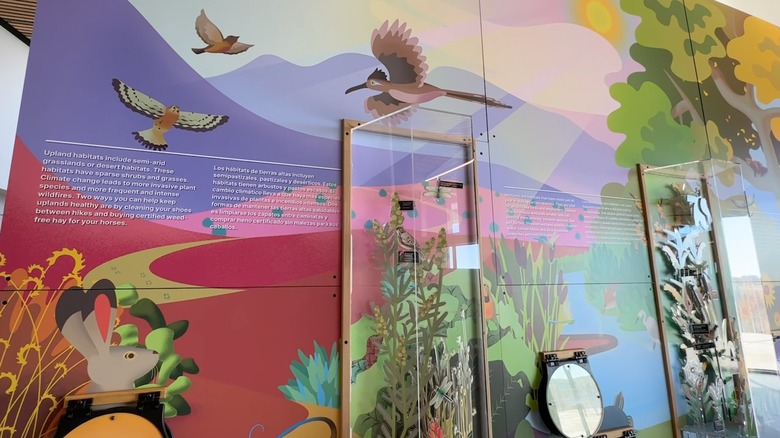
To learn more about the refuge, stop by the Visitor Center. It was built with sustainability and wildlife protection in mind, with features like specially glazed glass to reduce bird collisions and rainwater catchment systems. Inside, you can find interactive exhibits on the area's ecology, an environmental justice resource library, and a small gift shop.
The refuge was recognized by DarkSky International as an Urban Night Sky Place. There are occasional stargazing events at the refuge to help you learn about and better appreciate the night sky. Beyond those events, there is limited time to see the stars here. The refuge is not open to overnight visitors — opening hours are from one hour before sunrise to one hour after sunset. If you are there at night, remember to follow light pollution rules for DarkSky locations to maximize the chance of seeing more stars.