
'The Prettiest Sunday Afternoon Drive In The World' Is This Scenic Road Hugging The Niagara River
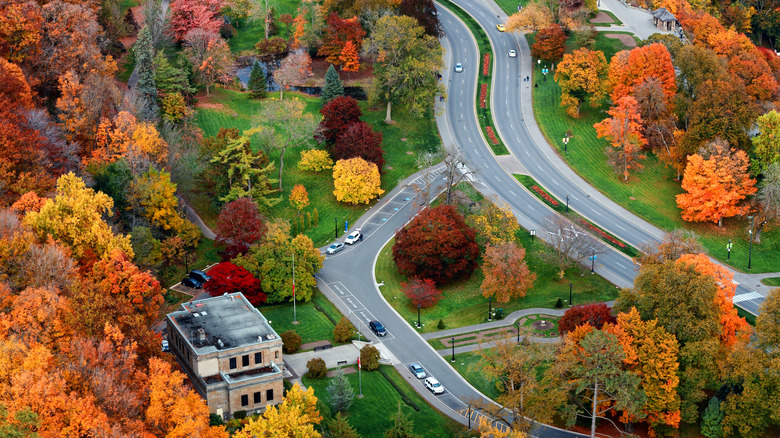
Running parallel to the Niagara River, between Fort Erie and Niagara-on-the-Lake, the Niagara Parkway is considered one of the most beautiful drives in Canada. So much so that when touring the area in 1943, Sir Winston Churchill described it as "the prettiest Sunday afternoon drive in the world." That's high praise, but most people who've driven it would probably agree. That's because, not only does it provide stunning views along the river, but it passes through some of Ontario's top destinations and attractions, including Niagara Falls — the most powerful waterfall in North America.
Stretching across the Niagara Peninsula, the strip of land between Lake Ontario and Lake Erie, the Niagara Parkway is one of Ontario's oldest parkways, with construction beginning in 1908 and completed in 1931. The 34-mile route runs from Fort Erie in the south to Niagara-on-the-Lake in the north, and is widely regarded as one of the most scenic drives in Ontario. Traveling northbound is usually considered the better option as it's the lane closest to the river, keeping the water and riverbank in view for much of the drive.
The history of the Niagara Parkway region
In addition to being scenic, the route the parkway follows is also historic. It was along the banks of the river and the Niagara South Coast of Ontario where major battles of the War of 1812 were fought, with one of its bloodiest campaigns at Fort Erie. Later in the 19th century, freedom seekers traveling the Underground Railroad escaped to Canada by crossing the river from Niagara Falls. And, in the late 1800s, the Fenian Raids happened along the parkway's route. The raids were a series of armed encounters between the Irish Brotherhood and British troops in Canada to further the cause of Irish independence from Britain.
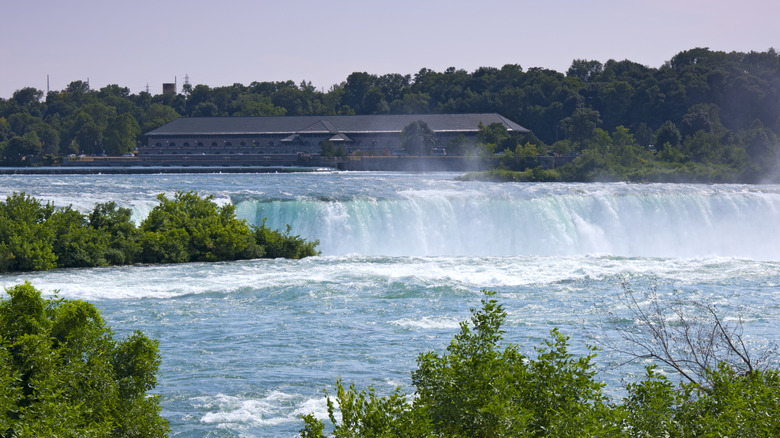
Given the power of Niagara Falls, it's not surprising that this is also the site of the first significant hydroelectric power plant in the region, which began operating in 1905. Though the building has been decommissioned, it reopened as the Niagara Parks Power Station, where visitors can discover artifacts, exhibits, and an underground tunnel experience accessible via a glass-paneled elevator.
There's plenty to do and see along the route
The views along the Niagara Parkway are reason enough to plan a trip, but there are also notable towns, parks, and attractions along the route. In addition to seeing thundering waterfalls, there are plenty of things to do around Niagara Falls. The Niagara Falls tourist district — home to restaurants, museums, theme parks, a casino, and more — and the sprawling Queen Victoria Park are worth a visit. Just south of there, the Dufferin Islands offer 10 acres of green space with walking paths and wooden footbridges. It's a great stop for a picnic or stretching your legs.
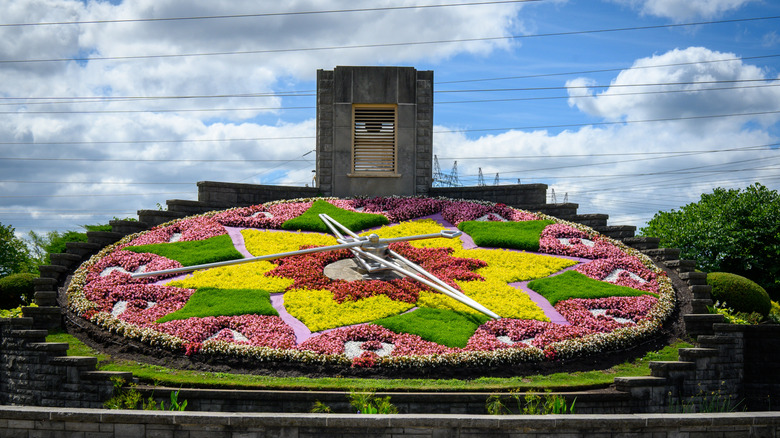
A short drive north from Niagara Falls is the Whirlpool Rapids Gorge, where the river makes a sharp bend. Visitors can get an aerial view of the churning natural whirlpool from the Whirlpool Aero Car, a suspended cable car that traverses 3,500 feet across the Niagara Gorge. If that's too adventurous, check out the Floral Clock, a working clock made of small plants with a face measuring 40 feet in diameter (pictured above). It's in Queenston, which is about halfway between Niagara Falls and Niagara-on-the-Lake, the parkway's culmination point. Sightseeing around the little Canadian town of Niagara-on-the-Lake, referred to as NOTL by locals, includes sipping the local ice wine at one of the nearly 40 local wineries and exploring the 19th-century architecture that helped earn NOTL its designation as a National Historic Site of Canada.
As with any cold-weather destination, the drive and views change dramatically in winter. While it may not be the ideal time to visit, given the unpredictable weather, it does draw people in for its holiday Festival of Lights, named by Condé Nast Traveler as one of the most magnificent light displays from around the world.