
Texas' Once-Thriving Fort Was Abandoned And Transformed Into A Historic Site With Ruins Waiting To Be Explored
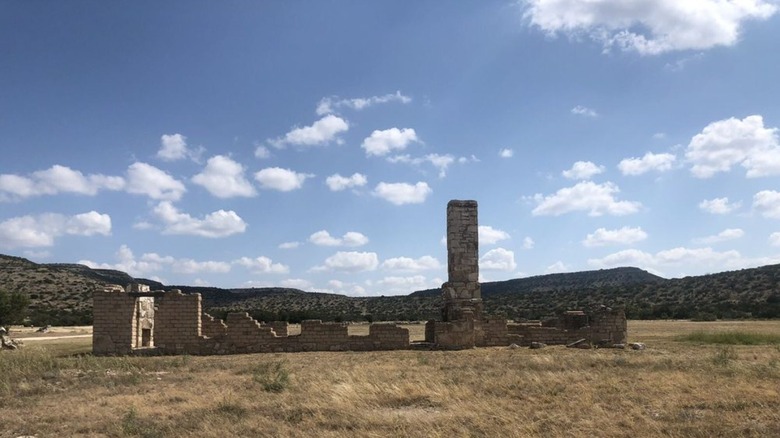
In the rugged expanses of West Texas lie the ruins of a once-thriving military outpost. Fort Lancaster and Battlefield State Historic Site, situated over 100 miles south of Midland, played an integral role in American history. Established in 1855 near the present-day small town of Sheffield, the fort housed soldiers who protected pioneers and mail carriers traveling along the old San Antonio-El Paso Road on their way to California. Notably, it was the only post in the region to use camels for transportation across the Southwest.
Fort Lancaster remained a U.S. Army post until 1861, when Texas seceded from the Union, and the fort was later occupied by the Confederate Army. The Confederates held the fort for only a year before abandoning it. After the U.S. Army reoccupied the site, Native Americans attacked in 1867 in what became known as the Battle of Fort Lancaster. The 9th U.S. Cavalry Regiment successfully defended the post, but by the 1870s, the fort was abandoned again. In 1965, the Meadows and Benckenstein families donated nearly 40 acres of the land to Crockett County, where the fort is located. Three years later, management of the grounds was transferred to the State of Texas, and the site opened to the public.
Exploring the history of Fort Lancaster
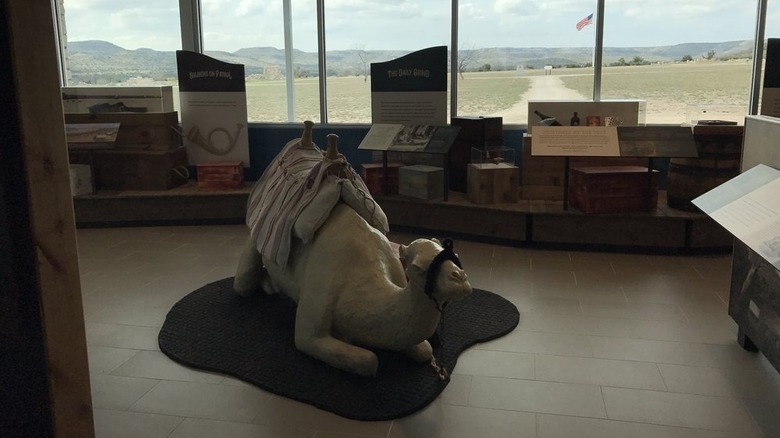
Fort Lancaster and Battlefield State Historic Site, managed by the Texas Historical Commission, preserves the ruins of the 30 original buildings that once made up the fort, as well as the battleground where the "Buffalo Soldiers" — the name given to the all-Black 9th Cavalry Regiment — held off the attack and defended the post. A modern visitor center at the front entrance houses a museum and interpretive center chronicling the fort's history, from its time as a U.S. Army post to the day it became the only army fort in Texas directly attacked by Native Americans.
In addition to the displays in the exhibit area, the museum features artifacts recovered during archaeological digs that took place at the site between 1966 and 1976, such as iron nails, bullet casings fired during the attack on the fort, and more. Outside the museum, the visitor center offers a gift shop, along with cold drinks and restrooms for visitors before they venture out to the ruins. Much like Fort Griffin State Historic Site in Albany, Texas, the ruins of the fort itself are the main attraction here. However, to better understand the history of the fort and what you're about to see in person, it's worth starting your day at the visitor center.
The haunting stone ruins of Fort Lancaster
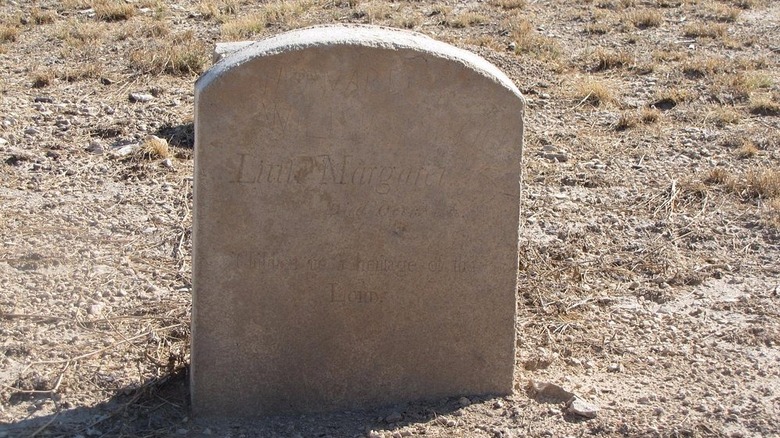
After exploring the history of the fort in the air-conditioned visitor center, walk outside to tour the ruins. The most visible structure is the Company K barracks. By 1860, five years after the fort's establishment, stone and adobe were used to construct permanent buildings instead of temporary ones. The Company K barracks contains the chimney that now stands as the park's most recognized landmark. Fort Lancaster is also home to a cemetery with the graves of soldiers and family members, including a haunting gravestone simply inscribed "Little Margaret."
There are two ways to explore Fort Lancaster. The first is a self-guided tour, "A Frontier Legacy," which starts at the park's visitor center and takes about an hour to complete. You can walk the grounds or take a golf cart, available on a first-come, first-served basis. A visitor guide with a site map is available at the center. The second option is a guided tour of both the fort's ruins and the battlefield, which also takes about an hour. Whichever tour you choose, you'll have the opportunity to see "A Soldier's Life," a 30-minute presentation showcasing the uniforms and equipment used during that era, as well as "Reveille to Taps," where visitors hear the snare drum and witness a live demonstration of the drum calls that once structured daily life at the fort.
If you want to immerse yourself further in Texas military history, visit the Fort McKavett State Historic Site. Alternatively, if you'd like to experience the grounds where Texas won its independence, head to Houston and explore the historic San Jacinto Battleground State Historic Site.