
What Nobody Believes About The Statue Of Liberty Until They See It For Themselves
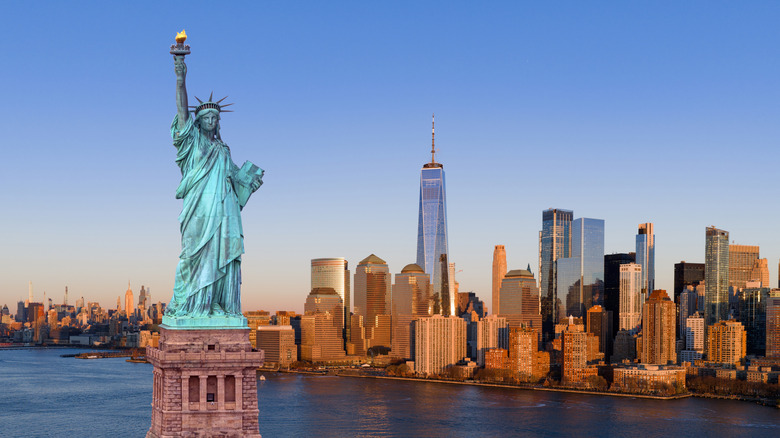
The majestic Statue of Liberty is synonymous with New York City, and America itself. The Lady in the Harbor was a gift from France, and was dedicated by President Grover Cleveland on October 28, 1886. You may think you know a lot about this enduring symbol, like the fact that it's exterior is made of copper that has oxidized into the current greenish color, or that she was modeled after the Roman goddess of liberty. However, there are a number of things you just have to be there to believe. They include the fact that the original torch is inside the pedestal (and how cool it is to see up close), how difficult it actually is to get to the crown, what you have to endure to get up there, the fact that the statue moves, the sheer size of it, what's holding it all up, and the pose she's actually in.
The Statue of Liberty was sculpted by Frédéric-Auguste Bartholdi, and is 151 feet, 1 inch tall, with a pedestal that is 154 feet high. You can only get there by going through Statue City Cruises, and if you want to go as high as the crown, you have to book your tickets months in advance. You cannot, however, go up to the torch, and you haven't been able to for over a century. In fact, one thing you may not know is that the torch you see right now is a replacement. The first one was corroded inside and was switched out for the new one in 1984. There is a museum inside the pedestal that still has the old one.
Things you won't believe about the Statue of Liberty until you're there in person
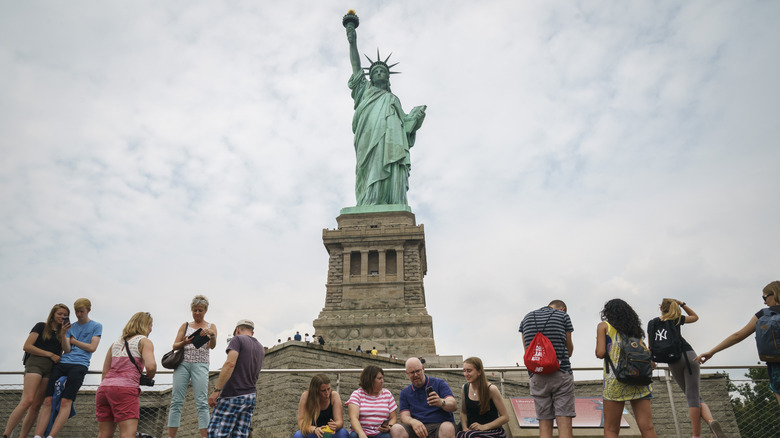
Close to four million people visited the Statue of Liberty and Ellis Island in 2024, and if you haven't gone yet, put it on your bucket list right now. I can say from experience that it will move the hearts of even the most jaded visitor. One thing I didn't believe until I got there is what it takes to get to the top. You have to be in pretty good shape. There are 393 steps to get from the base to the crown. While there is an elevator to the top of the pedestal, there is no elevator to the crown, and inside are 162 narrow spiral steps. The other thing you won't believe until you give that climb a shot is how tightly-squeezed in you are. If you're claustrophobic (like I am), it can make you sweat.
It can also get very, very hot inside — up to 20 degrees hotter than the air temperature outside on a hot day. There are no bathrooms in there either, so if you plan to walk up, you need to be prepared. Another thing you may not realize until you're standing right under the statue is how it sways in the wind. It can move up to three inches in any direction, and the torch itself can move five inches. If that freaks you out, you can just stay in the pedestal. It's still an awe-inspiring experience.
More things you have to be there to believe about the Statue of Liberty
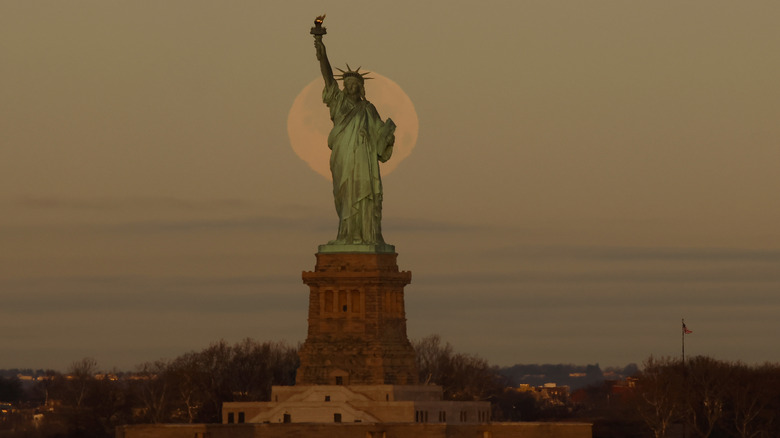
It's one thing to see the Statue of Liberty in photographs, TV shows, and movies. However, the sheer size of this symbol of freedom is hard to take in until you're standing under it. Her feet alone are massive, and if Lady Liberty could step off her pedestal and change her shoes, she'd have to order a size 879. However, the crazy part is that the copper that makes up her outer shell is only the width of two pennies stacked on top of each other. What you'll see inside as you climb the stairs is the the massive supporting structure holding the whole thing up.
From far away, it appears that the statue is simply standing, holding her torch (which symbolizes enlightenment) up high. However, she's actually posed in the act of walking forward. Her right foot is in the process of moving off the ground to take a stride. And in fact, the poem that is so closely associated with the statue, "The New Colossus" by Emma Lazarus, was added on nearly two decades after the statue was unveiled.
If you can't get tickets in time, or you aren't planning on braving the climb, there is another way you can get a good look at the lady. Finally, if you happen to be visiting Paris, there are mini Statues of Liberty around that city to visit as well.