
Between Toronto And Ottawa Is Canada's Gorgeous Park With Scenic Camping, Fishing, And Lake Trails
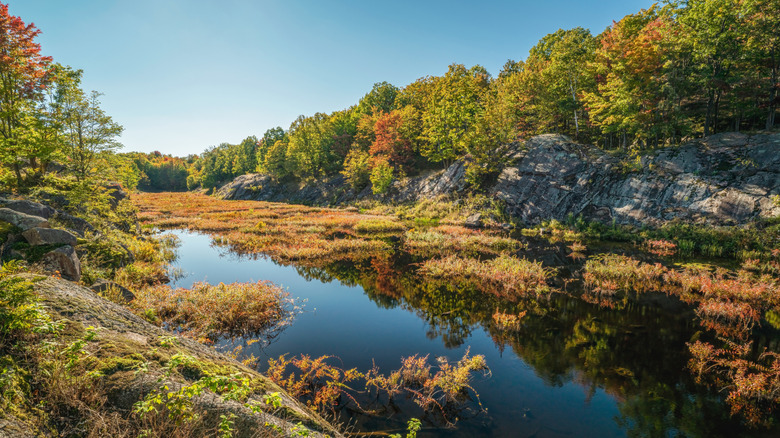
Few countries do the great outdoors better than Canada. From the high-altitude trails throughout the Canadian Rockies to the historic gold rush and cowboy trails, Canada keeps its wilderness untamed and inspiring. But you don't need to stick to the well-known outdoor adventures here, as gorgeous settings are often found between the country's cities. Frontenac Provincial Park is the perfect example, located 100 miles from Ottawa and 175 miles from Toronto.
Frontenac Provincial Park is a massive and varied environment to explore. It sprawls across 13,000 acres, which includes over 20 lakes and about 100 miles of trails. As you can imagine, hiking, canoeing, kayaking, and fishing are all popular pastimes at Frontenac. In fact, over 50 campsites within the park can only be reached via walking or paddling. Nature takes center stage here, showing off granite outcrops carved by ancient glaciers. You'll also roam among white pine trees, encounter wetlands, and stroll along lake shorelines.
The diversity of plants and animals reflects the park's size. Almost half of all plant species in Ontario grow here, with about 700 different species, per Frontenac Outfitters. You can also see almost 200 different species of mammals and birds. Otters, wolves, white-tailed deer, black bears, foxes, wild turkeys, northern loons, golden and bald eagles, owls, and hawks all call Frontenac Provincial Park home. Some consider this place a hidden gem, praising its remote setting for keeping crowds low and the nature pristine. "The forest feels unending, the lakes are clean, clear, and beautiful. The trails through the woods wind around trees, hills, and flowing creeks, it's the perfect spot to experience the wilderness," one visitor writes on Google.
Backcountry camping and fishing in Frontenac Provincial Park
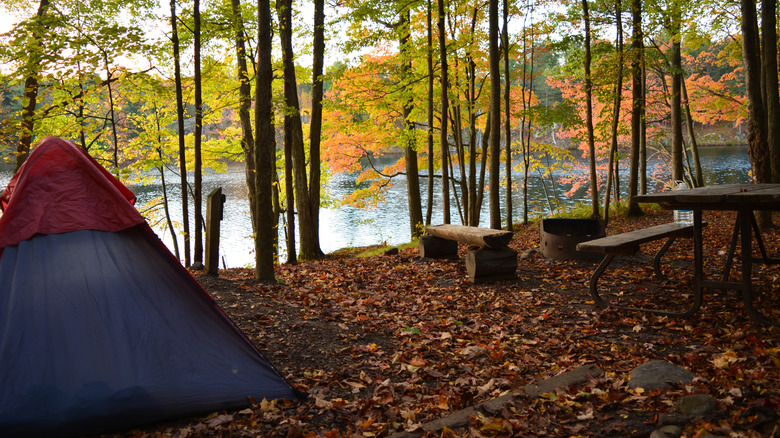
Regardless of the season, Frontenac Provincial Park's rugged campsites are open for adventurous travelers. The park has 54 backcountry campsites scattered across its ecosystems, connected by hiking and paddling routes. You won't find much in the way of modern comforts here. These campsites are designed for backpackers, but they still include some handy amenities appropriate for the setting. This includes a raised platform to keep your tent off the ground, a fire pit, a picnic table, an outdoor toilet, and a food locker to prevent unwanted bear encounters.
You can hike to all the campsites and paddle to most, except for one cluster. How far you have to hike depends on where you want to camp. Some sites are only 20 minutes away from parking areas, while others can take upwards of three hours to reach. You can purchase park maps from the Ontario Parks Store. Your GPS might be good enough, but an actual map can be helpful if your tech malfunctions. Many campsites are located on lakes, offering scenic and wild camping, with sweeping water views and great access to fishing. You'll need a permit to camp here, and reservations are recommended.
If you've come here to fish, you have almost 30 lakes to choose from, including a handful around the park's borders. Anglers can reel in a range of species, such as trout, largemouth and smallmouth bass, northern pike, and black crappie. Where you fish often changes depending on what you want to catch. The Moulton, Tetsmine, and Clearwater lakes are best for catching brook trout. If you're hunting northern pike, you're better off sticking to the boundary lakes, such as Doe and South Otter. Perch and bluegill, meanwhile, are found in most lakes. Ice fishing is also possible during winter at certain smaller lakes, like Big Salmon. If you want a bigger fishing experience, all this wilderness is just north of Lake Ontario, one of America's 10 deepest inland lakes.
Frontenac Provincial Park's all-seasons hiking
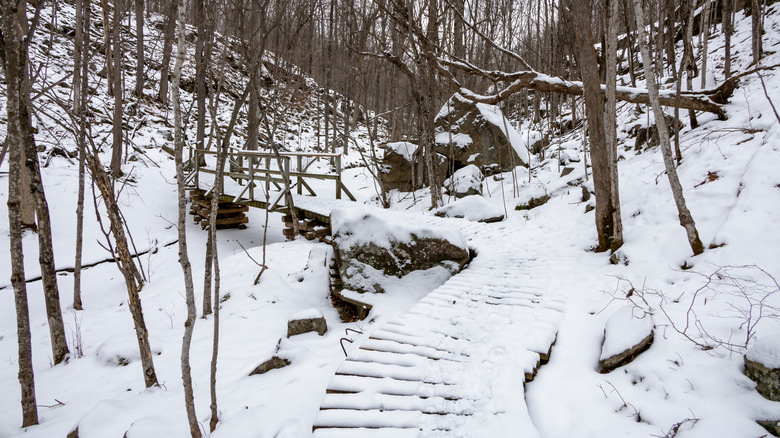
Hikers can explore this wilderness year-round using interconnected loops of various hiking routes totaling between 60 and 100 miles. Each route tends to have its own unique features, too. Arab Lake Gorge is one of the easiest routes, taking 30 minutes and including a boardwalk along lush valley vegetation. The Doe Lake trail takes twice as long, offering beautiful lake scenery and beaver ponds. If you want to see 19th-century homesteads and historic mines, choose the 4.3-mile Little Clear Lake or 6.2-mile Tetsmine Lake route. The 8.6-mile Cedar Lake Loop offers the best wetland scenery, while the Bufflehead Trail has a scenic ridge.
The most popular hiking route here on AllTrails is the 8.3-mile Small Slide Lake Loop. This one takes you around Slide Lake, exploring some of the park's most wild and unkempt nature. The route is a section of the 13-mile Slide Lake Loop and includes a lot of muddy areas as you traverse wetlands and dense woodland. Although this is one of Frontenac's more challenging routes, it's also one of its best for nature views and wildlife sightings. Many of the trails are also good for snowshoeing during winter. Popular options include the Corridor Trail, Doe Lake Loop, and the Bufflehead Trail. Bears are often sighted here, so remember to pack bear spray and tread carefully. This is common in Canada, as Prince Edward Island is Canada's only province without bears.
Frontenac Provincial Park is about a two-hour drive from Ottawa or three hours from Toronto. You can base yourself closer to the park by staying in other towns and villages in Ontario. Merrickville-Wolford, considered "Canada's Most Beautiful Village," is only a 1.5-hour drive away. If you don't want to spend the night, you can visit just for the day by paying for a vehicle permit.