
Forget Florida, Retire To This South American Gem With A Low Cost Of Living And Picturesque Beaches
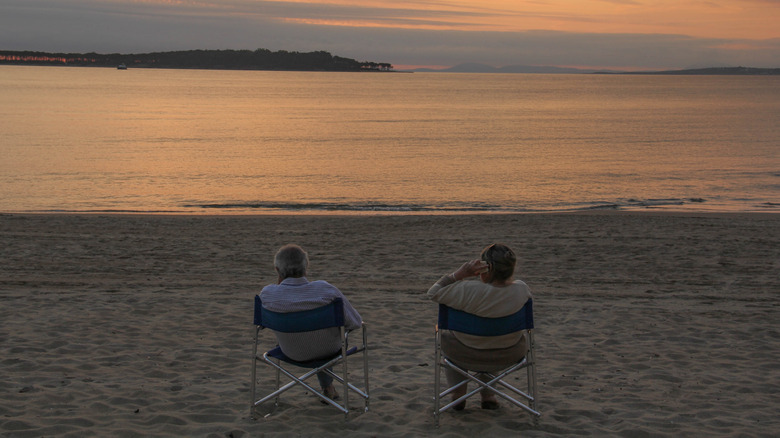
Warm weather, waterfront living, and established retirement communities — these are some of the reasons retirees are drawn to Florida, but what if there's another option that offers all three at a more affordable cost? If you're open to destinations beyond the United States, perhaps venture further south to Uruguay, a small country tucked between Brazil and Argentina. Uruguay makes a strong case as an alternative to Florida for retirees, ranking fourth globally in Global Citizen Solutions' Global Retirement Index. Like Florida, it's a coastal retreat with gorgeous beaches, except in Uruguay, they're less crowded. This South American country has mild winter temperatures like Florida, but its summers are far less brutal in most cities than the Sunshine State. It's a destination that has a network of retirees and policies like its Independent Means Visa that make it easy and affordable to settle in.
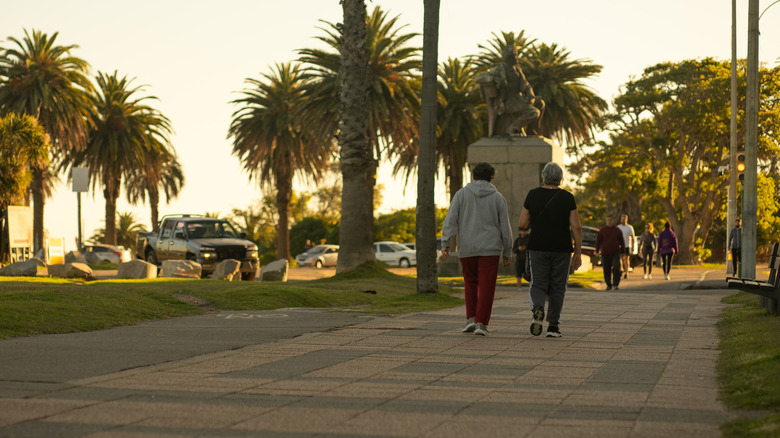
On a national level, Uruguay has a substantially lower cost of living than the United States. While it's generally considered one of the pricier South American countries, the average cost of living is about 23% lower than the U.S. as a whole, according to data from Numbeo. On a city level, the cost of living in Montevideo, Uruguay's capital city, is close to 18% lower than living in Tampa, Florida. But beyond paying less for basic necessities, Uruguay offers plenty of retiree-friendly activities at a low cost, too, from visiting one of its free national museums to walking the lively beachfront promenade, La Rambla.
Best beachfront cities in Uruguay
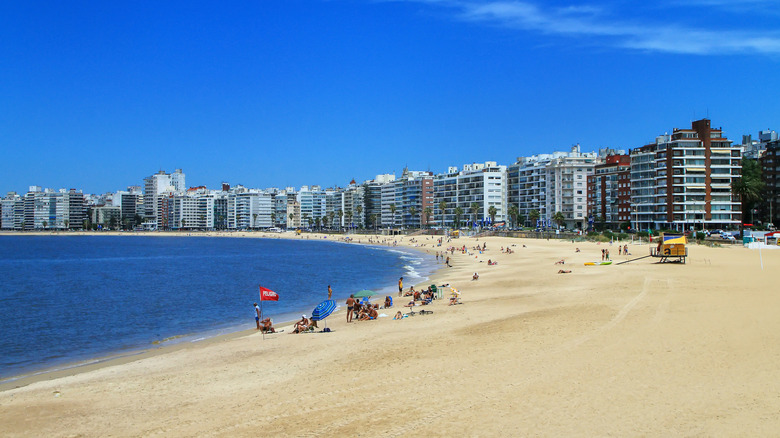
One of the biggest appeals to Uruguay is its beaches, and this shows in the fact that two cities, often named as its top spots for retirement, are on the coast: Montevideo and Punta del Este. As Uruguay's capital and largest city, Montevideo's beachfront has a more urban feel with modern infrastructure. Many beaches and parks are connected along La Rambla, one of the world's longest sidewalks running through multiple neighborhoods of Montevideo's shoreline. One of those beaches is Playa Pocitos, situated on the edge of the Pocitos neighborhood, which is popular specifically with expats. Reviewers have described Playa Pocitos as clean and praised its view of the coast with the city framing its edges. Just beyond the tip of the beach is the Castillo Pittamiglio, a castle home turned into a cultural center. The castle hosts exhibitions and programming for a cultural fix after a beach day.
Retirees drawn to coastal cities that aren't as populated as Montevideo can head to Punta del Este, a beachfront retirement city with laidback vibes. One of the best beaches here is Playa Mansa, a long sandy strip stretching along the western half of Punta del Este. Though it's within easy reach of the town, Google reviewers describe it as a relaxed place to lie back and enjoy the view. "This 'calm beach' is perfect for lazy readers like me, with a beautiful view of Isla Gorriti," travel blogger Silvia's Trips remarked. The beach is lined with lots of great restaurants, too.
How retirees can stay active in Uruguay
What sets Uruguay apart for retirees is not just its beaches but the range of activities you can partake in without splurging. If you're looking to maintain an active outdoor life, the country has a wealth of public parks and recreational sites. In Montevideo, there's Parque Rodó, with picnic spots, walking trails, and pedal boats you can rent. Beyond the capital city, consider a visit to Salto, a scenic, historic town that's known for its surrounding hot springs. The resort of Termas del Daymán is a 15-minute drive outside the city center of Salto and has a complex of ancient hot spring-fed pools and saunas. If you'd rather explore a wilder setting, the country's Cabo Polonio National Park is a gem of rugged coastal landscapes to hike with a colony of sea lions who call it home.
Retirees in Uruguay can stay culturally active, too, through the country's network of free national museums and cultural organizations. The National Museum of Visual Arts, with a large collection of Uruguayan artworks, and the National Museum of Natural History are both free for residents (the museum system charges a small fee for non-residents). Around bigger cities, you can often find tango milongas, casual gatherings for people to tango together into the night. Stop by one of Montevideo's street markets for a mouthwatering, low-cost dish like chivito (a hot steak sandwich) — Uruguay was dubbed one of Chef Anthony Bourdain's most underrated destinations, after all, which might be the final stamp of approval to convince you to go see it for yourself.