
Between Jacksonville And West Palm Beach Is Florida's Once-Thriving Coastal Village That's Now An Abandoned Gem
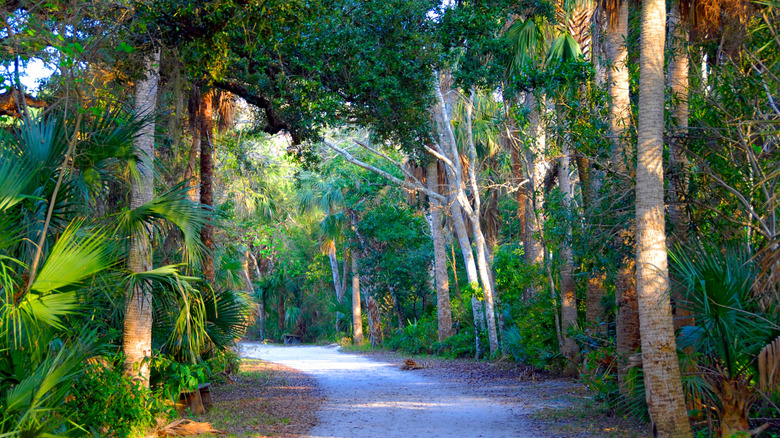
Along the famously scenic coastal byway A1A, which traces nearly the entire length of Florida's east coast from Fernandina Beach to Key West, small beach cottages, palm hammocks, pine flatwoods, old fishing villages, marshy lagoons, tangled mangroves, and quiet beaches offer glimpses of timeless Florida. Halfway down the Sunshine State, a thin barrier island called Canaveral National Seashore juts from the mainland in a 24-mile stretch of protected coastline home to thousands of plant and animal species, including nesting sea turtles, and bordered by the waters of Mosquito Lagoon, a protected estuary.
Between the lagoon and the Atlantic Ocean in Volusia County on this slender island sits the tiny, abandoned settlement of Eldora. Just over 100 miles south of Jacksonville and roughly 200 miles north of West Palm Beach, it was once a thriving agricultural, fishing, and crabbing hub, as well as a steamboat port during the early years of Florida's citrus boom. But Eldora — a portmanteau of two 19th-century sisters, Ella and Dora Pitzer — declined after devastating back-to-back freezes destroyed the citrus groves, and railroads redirected transportation routes inland. Today, the former village area known as Pumpkin Point survives as an uninhabited natural space along the public beach where a single historic building still stands.
To visit the ghost of — or at least what's left of — Eldora, visitors must enter the Canaveral National Seashore, which does charge an admission fee per vehicle. Visitors can park in small lots on either the lagoon "lake" or the beach side, then stroll two short hikes: Eldora Hammock Trail and Eldora Village Loop, accessing these paths from the one-way Eldora Loop Road leading to the visitor center. Less than two miles north at Apollo Beach, kayak rentals and boat launches allow visitors to explore Mosquito Lagoon and catch a glimpse of Eldora from the water.
Visit the village's one remaining historic home
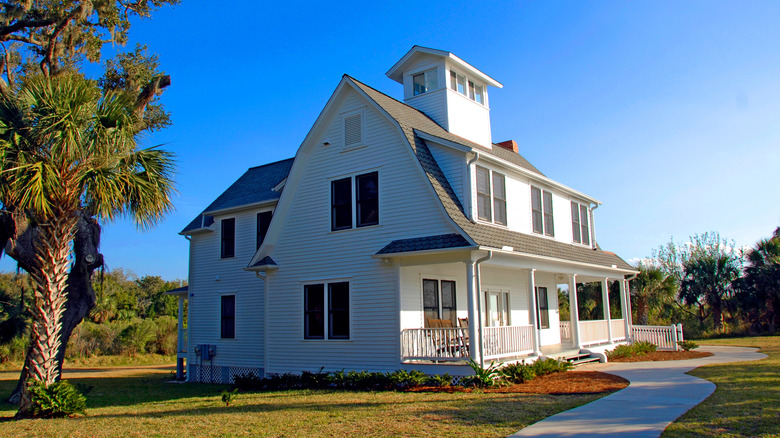
"Listen closely. You can almost hear the sound of a child's laughter riding on a westward breeze toward Mosquito Lagoon," intoned a 1992 article about abandoned Eldora in the "Orlando Sentinel," but Eldora's abandoned environment is little more than that. There are no spooky buildings or eerie ruins, just the sounds of nature under the shadows of moss-draped live oaks and palms. Locals have reminisced that at least until the mid-1960s, a few shack-style eateries were located in the area, but there is little remaining, and the last Eldora resident died in 2000. There is one well-preserved historic building: the Eldora Statehouse, also known as the Moulton-Wells House, a two-story residence built around 1912, furnished in the period, and listed on the National Register of Historic Places. It's pristinely maintained by "Friends of Canaveral," and open to visitors during the summer (calling ahead is recommended). "Wow! A lot of history in a small house," wrote one Google reviewer. "What a beautiful place," noted another. "The nature is amazing. The Statehouse is calm and peaceful."
Of course, Eldora wasn't the only once-thriving Florida ghost town now transformed into a wild, abandoned beauty (though Eldora is less eerie than some). Places like Osceola, Shiloh, and Haulover Heights have also been lost to time, offering opportunities for history buffs and dark tourists to explore.
Eldora is 12 miles south of New Smyrna Beach, an underrated, artsy city with a white sand coastline where Eldora once shipped its citrus for distribution. Though New Smyrna is still a thriving beach community, it, too, holds ghosts of the past: New Smyrna's abandoned sugar mill ruins are ghostly time capsules leftover from plantation times, burned down during the Seminole War of the 1830s, and another unique stop for history buffs.