
Not Grand Canyon, Not Great Smoky Mountains: This National Park Has The Most Missing Persons
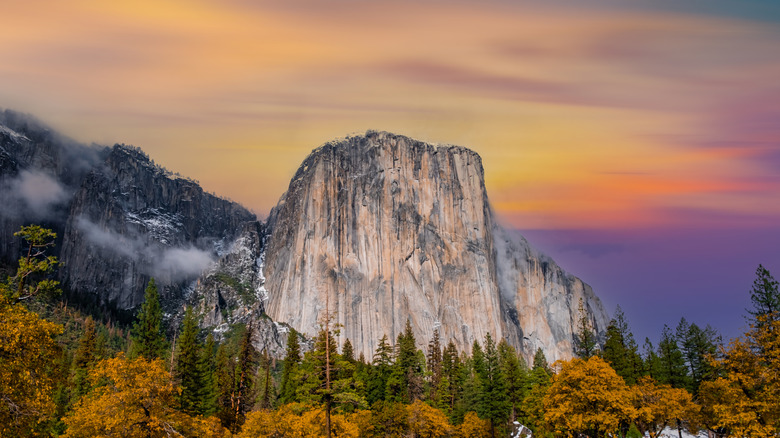
Time spent in the wilderness can be healing to the body and soul, but it is easier than you think to go missing. That holds true whether you're a seasoned backpacker or a casual first-time hiker. Visitors to America's national parks go missing for a variety of reasons. Although up-to-date statistics are hard to come by, in 2023, the New York Post cited Department of the Interior documentation stating that around 1,100 people had been reported missing in national parks since 2018.
According to Survival Dispatch, 48% of those who go missing in the wild are hikers, and 21% are boaters. Great Smoky Mountains National Park — America's most-visited — seems to be one of the most dangerous, averaging between 100 and 150 search and rescue operations per year — not all of which are for missing people, and some are just rescues. Meanwhile, the Grand Canyon averages 310 search and rescue operations per year, with extreme heat and steep terrains likely increasing the risk of accidents.
But while you might turn an ankle hiking the Great Smoky Mountains, or collapse on the trail from heat exhaustion in the Grand Canyon, Yosemite is where you're most likely to vanish without a trace. Yes, the park with the highest number of unsolved missing-person cold cases, hands-down, is Yosemite, at least according to the National Park Service. As of this writing, 10 missing person cases remain unsolved in Yosemite, while the Grand Canyon has five, and the Great Smoky Mountains has four. Rocky Mountain, Crater Lake National Parks, and Chiricahua National Monument report one each.
How and why people go missing in Yosemite National Park
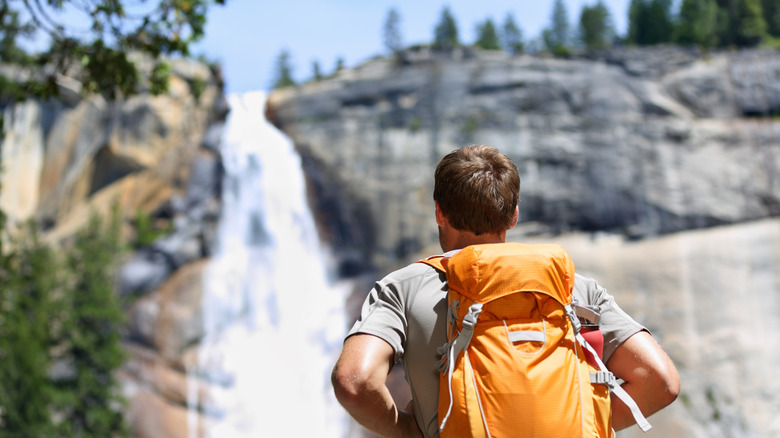
You can go missing in Yosemite even if you're hiking with a group on an established trail. George Penca, 30, was hiking with 20 members of a church group in 2011 when he became separated from the others on the popular hike to Yosemite Falls and was never seen again. "Always stay together. Put the slowest hiker near the front to keep your group together. While it may take a bit longer to reach your ultimate destination, staying together helps reduce the chance of someone getting lost, and if someone gets injured, you are there to help," the National Parks Service advises.
Experienced hikers go missing in Yosemite, too. Fifty-one-year-old Michael Ficery was on a solo backpacking trip in the rugged, less-visited Hetch Hetchy region when he disappeared over 20 years ago, in 2005. He was an avid hiker who was familiar with the area, but after a half-million-dollar rescue effort, all that was ever found was his backpack.
Hikers have even gone missing in Yosemite on guided tours. In 1981, 14-year-old Stacey Arras and her father were on a four-day group tour of the High Sierra Loop, riding mules as they set out from scenic Tuolumne Meadows and camping in cabins at Yosemite's High Sierra Camps. After stopping for the night at Sunrise Camp, Arras set out on a brief 1.5-mile hike to see Sunrise Lakes, but was never seen again. According to news reports at the time, the search for Arras involved 100 searchers, as well as helicopters, dogs, and scuba divers, but was called off after 11 days. No trace of her has ever been found.
Most missing persons in Yosemite are eventually found
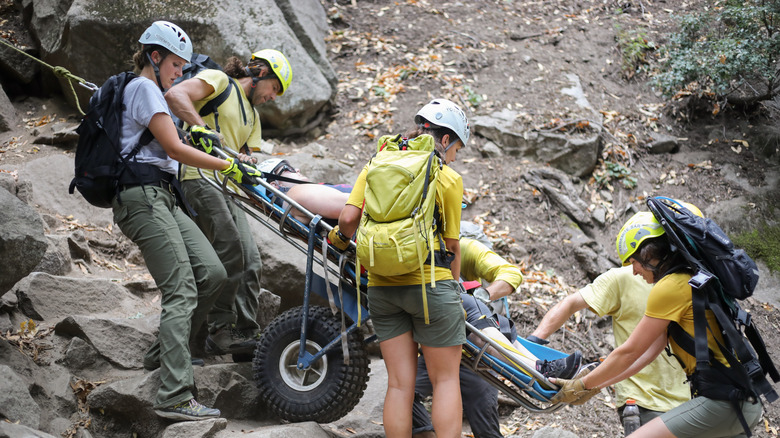
When hikers in Yosemite go missing, many are eventually found alive by search and rescue workers. In 2024, the most recent year for which statistics are available, Yosemite Search and Rescue (YOSAR) conducted 191 operations, with 90 listed as "major." While it's unclear how many were searches for actual missing persons, the organization Friends of YOSAR says that "at least a dozen" of those calls resulted in saved lives.
Anecdotally, it's clear how and why people who go missing in Yosemite are (or aren't) found. In 2015, 20-year-old Michael Dahl was found injured but alive by other hikers who recognized him from a flyer two days after he was reported missing by his hiking companions. In 2018, backpacker Alan Chow, 36, survived six days in the Yosemite backcountry before a search and rescue helicopter spotted him. According to a UPI report, he became lost and disoriented hiking in the snow, but did the right thing once he realized his situation, which was to stay put and wait for a rescue. "His preparedness and ability to make good decisions were key to his rescue and good health," the National Park Service said in a public statement.
Not all successful searches have such a happy outcome. In 2024, the body of 60-year-old Kirk Olsen, himself a former park ranger, was found two days after Yosemite Park Rangers discovered a note in his car, parked at a trailhead, describing his planned backpacking route. But by that time, Olsen was already two weeks overdue. A Backpacker magazine story speculated that he'd simply gotten lost. That's why it's vital to let someone know exactly when you expect to return, and equally important to know what to do if you get lost hiking.