
Between Sioux Falls And Omaha Is Iowa's Largest Remaining Prairie With Roaming Bison, Hiking, And Scenic Views
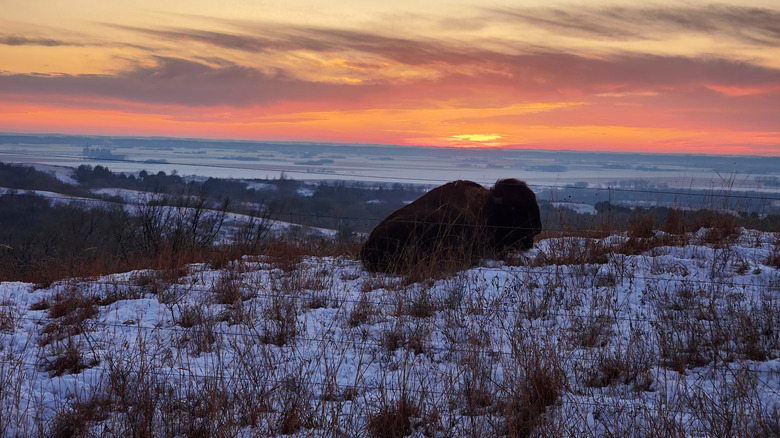
The America famously explored by Lewis and Clark has largely disappeared — unless you know where to look. About an hour and 10 minutes south of Sioux Falls and 114 miles from Omaha, along Iowa's western edge, lies the state's largest prairie, where hikers can see bison still roaming — from a safe distance, of course. The Broken Kettle Grasslands preserves what little is left of the nation's tallgrass prairies.
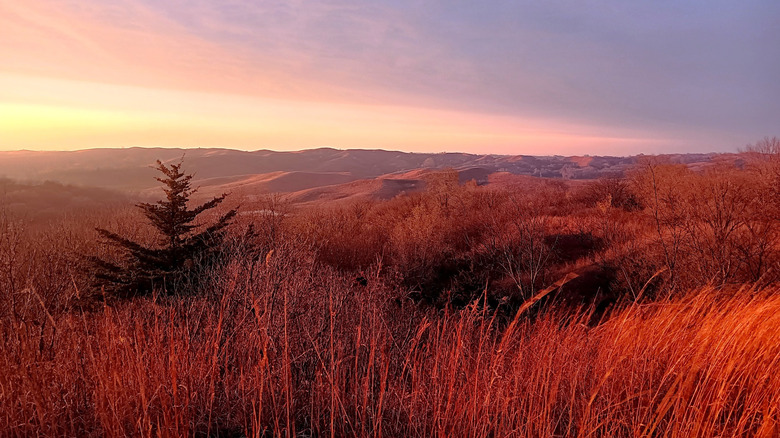
The 3,000-acre Broken Kettle Grasslands is also the state's largest preserve run by the nonprofit Nature Conservancy, which acquired the land over the course of decades. The site offers a compact mix of diverse wildlife and plants common in the Great Plains, yet unique because of what's beneath the grass. The prairie sits at the northern end of the Loess Hills, a collection of fertile land left behind by glaciers from the last Ice Age. It's what makes the area so green, and prime real estate for grazing creatures like the bison and grassland birds like the black-billed magpie. While those bucolic green vistas with rare animals interspersed may engross travelers, Broken Kettle Grasslands serves a second purpose. The 1999 discovery of the rare prairie rattlesnake added more fuel to conservation efforts.
Taken as a conservation project, Broken Kettle Grasslands is trying to save what's left of one of the continent's last tallgrass prairie ecosystems. The bison do their part, helping graze the land better than cattle could and maintaining the prairie's biodiversity. From the perspective of a traveler, the conservation efforts create a time portal to life before the arrival of settlers, when scenic views of herds of bison grazing in a sea of biodiverse green were commonplace. Observed from a safe distance and with minimal disturbance, it's an ideal day trip for travelers in the area. Just make sure to pack binoculars or a zoom lens to get a good look at all the wildlife.
Hike where the bison roam
At the heart of the prairie lies America's official national mammal, the bison. The conservancy boasts the animal's ideal natural environment, hosting over 200 genetically pure specimens. Be careful, as the bison, which weigh up to 2,000 pounds and run up to 40 miles per hour, can be dangerous. There are a few things to do if you encounter them in the wild, like giving them space. Iowa's grasslands offer a menagerie of other wildlife as well, including the aforementioned prairie rattlesnake, over 200 bird species such as the colorful bobolink and western kingbird in the sky, and the Great Plains toad underfoot.
There's only one way to see Broken Kettle's residents properly, though, and that's on foot. Do note that the bison preserve itself is closed to hikers. While there are no official hikes through the grasslands, travelers often find a way to pass through or by tangentially on Butcher Road, which passes alongside the conservancy. Camp Joy Hollow, a Girl Scout camp adjacent to the conservancy, joined the Grasslands in 2022 and provides hiking opportunities for visitors through old-school, unmarked trails (so bring a compass). Birdwatchers should also bring their binoculars.
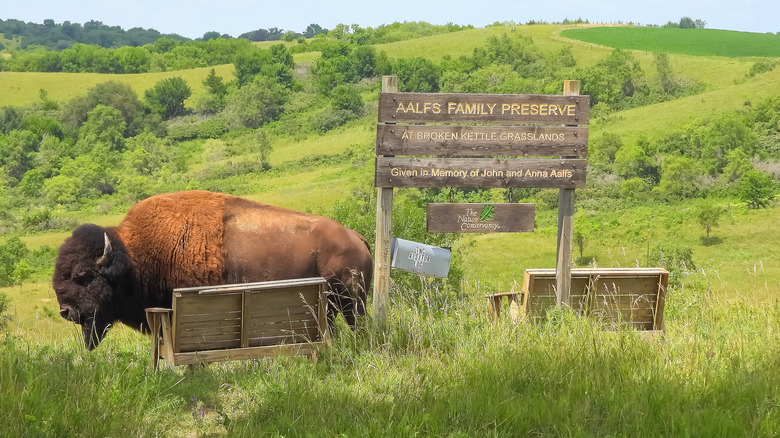
You can find a decent view of the prairie from the Aalfs Family Preserve, which has earned rave reviews from visitors. Along the way, you can scope out the varied plant life, which consists of a rugged blend of grasses like the big bluestem, with flowers like the dotted blazing star and silky aster sprinkled across the sea of grass, offering up shots of purple, red, and white. The leadplant and purple locoweed add tough legumes to the mix. You'll also spot bison wallows, where the giant beasts chill out and roll around, helping plants that prefer rougher soil.
The logistics of visiting Broken Kettle Grasslands
While worthy of a visit, Broken Kettle Grasslands doesn't offer a full trip's worth of fun. It's best to merge your visit with a trip to Sioux City, Iowa's "Little Chicago," with tasty local eateries. That is, unless you're particularly taken with bison and feel they merit their own trip. In that case, book a flight to Sioux Gateway Airport, the closest regional airport for fliers. It's a bit of a hassle to reach, but not as onerous as landing at the closest major travel hub, Des Moines International Airport, which is 200 miles away. If that all seems too daunting, you have other options. Broken Kettle Grasslands is just one of many destinations where you can see the creature roam. You'll find nearly 6,000 at Yellowstone, that stunning national park known for its natural beauty and roaming bison.
There are no accommodations within Broken Kettle Grasslands. You'll have to overnight instead at Sioux City, or cross the border into Vermillion, South Dakota, about half an hour away. Be sure to follow The Nature Conservancy's guidelines when visiting Broken Kettle Grasslands, which include no feeding the wildlife and no collecting seeds.