
Washington's Deactivated Military Fort Is Now A Scenic State Park With Beaches, Trails, And Mountain Views
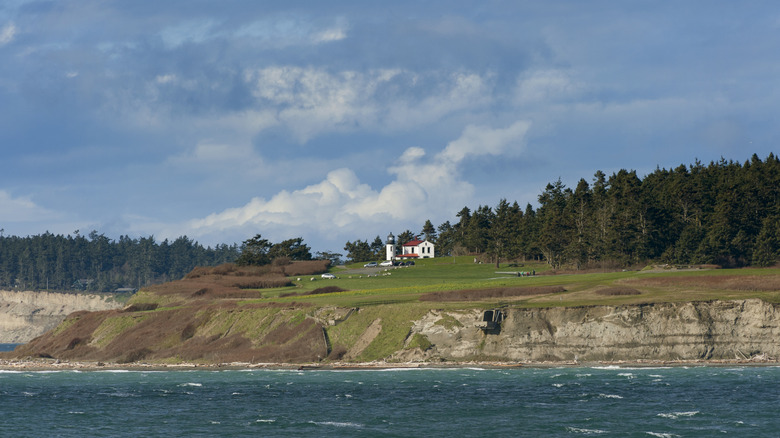
If you love coastal scenery and lush forests, Washington state is a fabulous option, especially around the Seattle area. While the Evergreen State is famous for places like Olympic National Park, it actually has more than its fair share of state parks, too. Situated at the northern edge of Puget Sound, you'll find the underrated getaway that is Whidbey Island, a place that blends stunning scenery with vibrant history. Fort Casey Historical State Park was, as the name implies, an active military fort on the island, until it was officially deactivated in 1953.
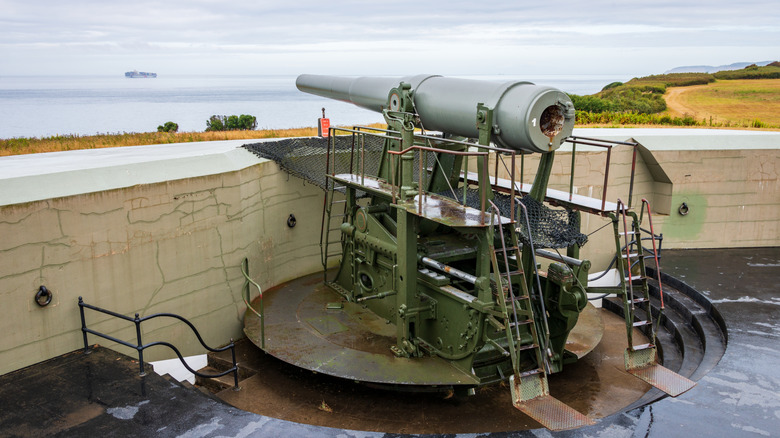
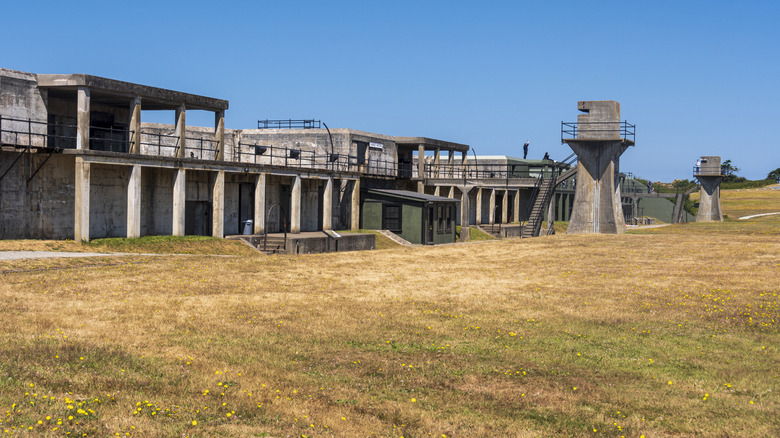
When you visit the park, it's apparent why the site was chosen for a military base, as it's well-positioned above the entrance to the sound, making it a prime defensive position. However, from its opening in 1902 until its deactivation, the only action the fort saw was training soldiers during World War I and World War II. Still, the remnants of the base and its guns are impressive enough, as is the lighthouse.
However, there's more to visiting Fort Casey Historical State Park than just exploring its military past. The park also has its own beach, hiking trails, and campsites, and it's even great for scuba diving. So, if you're looking for a more unique way to experience Washington's natural beauty, it's time to plan a trip to Fort Casey.
Enjoying the scenery at Fort Casey State Park
Fort Casey overlooks Puget Sound, so you'll want to take advantage of the beach and the views of the surrounding area. The best beach access is on the eastern side of the park, across an inlet from the campground. However, keep in mind that this isn't a soft, white sand beach. Instead, it's covered in rocks and shells, meaning it's best to wear water shoes so you can enjoy the shoreline without hurting your feet. Depending on the time of day and the season, you can explore tide pools and try to spot various marine life.
Hiking throughout the park allows you to enjoy the scenery even further, especially the mountains surrounding Puget Sound. For example, on a clear day, you can see Mount Rainier towering above the horizon. Alternatively, if you look out toward the Olympic Peninsula, you can get a view of the Olympic Mountains. The main trail inside the park is 1.8 miles and wraps around the old military facilities and the Spanish-style Admiralty Head Lighthouse, which you can explore. This trail also connects to the massive Pacific Northwest Trail (PNT), which you can follow north through the rest of Whidbey Island. Alternatively, the PNT continues south if you take the ferry across to Port Townsend, a storybook seaport filled with antiques and fresh seafood.
Another unique activity you can try here is scuba diving. There is a protected underwater park just offshore, which is perfect for honing your skills or viewing local sea life. In fact, Fort Casey is considered one of the best scuba sites in Washington, so if you have the right gear, you'll want to take a dip during your visit.
Adding Fort Casey State Park to your next Washington vacation
The easiest way to reach Fort Casey State Park is to fly into the Seattle-Tacoma International Airport, drive north to Mukilteo, and take the ferry across to the island for the remainder of the journey. This route takes just under two hours, even with the ferry. Alternatively, if you want more of a scenic drive, you can head to the northern side of the island and cross the Deception Pass Bridge. This option is only about 2.5 hours, so you won't lose that much time. Since it's a Washington state park, you'll have to pay $10 to enter, or you can buy an annual Discovery Pass for $45 (at the time of writing) if you plan to visit multiple parks during your trip.
To maximize your stay, you can book a campsite at the park. These sites accommodate tents, vehicles, or RVs, so you can choose how to spend the night. However, there are only 22 standard campsites and 13 sites with partial hook-ups, so reservations can fill up quickly. The sooner you can plan your trip, the better. The campground also features restrooms and showers for added convenience.
Fort Casey was built alongside Fort Flagler and Fort Worden to provide better protection of the sound. These three made up what was known as the "Triangle of Fire," and you can visit all three today. You'll find Fort Flagler on Marrowstone Island, and there's Fort Worden across the sound, itself a scenic escape with beaches, camping, and tunnels. Best of all, the campground at Fort Casey is next to the Port Townsend ferry, so it's easy to go back and forth between it and Fort Worden.