
Minnesota's Scenic State Park Is Home To Waterfalls, Roaming Bison, And Breathtaking Trails
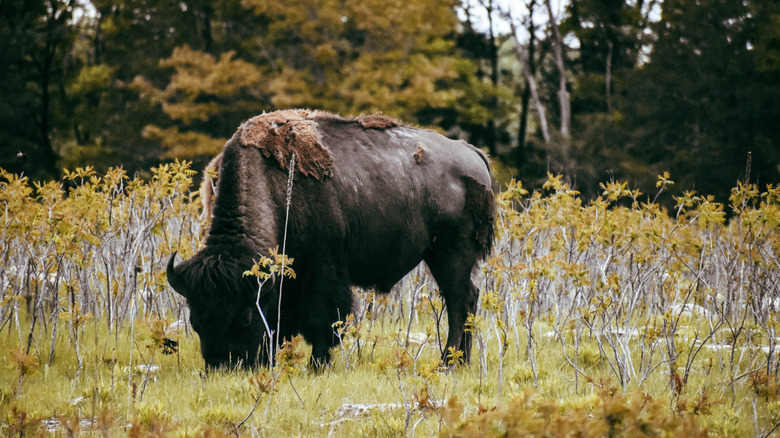
While northern Minnesota's lakes and waterholes usually attract visitors, the southern region's deep woods and prairies are just as captivating. Within this corner, not far from the Iowa border, sits Minneopa State Park. Tucked within the picturesque Minnesota River Valley, this reserve boasts 4,643 acres of wildly diverse ecosystems to explore — from prairies and forests to waterfalls and rivers — along with wildlife like bison and birds. With campground facilities that include electric sites and hot showers, it's easy to plan a wonderful getaway in this nature escape.
The park is split into two sections. The smaller southern section features the two-tiered Minneopa Falls and a visitor center, while the northern section includes more than 300 acres of prairie, campgrounds, and longer hiking trails. The prairies are where the park's bison thrive — and this herd is managed for high genetic diversity as part of the Minnesota Bison Conservation Herd. The easiest way to see them out and about is on a scenic drive (check the hours here before visiting) that encircles this wilderness. One visitor sums up the experience in a Google review, "A landscape out of place. Definitely felt like an African savannah and not a Minnesota floodplain. Enjoyed seeing the herd."
Minneopa State Park is located about 90 minutes south of Minneapolis (with North America's best airport) via U.S. Highway 169. Along the way, the highway runs parallel to the Minnesota River Valley Scenic Byway between Belle Plaine and Mankato, offering gorgeous panoramas on your drive. With a $7 daily permit and a $35 annual permit as of this writing, it's a solid choice for travelers who want to enjoy southern Minnesota's unique landscapes on a budget.
Chase waterfalls and stroll through lush woodlands at Minneopa State Park
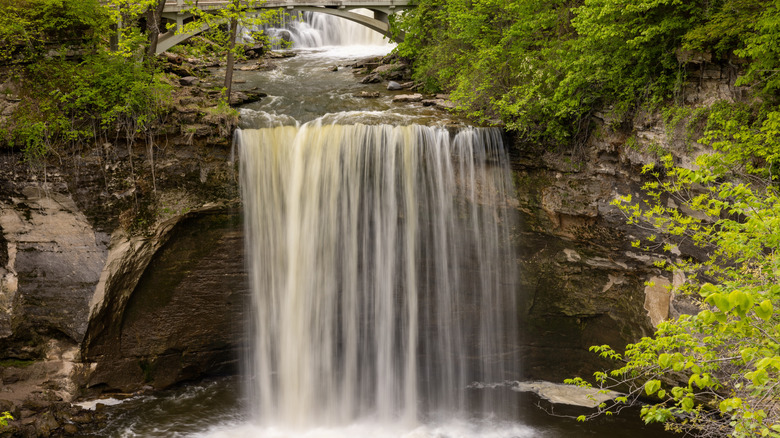
The state park's name, Minneopa, translates to "water falling twice" in the Dakota language and references the cascades within the reserve. The waterfalls were created roughly 10,000 to 15,000 years ago when glaciers carved Minneopa Creek and the surrounding valley, ultimately forming the ledge over which the two cascades flow. Once celebrated as one of the region's natural masterpieces, the falls remain just as awe-inspiring today. With the first fall dropping about 10 feet and the second plunging nearly 40 feet through a beautiful mossy setting, the entire waterfall gorge is a sight to admire.
The views can be enjoyed with minimal effort. The waterfall hike is an easy 0.5-mile trail and features a historic footbridge between the two falls for views on both sides, alongside stairs that lead to a closer look — although they can close when water levels rise for safety reasons. Depending on the season and weather, the waterfalls can thunder, softly flow, or freeze over the ledges.
Besides this popular trail, another easy walk that ends with a rewarding overlook is the 0.4-mile Confluence Trail. The route follows Minneopa Creek and ends where it merges with the Minnesota River. A bench overlooking the confluence allows visitors to soak in the views a little longer and makes for a lesser-known photo spot within the park.
Explore more trails and book a campsite at Minneopa State Park
If you want something longer, the 5.1-mile Minneopa State Park Loop, with its mix of lush forests and open grasslands, is a good option. The trail encircles the bison enclosure and also leads to the historic Seppman Mill — an archaic windmill listed on the National Register of Historic Places since 1971. "Great conditions. Got to see 17 bison loved the variety of the trail, prairie woods, and good footing throughout," writes a reviewer on AllTrails. Hikers also note that the mosquitoes here can get quite aggressive, so pack a strong repellent, like this odorless, best-selling Amazon spray for both hikers and campers.
Besides bison, Minneopa is also home to other wildlife, like deer, rabbits, and over 217 recorded bird species – red-tailed hawk, scarlet tanager, Louisiana waterthrush, and several species of woodpeckers and sparrows can all be spotted here. Birders can also download and print a checklist before exploring the trails.
Those who wish to stay and plan on exploring over the course of a few days can book one of the 61 campsites, six of which have electric hookups. While the campgrounds are open year-round, some facilities, such as showers, drinking water, and a dump station, only operate seasonally. Need a roof over your head? There's also a rustic camper cabin featuring furniture, heat, electricity, and a porch for a more comfortable stay. You can also extend your getaway by visiting the charming town of Mankato, known for its boutique shops and outdoor adventures, located about 10 minutes away from the park.