
Hidden On Washington's Goat Island Is An Abandoned Military Fort Explorers Can Only Access By Boat
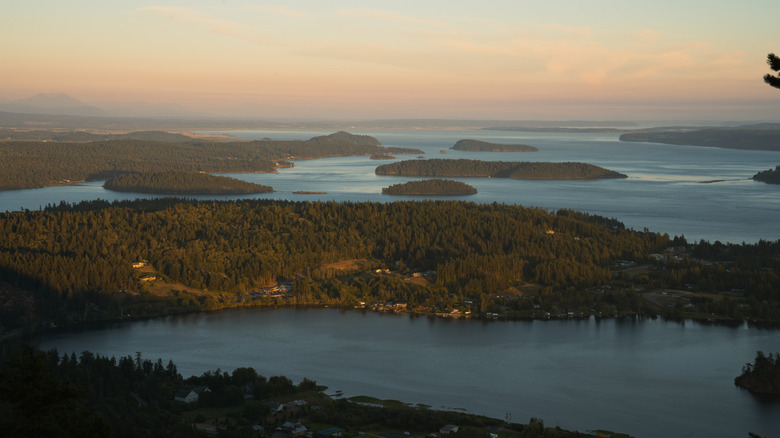
As you drive north out of the bustling West Coast metropolis of Seattle, Washington's beauty begins to reveal itself. Taking Interstate 5 out of the city, you'll find Puget Sound with its numerous archipelagos and quiet bays, including Skagit Bay on the northern tip of this serene area. Goat Island sits amidst its waters, with Fort Whitman tucked far away from view, a silent witness from a bygone era.
Long overgrown by trees and ferns, Fort Whitman has been abandoned since the aftermath of World War II, but its inception dates back to 1909. To the modern visitor, it may be quite an enigma to understand what the military aimed at. With Washington so far removed from any potential enemies in this corner of the North Pacific, the answers lie obscured by history now largely forgotten.
But with Puget Sound forming a strategic inlet leading to Seattle and the nearby Bremerton naval base, the U.S Navy had concerns at the turn of the 20th century that the growing Russian and Japanese navies might one day venture too far. So several large forts were built overlooking the key passes that granted access to the Seattle area, including Fort Ebey, now a 651-acre scenic escape. They formed what would be termed a "triangle of fire," a system of defensive positions for artillery. The smaller Fort Whitman was built for similar reasons, to protect Deception Pass.
Fort Whitman's life and legacy
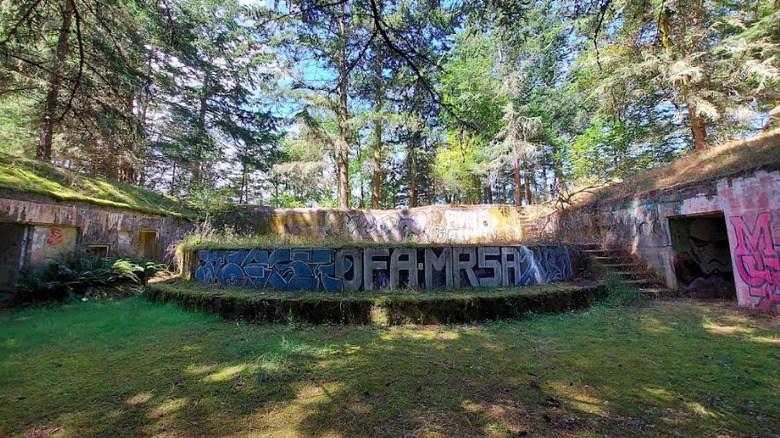
Fort Whitman was built during the Endicott Period, when a great amount of modernization was taking place across the U.S military's coastal defenses. Defined by the advent of reinforced concrete fortifications and larger artillery — those strong walls can still be seen on Goat Island — Fort Whitman was completed in 1911, tiny yet mighty. It boasted four modern 6-inch guns that could fire and disappear behind into concrete bunkers, which the garrison never ended up needing to use on any enemy forces.
The fort was deemed surplus by the military in 1947 and handed over to Washington State, which entrusted it to the Washington Department of Fish and Wildlife. Today, this remote island is a hiker's, paddler's, and urban explorer's delight. Fort Whitman's existence seems to be somewhat of a locally kept secret, neither advertised nor promoted by the Department of Fish and Wildlife. The island is, however, open to visitors, although camping overnight is not officially allowed.
Today, the fort's remnants paint an otherworldly time capsule. Its concrete fortifications are covered both in rich moss and colorful graffiti, the site surrounded by the encroaching forest, hidden away from the world. The Fire Control Station, where the former gun emplacements stood, is still accessible, as well as some of the fort's underground rooms. Goat Island's silent guardian has decidedly retired, like its neighboring big brother, Fort Worden, now a popular historical state park with scenic beaches, camping, and more tunnels.
How to get the most out of your visit to Fort Whitman
So how do you set out on this coastal adventure? The only way is by boat, surrounded by the gorgeous scenery of Skagit Bay, its cliff faces bearded with dense forests. The closest starting point from the mainland can be found in the bustling town of La Conner, with a relatively short 3-mile paddle to Goat Island. Kayaking is the most efficient method of reaching it, unless you have a pleasure craft handy.
A popular site for many kayakers is right next to the Rainbow Bridge on the outskirts of town. According to explorers on mountaineers.org, it's best to paddle during high tide. At low tide, you may encounter several wide tracts of mudflats in the area. After you've calculated the right conditions for navigating this section of the waters known as the Swinomish Channel, pack a flashlight for exploring the fort's passageways, and some snacks and water, along with other necessities.
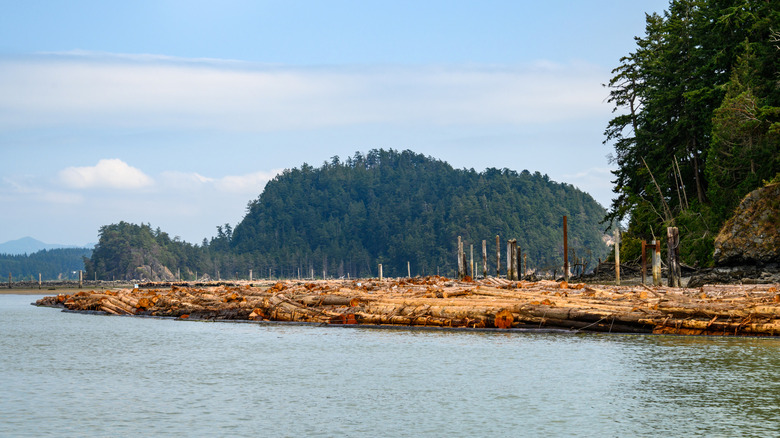
The best landing spot can be found on the island's northern face, past the old pilings that are the remnants of the fort's wharf. Find the small opening with a cove next to the piled-up logs, and Fort Whitman is an uphill hike that takes roughly 10 minutes. Should you catch the abandoned fort explorer's fever, this beautiful expanse of Washington offers more than a few, including Fort Casey, nestled in one of Washington's oldest towns.