
Not Sicily, Not Santorini: This Is The Most Popular And Talked About Island In Europe
We may receive a commission on purchases made from links.
While Sicily and Santorini may have more visitors each year, a Spanish party island holds the trophy for being the most popular and talked about online. Ibiza garnered over 20 million hashtags on Instagram — compared to 18.6 and 8.5 million for Sicily and Santorini respectively. Plus, Ibiza consistently outpaces Santorini and Sicily in global search popularity on Google Trends in 2026, with "average interest" in the keyword "Ibiza" tracking three times higher than the others. Clearly, Ibiza is the "It Girl" of these three European islands.
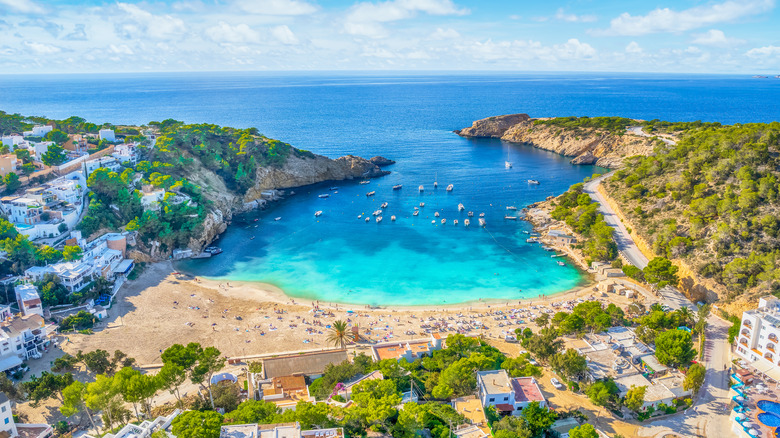
With a glitzy party scene and plenty of idyllic daytime activities to keep you entertained, it's no wonder Ibiza is the talk of the town on social media. For decades, hedonists have flocked to this island each summer to indulge in its music and clubbing scene, and to attend parties at one of the world's premier destinations for electronic music, Ushuaia. Not only that, but Ibiza in the daytime is also a beauty to behold with sandy white beaches and sparkling blue Mediterranean waters, perfect for daytime beach parties or glamming it up on a swanky boat. All in all, if you love partying in a "see and be seen" atmosphere, Ibiza is absolutely the place to be, both in-person and online. But, there's more to this popular island than meets the social media eye.
There's more to Ibiza than partying: quiet beaches and stunning hikes
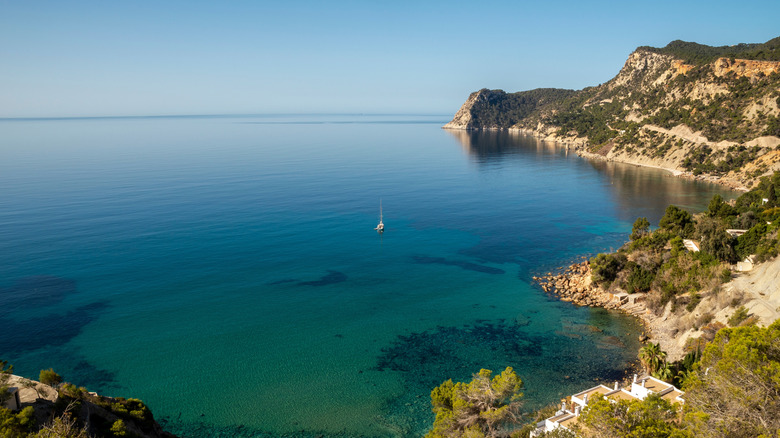
Ibiza is one of four Balearic islands off the coast of Spain, including Menorca, Formentera, and Mallorca, a top spot for hiking. Of these islands, Ibiza's reputation is mostly known for thumping EDM, foam parties, and eye-catching laser effects — less for its natural beauty and history. However, it's possible to escape the crowds and discover its quieter side. In fact, Ibiza is home to many peaceful hikes and quiet beaches like Cala Saladeta.
One trail originating near Sant Joan de Labritja on the northern part of the island takes you on a 4-mile loop through a bit of everything Ibiza's nature has to offer — from stunning seaside cliffs and white sandy beaches to forests and terraced hillsides. Want a bird's eye view? Try the 4.7-mile loop from Caló des Moro on the west side of the island with elevated vistas of Ibiza's coastline and the town of Sant Antoni. There are many to choose from, but regardless of which you take, go earlier in the day, wear a hat and sunscreen, and bring lots of water and some snacks. This advice is doubly important if you've been partaking in the typical island festivities!
If you're looking for an even more laid back afternoon away from crowds, explore a secluded pebble beach like Cala Llentrisca. To get here you'll need to drive and follow specific directions to find a semi-hidden trail. However, it's well worth it to have a beach almost all to yourself, save for a few fishermen's huts. If you're not feeling that adventurous, try Cala d'en Serra, a small sandy cove with crystal clear waters. This beach is easier to get to but still requires a car and a short walk, making it a quiet escape compared to other beaches in Ibiza.
Visit Ibiza's UNESCO World Heritage Sites
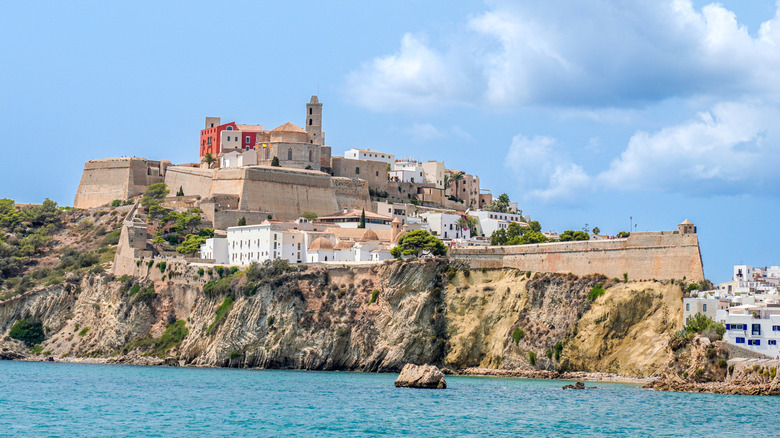
Ibiza is also home to four UNESCO World Heritage Sites: Dalt Vila, Puig des Molins, Sa Caleta, and Posidonia Oceanica — all of which are Instagram worthy spots, but without the party crowds. Dalt Vila is the historic Old Town in Eivissa which features medieval and Renaissance architecture. Puig des Molins is the ancient necropolis that houses the tombs of the early Phoenician settlers, and there's an archeological museum here as well. These two sites are located about 15 minutes walking distance of each other. Sa Caleta, the earliest evidence of Phoenician settlement on the island, is located further south and can be reached by car or bus in about 40 minutes from Eivissa. These three locations can easily be visited in one day, showcasing the breadth of Ibiza's long colorful history.
If you're up for a snorkeling trip or are SCUBA certified, the last UNESCO site, Posidonia Oceanica, is actually a marine area that's home to "Neptune Grass" which creates an ecosystem that helps local Mediterranean sea life thrive and prosper. According the Archipelagos Institute of Marine Conversation, these grasses "can absorb 35 times more carbon than tropical rainforests." Here you'll see a diversity of fish and other marine life, including sea horses, which call these grasses home. You can even snap pictures underwater with a water-proof phone case, they'll surely be as talked-about as any party pics you might post!