
Why East Coast Trails Are So Much Harder To Hike Than West Coast Trails
The West Coast's Sierra Nevada and Cascade mountain ranges soar to greater heights than their East Coast counterparts, the Appalachians and the Adirondacks. This is why the Pacific Crest Trail, which often ventures above the treeline on the slopes of soaring peaks, is known for big views. Meanwhile the Appalachian Trail is nicknamed the "Green Tunnel" because it sticks to lower elevations among the trees.
Despite this, there's a rough consensus among hikers and trail historians that the East Coast's trails are generally steeper and harder than those on the West Coast. Some hikers cite the East Coast's high humidity as a reason outdoor ambulation can be more challenging there than in the generally drier West. But that has more to do with the hiker's fitness and acclimatization than with the trails' inherent difficulty.
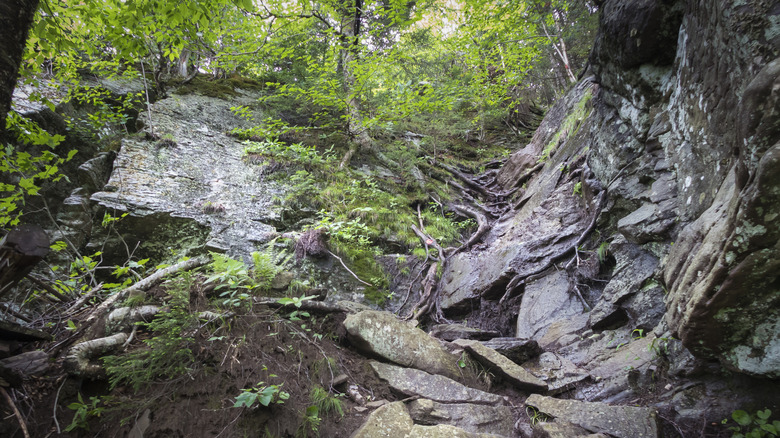
The real answer to why the East Coast's trails are harder than the West Coast's comes down to a single word: switchbacks. West Coast trails have 'em; East Coast trails, not so much. According to Backpacker magazine, one reason the West Coast trails carved out in the 1880s used switchbacks — sharp U-turns that allow for more gradual climbs — was that they were designed for pack animals to transport gear over high mountains. Meanwhile on the East Coast, steep trails were initially built for recreation in the early days of mountain hotels that wanted to offer guests a hike to an outlook, but were limited by the confines of the property they owned — hence a straight shoot up was the best they could do.
It's a common myth that the West's trails were all built later than those on the East Coast, using superior switchback technology. Instead, many reports note that East Coast trail builders who came along after the initial rise of land-limited steep trails actually knew all about switchbacks. But as the story goes, by then, Eastern hikers just preferred hikes with a steeper grade for the challenges they posed.
Some examples of the East Coast's most difficult trails
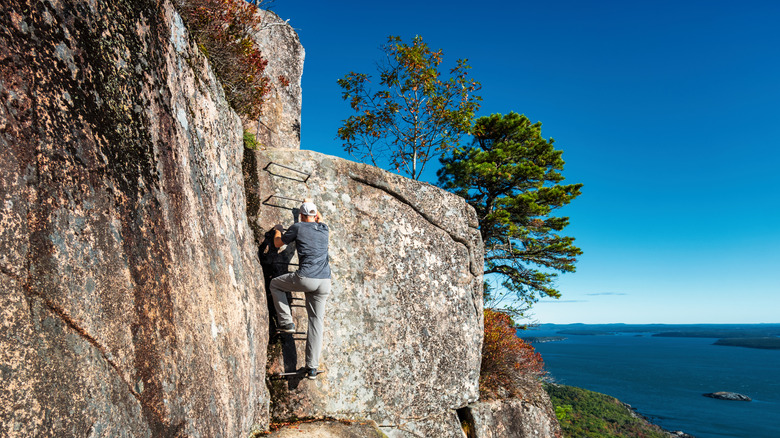
One of the Northeast's most notoriously brutal trails is the Devil's Path in the scenic Indian Head Wilderness, in New York's Catskill Mountains. In 22.5 miles, it gains over 8,000 feet in elevation, spread across five summit peaks. "Last 5 miles will have you cursing the devil himself," writes one AllTrails user. An even tougher one is New Hampshire's dangerous Presidential Traverse in the White Mountains, which gains 8,200 feet in 18.4 miles. Not all of the East Coast's hardest trails are long. Maine's Precipice Trail in Acadia National Forest is short, at just 3.2 miles, but one 0.9 mile section gains 1,000 feet, at times so steep hikers must ascend rock faces via iron ladder rungs.
Of course, the West Coast has its share of steep trails, too. The hike to the summit of Mount St. Helens is a prime example. The Washington State volcano erupted in 1980, blowing the top of the mountain off. Today nearly half of the hike to the mountain's new, lower summit of 8,365 feet elevation isn't over a built-up trail at all, but ascends a boulder field that climbs 4,500 feet in five miles. The alternative route is a 45-degree slippery ash slope. But that level of difficult verticality is an exception on the Left Coast. By contrast, the hike up California's Mount Whitney, the tallest peak in the contiguous United States, climbs 6,600 feet in 21.7 miles, with plenty of switchbacks along the way. Whew!
What hikers who have tackled both East and West Coast trails have to say
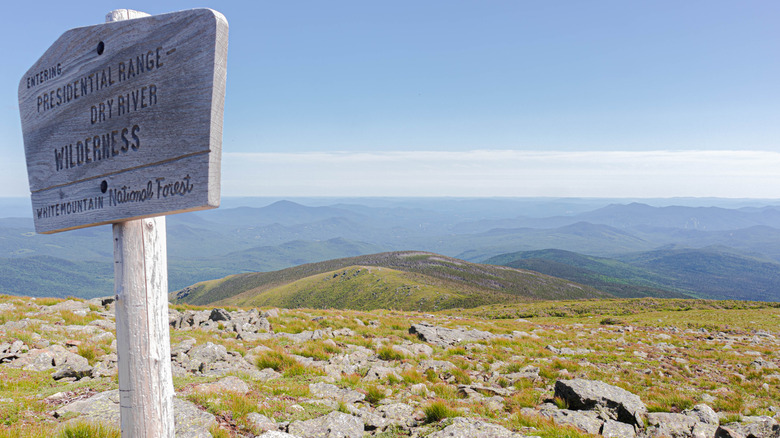
One hiker who grew up hiking New Hampshire's White Mountains wrote about her experience moving out West in Backpacker: "I found I could cruise along miles of ergonomic, inviting switchbacks at 9,000 feet with more ease than navigating the jumbled rockfalls of New Hampshire trails. In the White Mountains ... if you wanted to reach the summit, you understood there would be no switchbacks and only rare instances of dirt tread." Still, she waxed nostalgic for those difficult East Coast trails, despite their grueling profiles.
Another good source for anecdotal evidence are the reports of veteran thru-hikers who have completed both the Pacific Crest Trail (PCT) and Appalachian Trail (AT). "The PCT is graded for pack animals, whereas the AT at times seems like it's graded for mountain goats. This means many of the climbs on the PCT are not as brutally steep as on the AT," one writes on The Trek. "The A.T. is more physically challenging," writes another on LengthyTravel. "That was undoubtedly due to the countless PUDS (pointless ups and downs)."
That thru-hikers have taken the trouble to coin an acronym — PUDs — for the frustrating configuration of the East Coast's most famous trail says a lot about how harsh hiking without switchbacks can be. "The AT is designed and maintained to be a rougher trail: Its elevation gain per mile is 420', vs 310' for the pct, and the maintainers leave the roots and rocks in the trail," writes one user in Facebook's Pacific Crest Trail group, quantifying the distinction. As for which type of trail you'll find harder, East Coast or West Coast, the best way to find out is to get out and hike them both.