
Outside Orlando Is Florida's Once-Thriving Ranch That's Now A Wildlife Site With Trails And Primitive Camping
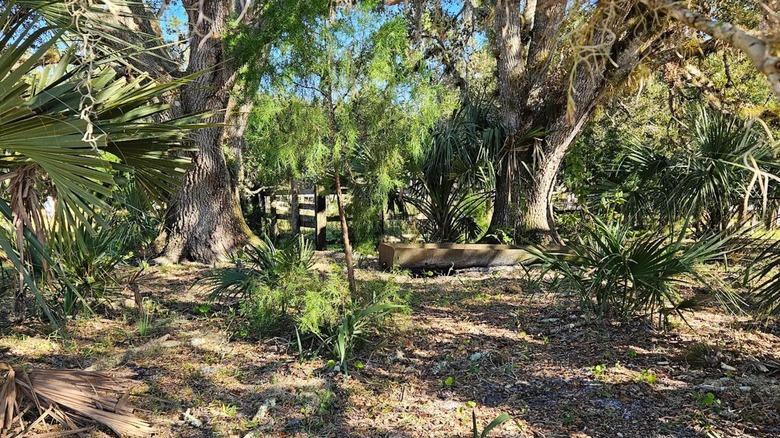
If you think Florida is just a mix of beaches, swamps, and theme parks, you'd be forgiven, as there is much of that to be had. Yet there's so much more to the Sunshine State. Once a humid swath of undeveloped land, Central Florida drew ranchers and farmers who cultivated citrus groves, raised cattle, and grew tobacco and sugarcane. By the early to mid-1900s, a surge in population and development had begun to change Florida's landscape. But a spirit of conservation has helped preserve many of its natural resources and waterways, including Seminole Ranch Conservation Area, a nearly 30,000-acre expanse of tranquil land with miles of trails, diverse habitats, and opportunities for outdoor recreation along the St. Johns River. This sprawling area feels remote, yet it's only about 25 miles from Orlando's hustle and bustle.
Seminole Ranch was once a vast cattle ranch, and in the 1980s, it became the first land acquired through Florida's Save Our Rivers program, an initiative that focused on ecosystem management and water treatment. Not only is the conservation area valuable for protecting plants and wildlife, but it also provides essential floodplains that help store water and control flooding for the Orlando area and beyond. It encompasses 12 miles of river, and roughly 96% of the property lies within the river's floodplain.
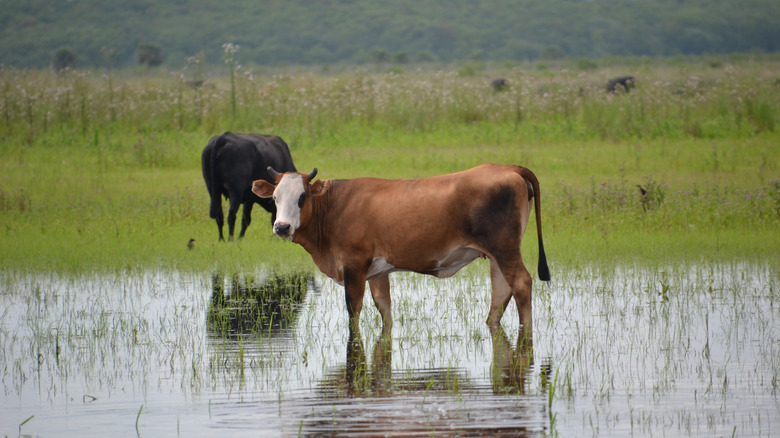
A patchwork of lakes, palm and hardwood hammocks, marshes, and fields rich in avian and wildlife habitats is dotted not only with wildlife and stray cattle but also with traces of old fences and crumbled foundations, some attributed to the Pennsylvania Club — a turn-of-the-century group that held hunting retreats. Seminole Ranch Conservation Area is part of the eastern section of the Great Florida Birding and Wildlife Trail, where birders might spot bald eagles, roseate spoonbills, pelicans, sandhill cranes, swifts, herons, and ibis, along with wild turkeys and migratory fowl.
Rustic recreation abounds
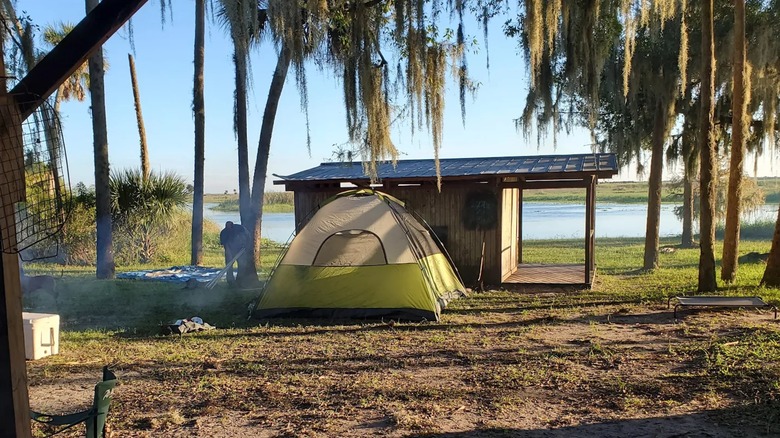
The St. Johns River is known as "the river of lakes" for the thousands of lakes throughout its watershed. At Seminole Ranch, mineral-rich waters support unique wildlife and plants that thrive in the brine of lakes such as Loughman Lake, Salt Lake, Silver Lake, and Puzzle Lake. While the conservation area lacks amenities found in many state or national parks — expect portable toilets or pit toilets rather than visitor centers — it offers equestrian and hiking trails as well as access for fishing, boating, and paddling. It's worth noting, however, that trails can flood seasonally. One easy path starts at the area's northern end to an observation tower with views over Loughman Lake. Part of this section of the Florida Trail includes a 4.6-mile trek, starting from a southern trailhead near Christmas, an old frontier town and home to "the world's largest gator" just 23 miles south.
There's also primitive camping available at designated sites along the Florida Trail. One campsite is nestled near Fishhawk Pond, while another is located at the Seminole Ranch Conservation Area trailhead. At the southern end of the property, Hatbill Park, a 15-acre riverside park, provides boat-ramp access to the St. Johns River as well as a small number of primitive campsites. More boat access can be found at Midway Fish Camp — where visitors can also take airboat tours — and at Orange County public boat ramps, including one along Highway 50.
The conservation area is also a renowned wildlife site. White-tailed deer, southern leopard frogs, snakes, and alligators are known to inhabit the prairies, marshland, and woodlands. And tucked in the conservation area's southwestern corner, the Seminole Ranch Wildlife Management Area is a 6,000-acre segment that allows seasonal hunting for turkey, deer, and small game, subject to Florida hunting regulations.
Getting to and around Seminole Ranch Conservation Area
Seminole Ranch Conservation Area is located about 10 miles west of Titusville, along the unique stretch of Florida's "Space Coast" near Cape Canaveral and the infamous rocket launches. It spills into four counties and is managed by the Florida Fish and Wildlife Conservation Commission in partnership with the St. Johns River Water Management District. Its eastern boundary is roughly the St. Johns River, and its general southern edge runs along Florida State Road 50. Several entrances and parking lots are located along Hatbill Road. The best way to access the preserve is by vehicle, and the closest airport is Orlando International Airport, about 50 miles southwest.
Though expansive on its own, Seminole Ranch is part of an even larger collection of public lands, which the state of Florida has indicated it will continue to expand. These lands include the adjacent Orlando Wetlands, a unique park and wastewater treatment facility that blends engineering innovation with protection of natural habitats and lands, as well as the Tosohatchee Wildlife Management Area, St. Johns National Wildlife Refuge (now closed to the public to protect sensitive nesting grounds), and the Little-Big Econ State Forest, tucked along Florida's best-kept secret, the Econlockhatchee River.