
What The Most Popular Amusement Parks Have In Common (And What They Don't)
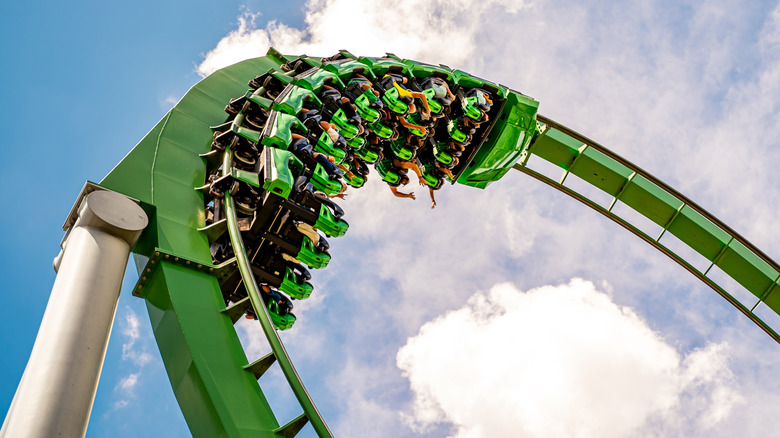
Orlando is home to some of America's most popular amusement parks: Universal Studios and Disney World. It's not typically a question of if you should go; rather, which one you should go to. These theme parks have quite a few similarities and some jarring differences that might surprise you. Growing up in Florida, the shorthand was simple: Universal for thrills, Disney for families. Rides like The Hulk and Revenge of the Mummy at Universal provide more hair-raising fun, catering to an older crowd, meanwhile the Slinky Dog Dash and Spinning Teacups at Disney are more tailored to please all ages.
From brand power and on-site tech to ticket prices and dining philosophy, the two parks share a playbook...until they don't. Some guests notice these discrepancies right away — like the ones who booked the reservations and had to sort out ticket prices — others don't notice until they get to the parking garage. The same rivalry plays out on the West Coast, too — where Disneyland and Universal Studios Hollywood bring the same energy to Southern California. No matter which park (or state) you go to, the debate is the same, and the details are worth noting before you book.
Similarities between Disney and Universal Studios
Both Disney and Universal run on the power of recognizable brands. You're either meeting princesses at Disney or shaking hands with superheroes at Universal — and those identities anchor everything from the rides to the restaurants. To help guests experience as much as possible, both parks also lean into technology with virtual queues, app-based planning, and skip-the-line passes. Disney's Lightning Lane and Universal's Express Pass make it easier to pack more into a single day. While Universal's Express Pass can be more expensive, you'll have ultimate flexibility, while Disney's Lightning Lane requires scheduling.
For those who want extended stays, both parks make a case for accommodations on the grounds. Disney's Port Orleans Resort — French Quarter and Universal's Cabana Bay Beach Resort are just two examples of how each park furthers the experience before and after hours, with perks like early entry that make the reservation worth it. While price points vary depending on which resort you choose, it's worth looking at commute efficiency, too. Disney is nearly 40 square miles, where monorails and buses will be needed to get to the park. Universal's smaller layout means most resorts are walkable to the gates, with complimentary shuttles for those that aren't. Otherwise, day pass parking is between $30-$36 for a standard garage space at both parks, as of this writing.
The same applies on the West Coast, with one key difference: unlike its Orlando counterpart, Universal Studios Hollywood has no on-site hotels, making lodging a bigger consideration for California-bound visitors. For all that they share, Universal and Disney also have some significant differences, which could ultimately change how you plan your visit.
How Disney and Universal Studios differ
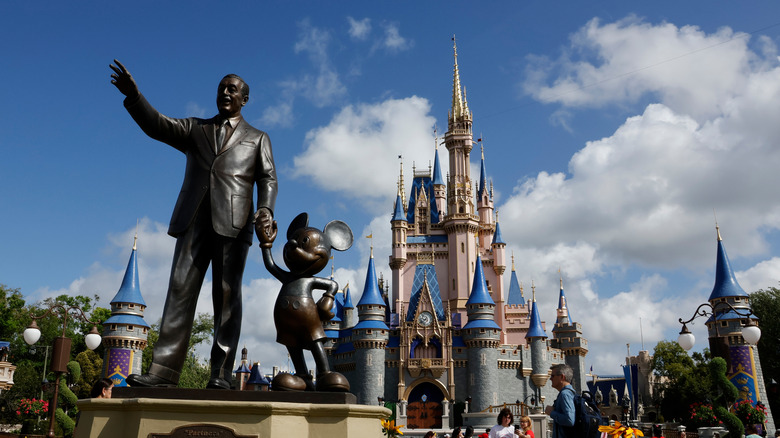
Aside from brand identity, the biggest difference between the two parks is the cost. Not only have park prices steadily increased at Disney World and Universal Studios, but the competition between the two is steep. Universal offers a five-day promotional ticket for a low average cost of $310, whereas Disney World offers a four-day ticket for $660, as of this writing. Note that these prices are subject to change based on the time of year you book, and there can be hidden costs at Disney and Universal that you should factor in, too, from locker rentals to dining no-show fees.
The price gap isn't the only thing that sets them apart. Both parks run seasonal festivals and events that shift peak season crowds throughout the year. Disney's EPCOT International Food & Wine draws food lovers with celebrity chef events — including appearances from "MasterChef" winners — while Universal's Mardi Gras brings a full parade, live concerts, and Cajun-inspired eats to the mix.
Disney takes a broader approach to dining options, showcasing international cuisines in EPCOT and character dining at spots in Magic Kingdom, like Cinderella's Royal Table. Disney also has a clear edge in fine dining, with its Signature Dining tier offering elevated multi-course experiences at spots like Narcoossee's at the Grand Floridian. Universal, on the other hand, has more immersive experiences. Guests can enjoy treats like the massive donut from "The Simpsons" world of KrustyLand or taste Butterbeer in Hogsmeade from Harry Potter World. Here, guests don't just feel like they're bystanders to the film, but one of the characters. The park leans toward themed comfort food, but the trade-off is value over variety, with more budget-friendly options. Although there are different prices, vibes, and universes to immerse yourself in, they both foster the same result: you'll be back soon.