
Rocky Mountain National Park's Unique Wildlife Travelers Would Be Thrilled To Find
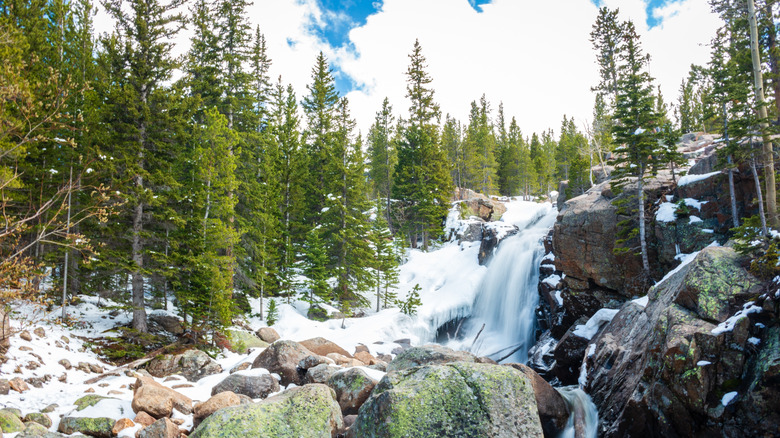
Rocky Mountain National Park encompasses just over 400 square miles of land, west of Estes Park. While this hidden gem of national parks is not overwhelmingly large, it is home to a dizzying array of birds and animals. Among the unique wildlife found in Rocky Mountain National Park are endangered species, massive mammals, and colorful insects. Even better for wildlife watchers, it's among the best Denver day trips for outdoor thrills, as it's located less than a 1.5-hour drive from the Mile High City.
All told, there are more than 65 species of mammals and nearly 300 different types of birds that call Rocky Mountain National Park home. Add to that well over 100 different kinds of butterflies, along with numerous reptiles and amphibians, and the diversity of wildlife in the park becomes evident. However, it isn't just the sheer volume of animals that makes Rocky Mountain National Park such a great wildlife-watching destination. The park is home to a handful of endangered species, as well as numerous animals that aren't found outside the Western United States, further adding to its allure for nature and wildlife lovers.
Bighorn sheep
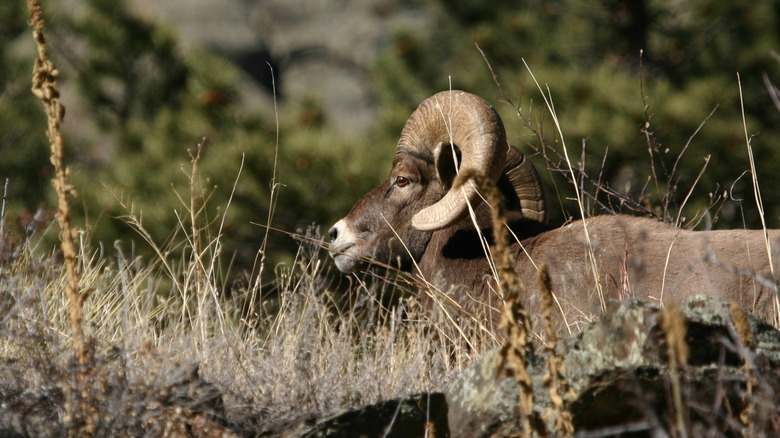
Bighorn sheep are emblematic of the mountainous regions of the Western United States. In fact, they're the emblem of Rocky Mountain National Park. Although there are between 300 and 400 bighorn sheep in the park, they aren't always readily seen, choosing to hang out in steep, rugged, rocky areas. Your best chance of catching a glimpse is from late spring to early summer at the aptly named Sheep Lakes. Bighorns come here in search of key minerals that they can't find in the vegetation at higher elevations.
Black bear
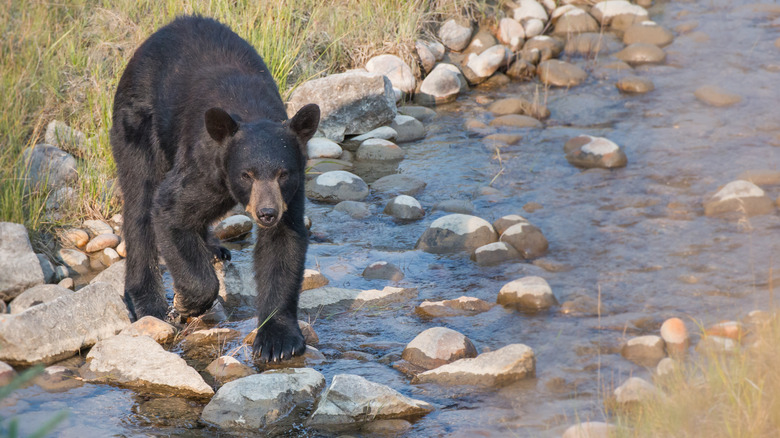
Rocky Mountain National Park is bear country. Like the rest of Colorado, this portion of the state only has black bears, which are typically not as aggressive as grizzlies. Nonetheless, it's a good idea to know what to do if you see a bear while hiking or camping before entering the park. Black bears are most commonly seen in areas with berry bushes, laden with ripening fruit, a major part of their diet. If you do happen to see a bear in the park, it's recommended to stay at least 120 feet away.
Elk
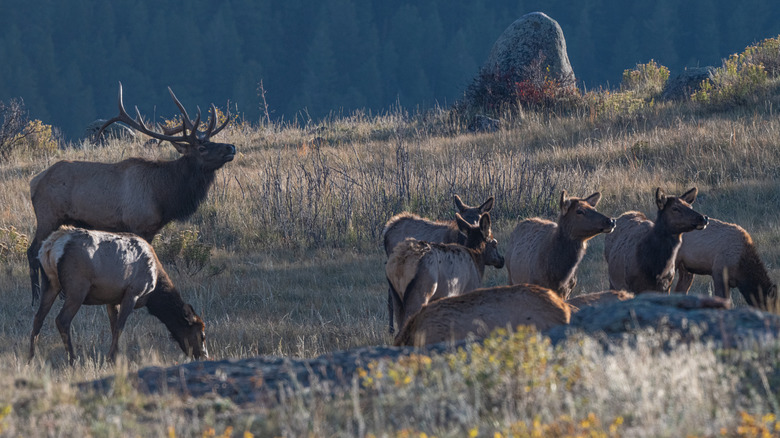
Elk are one of the largest mammals in Rocky Mountain National Park, where they live in abundance. With the exception of summer, elk can be found in the park's meadows at lower elevations, moving higher into the mountains in search of cooler temperatures in July and August. It's not uncommon to encounter elk at a relatively close distance. However, it is important to maintain adequate space — at least 75 feet — as they have been known to charge.
Gray wolf
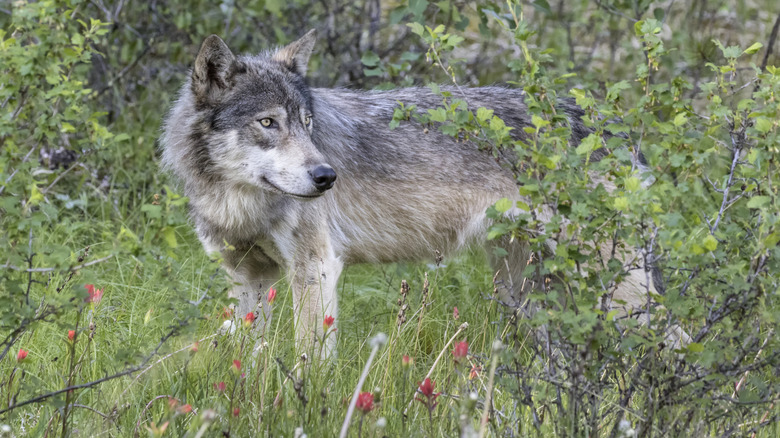
The gray wolf is a unique species to see in Rocky Mountain National Park for a couple of reasons. First, although they are native to the park, by the mid-1900s, they had been extirpated from the entire state of Colorado. However, in 2023, wolves were reintroduced to an area just outside the park. While they are still very few in number, seeing one of these wild canines in the national park is possible, as tracking data shows they move through the RMNP. Should a wolf be spotted, it is recommended to stay at least 300 feet away.
Moose
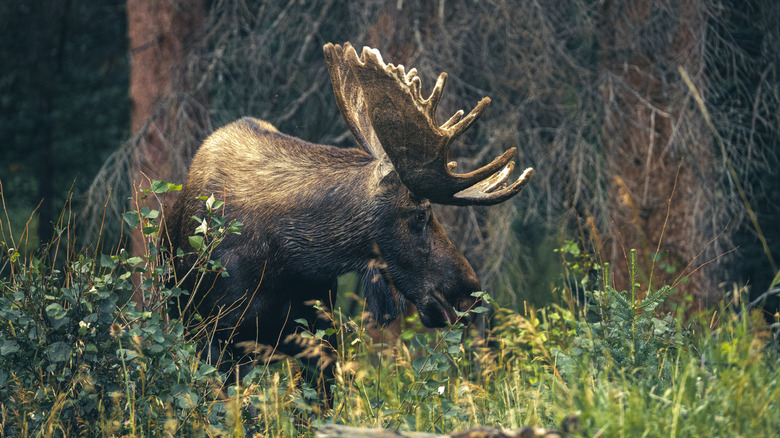
Moose are the largest animals found in Rocky Mountain National Park. Despite the fact that they are not indigenous to the region, RMNP is considered one of the best national parks to see moose. The moose in the park today are the descendants of two herds, introduced in the late 1970s. While these moose herds were not introduced directly into the park, they quickly multiplied and spread to cover a vast stretch of the Rocky Mountains, including RMNP. Unlike elk, moose are solitary, and it's typical to see just one at a time.
Pika
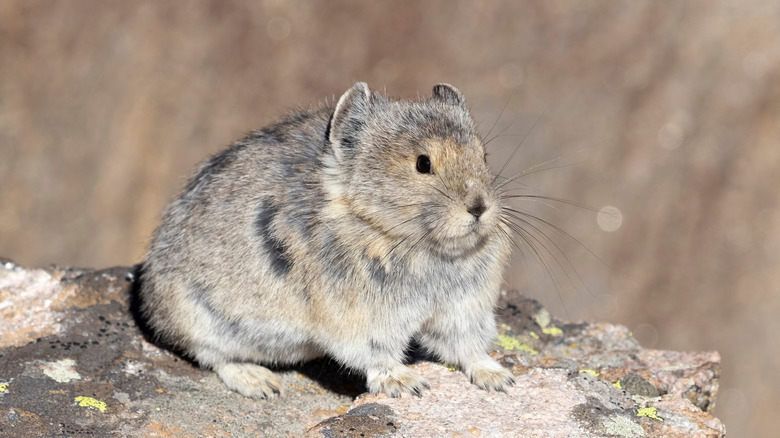
On the opposite end of the size scale from moose are pika, one of the smallest mammals in Rocky Mountain National Park. Although they are often described as rodents and have a similar appearance to guinea pigs, they are actually more closely related to rabbits. They are typically found above 8,000 feet in elevation and can be seen scurrying along the rock piles in the alpine tundra areas of the park. Due to their size — about 6 inches tall — and ability to quickly scurry into rocky crevices, they are sometimes difficult to spot. They are also known for frequent, high-pitched squeaks that are easily heard.
Red crossbill
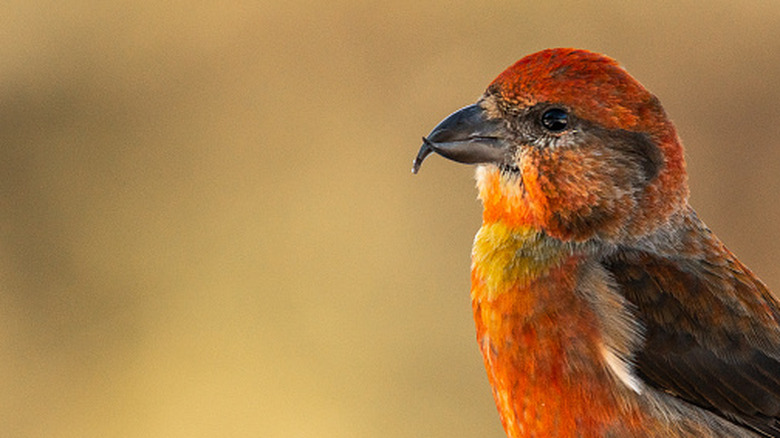
At first glance, the red crossbill may appear to be like any other member of the finch family. However, upon closer inspection, it's evident this bird has a different look entirely. As the name suggests, the upper and lower portions of the red crossbill's beak, or bill, cross in an X shape. This somewhat bizarre feature luckily doesn't impede its ability to forage for seeds. In fact, it is designed to aid them in removing seeds from pine cones, one reason why you'll typically see them roosting in conifer trees. Male red crossbills are almost entirely red with black wings, while females are a yellow-green in color.
White-tailed ptarmigan
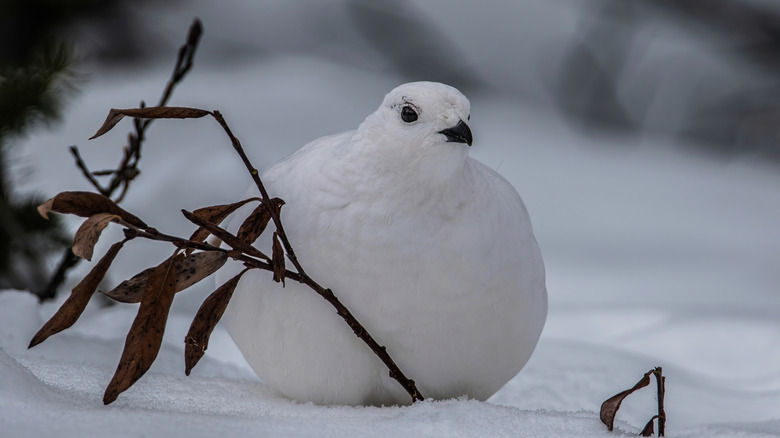
When it comes to birding, the most common practice is to look up into tree limbs or the sky above. However, when attempting to spot a white-tailed ptarmigan, it's best to keep your gaze trained on the ground. Even then, it can be difficult to spot this small member of the grouse family as the white-tailed ptarmigan is a master of disguise. For the majority of the year, their plumage is a mottled pattern of black, brown, and white, designed to match the rocky terrain of RMNP. However, in winter, their feathers turn pure white, helping it to blend in with the snow-covered ground.
Yellow-bellied marmot
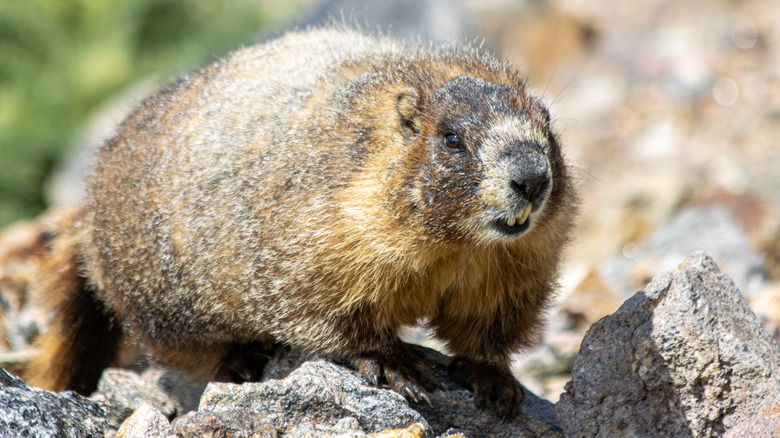
Unlike pika, yellow-bellied marmots are true rodents. In fact, at 2 feet long and weighing more than 10 pounds, this member of the squirrel family is the biggest rodent in the park. They are frequently spotted lounging in the sun along rocky outcrops in high elevation areas. Yellow-bellied marmots are known for exuding a relaxed demeanor. However, they are also known for extended hibernation. If you're hoping to see one, visit during late spring or summer, as they typically stay in their burrows from as early as September through May.