
What Is A Hotel Panic Button?
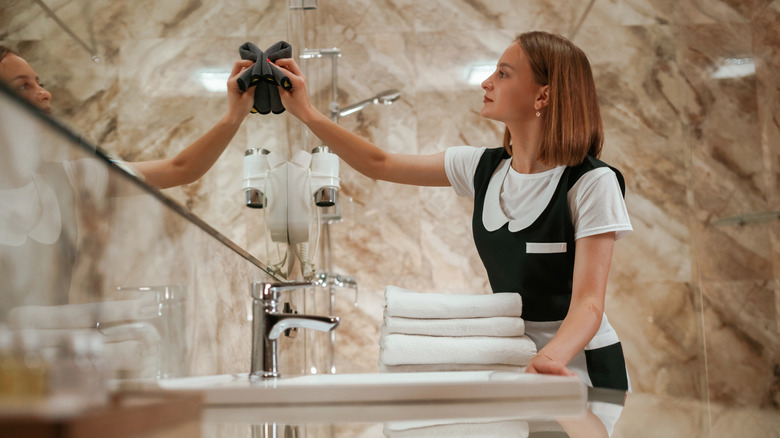
As travelers, we often overlook the many hotel employees who come together to ensure our holidays go smoothly. Perhaps more shamefully, we don't realize what they go through at the hands of guests with less-than-benign intentions. Many of these employees even carry panic buttons to stay safe.
According to a 2016 study by the hospitality workers union Unite Here, 58% of Chicago's hotel workers reported being sexually harassed by a guest at work. Following the #MeToo movement, in which women across industries spoke up against sexual harassment, hotels began adopting new tech-innovative ways to protect their employees. In 2018, the American Hotel & Lodging Association launched its 5-Star Promise, which included a pledge to provide staff with hotel panic buttons to protect them from predatory guests. Hotel panic buttons — aka Employee Safety Devices (ESDs) or Lone Worker Safety Technology — are small, wearable devices given to employees in the hospitality industry so they can alert security or any relevant authority when they believe they're in danger.
They typically use a combination of cellular, Bluetooth, and Wi-Fi signals to pinpoint the employee's exact location, down to the floor and room number. States like Washington, Illinois, and New Jersey have statewide mandates to provide hotel staff with ESDs, while cities like Miami Beach, New York City, and Los Angeles have local ordinances for the same. There's no exact data on how often they're used, but employees have reported feeling safer with an ESD. "At any moment, help is there if you should need it," Rani Accettola, a housekeeper at the Embassy Suites by Hilton, told the Las Vegas Review-Journal.
Do panic buttons actually help hotel staff?
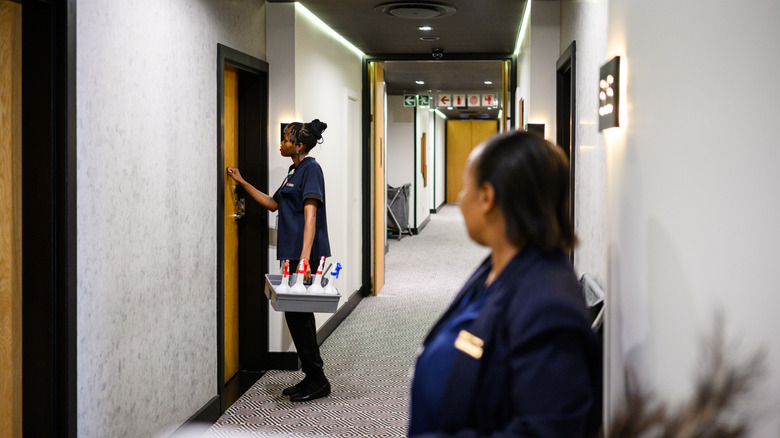
For years, hotel staff have fought to bring attention to their safety needs. The hospitality industry's main hurdle was balancing employee safety with customer service. Traditional camera surveillance was out of the picture, as travelers also need to feel safe during their hotel stay. Meanwhile, phones or phone-based systems can take too long for employees who need to summon help in a split second. Juana Melara, a room attendant in Long Beach who was a victim of inappropriate guest behavior, told The Economic Times that she had to wait over 20 minutes for her employer to respond.
That's why one-click panic buttons became the industry solution. With a single click, employees can silently trigger an alarm, allowing them to know that help is on the way without alerting — and possibly agitating — the person threatening them. "The difference between a manageable situation and a full-blown crisis often depends on how quickly help can be summoned and whether the worker can do so without escalating the situation," Kenny Kelley, CEO of Silent Beacon, which provides silent panic buttons to hotels, told Employee Benefit News.
So how do we ensure we're part of the solution and not the problem? For one, you can do your best to leave your room relatively tidy to avoid adding to the housekeepers' already full plate (you would not believe the things housekeepers have found in vacated rooms). Another simple thing you can do is vacate the room while hotel staff are cleaning — it helps the housekeeper feel secure and is just one of a few things that make you a better guest. This way, they can work without worrying about guests locking them inside or ogling them as they work.