
Between Wilmington And Charleston Is A Former Southern Plantation That's Now A Historic Site With A Nature Trail
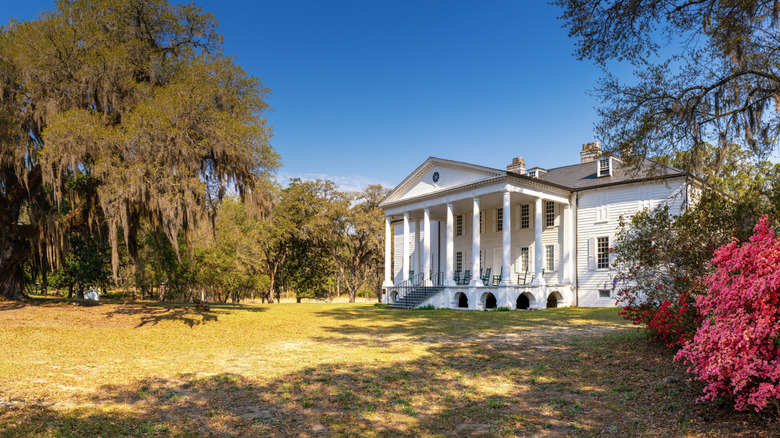
When you visit a historic Southern plantation, you get insight into the two extreme poles of American life prior to the Civil War: wealthy plantation owners living on stunning properties full of beautiful architecture on one hand, and the enslaved workers who endured horrifying conditions to make it possible on the other. The Hampton Plantation in South Carolina, now a state historic site, doesn't shy away from making its history visible. The site's grand mansion is accompanied by slave dwelling remnants, tours covering the lives of the estate's inhabitants, and two cemeteries on its grounds, where enslaved people and plantation owners are buried.
Located between Wilmington and Charleston in the Santee River Delta, the Hampton Plantation's riverside setting was an essential part of its operations. The plantation cultivated rice, and those rice crops were dependent on the waters flowing from the South Santee River, according to South Carolina State Parks. You can still see a now-fallow rice field on the historic site's nature trail. Beyond just rice, the lowcountry grounds are lush with flora, informed by plaques along the nature trail. The natural scenery and historic structures are inseparable here, each telling the story of how the plantation functioned.
The history of the Hampton Plantation's grand mansion
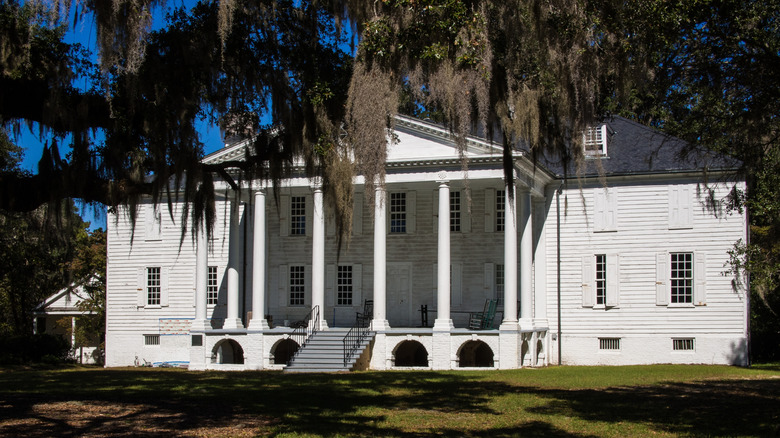
The Hampton Plantation's history is one that involves rice, wealth, and George Washington, all located on a tract of land south of Andrews, the friendly South Carolina town with old-fashioned charm. While the centerpiece of the plantation today is the grand, Georgian mansion, it began as a mere one-and-a-half-floor house built in 1735, according to the site's National Register nomination form. It was expanded throughout the 18th century, featuring a sprawling portico with an embellished frieze, one of the first examples of its kind in the U.S. In 1791, George Washington paid a visit to the Hampton Plantation, as the Charleston Museum tells it. He left one lasting mark on the property: a huge oak tree. The oak tree was going to be cut down, but Washington convinced the family living there at the time to keep it. The tree still stands in front of the mansion now as the "Washington Oak."
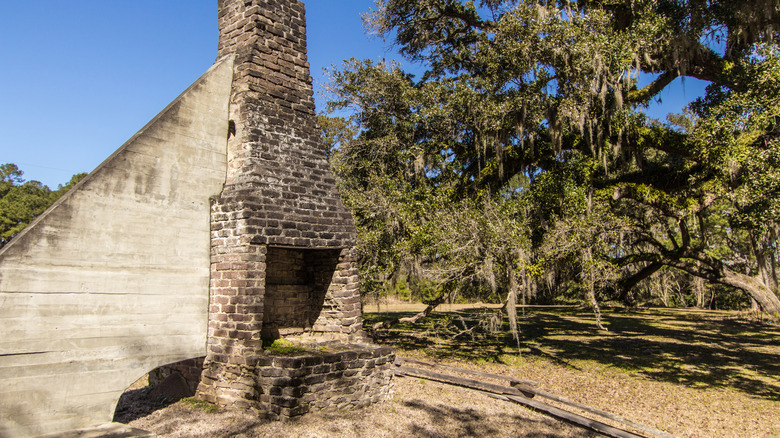
During its most active years, the plantation had about 340 enslaved people living and working on its property, according to South Carolina State Parks. The laborers worked not only on the rice fields, but also as carpenters, servants, blacksmiths, and more. It was the work of these enslaved people that financed the mansion's enlargements. One of the more harrowing relics of the grounds visitors can see is the foundations of a slave dwelling that was excavated. Though the building itself is gone, a rendering gives visitors an impression of what the dwelling looked like — a modest structure in contrast with the sweeping mansion.
The Hampton Plantation's nature trail and grounds
After exploring the house on a guided tour, you can meander further into the property on the 2-mile nature trail. The trail loops around the remains of the rice field, shaded by magnolia trees. All along the trail are signs describing the site's nature and labor history, which South Carolina blogger Raynor On the Coast says do "an excellent job of bringing this history to the interpretive forefront." There are two cemeteries that sit on the grounds, too — one for the Rutledge family and one for the enslaved people and their descendants.
Walking the grounds (and nature trail) of the Hampton Plantation is free and open to the public every day. If you want to go inside the mansion, you'll need to pay and join a scheduled, guided tour. There are restrooms and a gift shop at the site's parking lot. If you're coming from Charleston, the city blending a European appearance with Southern charm, it's an hour drive to the Hampton Plantation. From Wilmington, it's a longer route, close to three hours, though for those flying in, the Myrtle Beach International Airport is another option that's just under 1.5 hours away. You might stick around there, since there's plenty to do in Myrtle Beach for a beachy summer vacation.