
Goodbye Duty-Free Stores, This Travel Trend Will Change How You Shop On Vacation
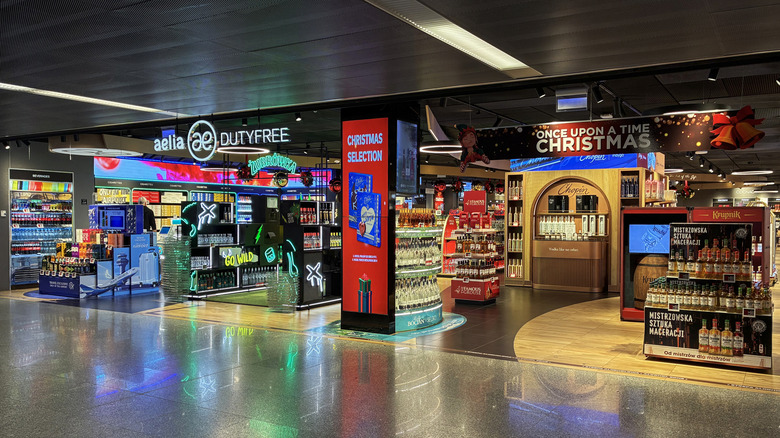
Duty-free stores are one of the many perks of traveling. The fact that the shops don't charge a sales tax helps tourists justify some overpriced airport travel shopping. No duty, no problem. Sounds enticing, and the marketing works. Or it used to. Because these days, more travelers are skipping the terminal shops altogether and saving their spending for something better: the hotel boutique.
Travelers are increasingly shopping with intention, seeking out items that feel specific to where they are. Hotels have stepped into that gap, transforming their shops from generic souvenir counters into carefully curated retail experiences. Think less keychains and shot glasses, more limited-edition ceramics and locally designed goods. Guests are finding gift packages and exclusive items that you can't get anywhere else, such as vintage bags at The Peninsula Beverly Hills and glassware sets from The Maker Hotel in New York. The consumer behavior has even reached a global scale. At Le Sirenuse in the Amalfi Coast, people shop for limited edition ceramics, and El Fenn in Marrakesh is selling products from Moroccan-born designers.
It's also expanded beyond traditional retail and into food and beverage. One Redditor mentioned, "I cannot stress locality enough. My hotel has gelato from a company that's local and it's been a hit." The shift reflects something broader happening in travel culture — buying things that actually connect them to the place they visited. The first duty-free shop opened in Ireland in the 1940s, and since then they've popped up in more and more airports all over the globe. This travel shopping institution has had its moment. The hotel boutique is having one now.
Why duty-free shopping is on a decline

Consumer demand in duty-free stores has been quietly declining for years, and airlines are starting to act on it. Swiss Airlines recently announced it will phase out inflight duty-free sales by September 2026, citing a steady drop in onboard purchases. It's the latest domino to fall in a longer trend that's been reshaping how travelers spend on the road. At the Canadian-U.S. border alone, duty-free sales have dropped by 60% in 2025, though that's also partly due to the fact that more and more travelers are choosing not to visit America.
At the heart of it, though, is price. While duty-free shopping may sound like a bargain, it doesn't always deliver meaningful savings. According to Tufts University international economic affairs professor Michael Klein, duty-free retailers often raise prices to offset tax advantages (via the Boston Globe), meaning shoppers may not be getting the deals they expect — and they've taken notice. In a Reddit thread asking if duty-free is worth it, one person replied that it isn't and noted, "whatever you might think your saving in taxes comes back two fold in the airport mark up and the absurd sizes they sell it in." If that's the case, travelers may be increasingly willing to spend the same money on something more distinctive, and more memorable.
Curious about more evolving travel trends? Check out our feature on why a new travel trend has people saying goodbye to traditional hotels.