
Japan's Picturesque Coastal Getaway Is Known For Warm Beaches, Dramatic Ocean Views, And Hot Springs
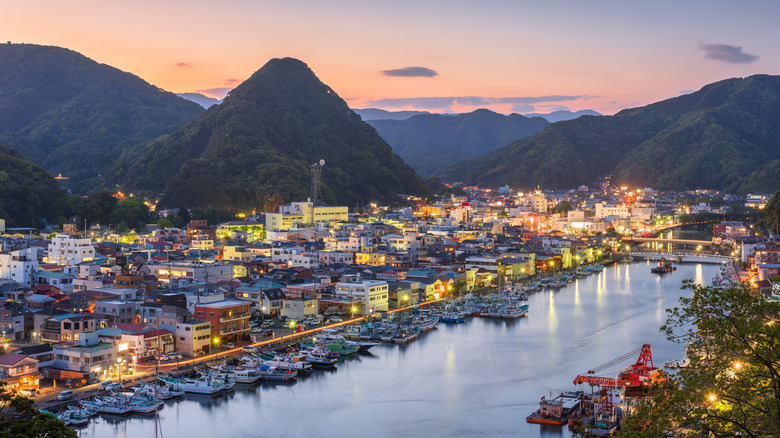
Punctuated by hot and humid spells, summers in Japan are best spent in either the cool embrace of the north or enveloped in the enticingly warm waters of the south. And if your summer persona skews toward the latter, head to Shimoda. The historically significant city on the southern tip of the Izu Peninsula and witness to Japan's mid-19th-century opening up to the world delivers a trifecta of coastal charm: warm beaches, dramatic ocean views, and a slew of hot springs.
Facing the Pacific Ocean, Shimoda's rugged coastline appeases both sun loungers and water adventurers with a choice of beaches and coves. Hike any given trail — or hop aboard a gondola — and be rewarded with views of the ocean and even glimpses of the Izu Islands on the horizon, weather permitting. Small and compact, Shimoda itself is easily navigated on foot — it has a high score of 90 on Walk Score, after all. Most visitors make a stop at Perry Road, a tree-lined, canal-adjacent lane lined with traditional buildings. Shimoda sits within the Izu Peninsula's UNESCO Global Geopark, and its volcanic geology leaves vacationers spoiled for choice when it comes to onsens — the perfect nightcap to all that sightseeing.
Tempted to go? You'll be surprised at how accessible it is: the Odoriko limited express train whisks passengers between Tokyo and Shimoda in roughly 2.5 hours, making a weekend beach getaway a reality for many Tokyoites and tourists. Beyond beaches that are perfect for a summer day, there's the journey itself: as Alastair Donnelly, director of tour company Inside Japan, notes, "the train rides to and from historic Shimoda are some of the most scenic in the country."
Visit the beaches of Shimoda, Japan
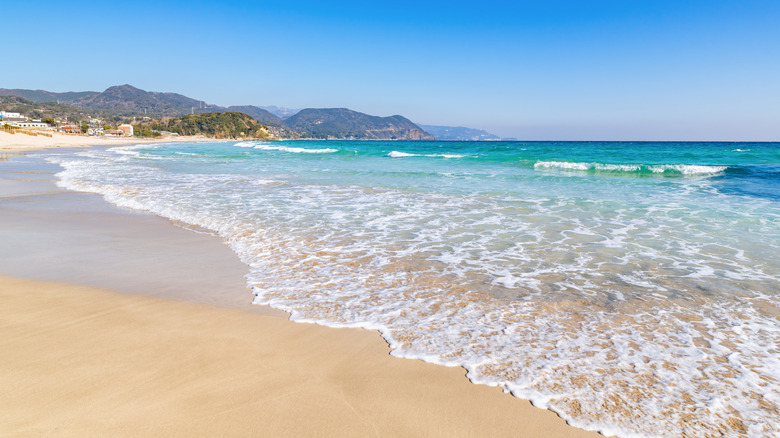
Shirahama Beach's reputation for being one of the most dazzling beaches in Japan holds up. Its extremely photogenic half-mile expanse of white sand, turquoise waters, and red torii gate overlooking the water won it a hearty recommendation from Japan-Guide.com out of all the Izu Peninsula beaches. As expected, it fills up with beachgoers in the summer.
Despite the popularity of Shimoda's beaches, some stretches can feel like a genuine find, especially outside peak tourist season. Kisami Ohama beach, located further south along the coast from Shirahama, is one such example. "Since this place is little known, you'll only find locals there," one previous visitor shared, while another noted that "the swimming and surfing areas are clearly separated, which is helpful." Though it's popular with families for its calm inlet waters and relaxed atmosphere, Sotoura Beach's fewer crowds make it a peaceful alternative to lively Shirahama.
Beaches are Shimoda's showstoppers, but beyond its swathes of white sand and turquoise waters, credit is due to the Kuroshio Current — which sweeps from the Philippines upward to Japan's Pacific coast — for keeping sea temperatures relatively warm. Shimoda's seawater averages between 63 and 77 degrees Fahrenheit throughout the seasons. July through August brings in the crowds, but surfers can also be found riding the swells in wintertime — in wetsuits, of course.
Ocean views and hot springs to cap off the day at Shimoda
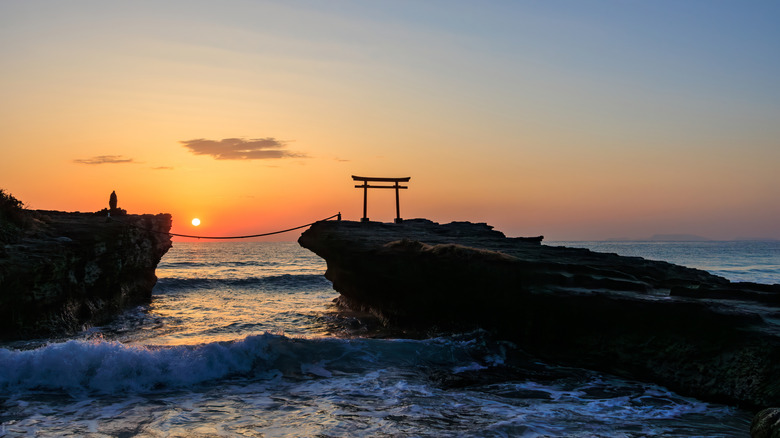
Shimoda's appeal doesn't stop at the shore — elevated viewpoints around the coastline reveal beautiful vistas of the Pacific Ocean. Don't miss the dramatic silhouette of a red torii gate perched on Daimyojin Iwa — the Great Deity Rock — jutting into the sea at Shirahama Beach. Hopping aboard the Shimoda Ropeway offers panoramic views during the gondola journey and at the destination itself: Mount Nesugata's observation deck from 656 feet up high. Note that gondola service can be canceled according to the whims of the weather. Straddling Shimoda's southeastern tip is the scenic lookout point of Cape Tsumekizaki and its lighthouse. The area is relatively calm and crowd-free unless you drop by late December through January for the Tsumekizaki Narcissus Festival, when the coastal landscape is carpeted in white daffodils against the blue backdrop of the ocean.
Izu Peninsula as a whole is a feast for the senses, touting Mount Fuji views and hot springs — the latter a nod to its volcanic landscape. It's no surprise that a relaxing soak in an onsen slots naturally into a Shimoda itinerary. At Kanaya Ryokan, both checked-in guests and curious drop-ins are welcome to soak in the Kawachi Onsen-fed waters of its communal indoor wooden tub that is "deep enough that the mineral-rich waters reach the abdomen when standing," according to Japanistry.
Ryokans in Shimoda's Rendaiji Onsen area feature skin-healing hot spring waters that have drawn bathers for over 1,200 years. Meanwhile, Kannon Onsen is known for its alkaline spring water, perfect for body soaks and drinking straight from the source. Shimoda is no stranger to onsens, but foreigners often are — so brush up on onsen etiquette — and the general rules tourists should know before visiting Japan — when you're in the area.