
Forget The American West – Canada's Prairie Province Is Packed With Cowboy Fun, Rodeos, And Ranch Stays
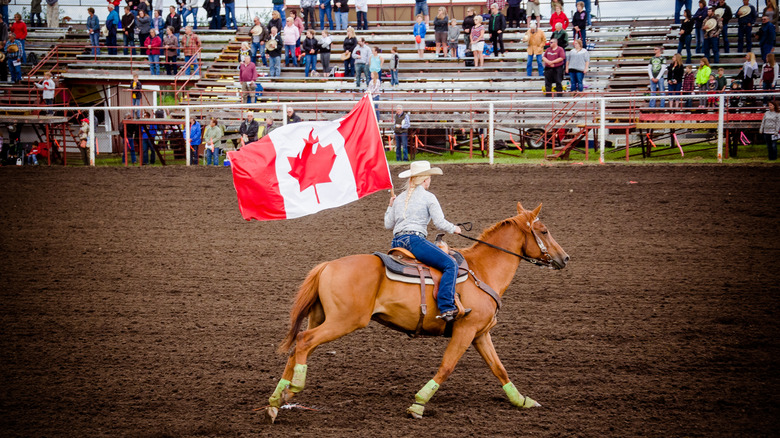
Stetson hats and fringed jackets. Galloping horses and rodeo clowns. Lassoed steers and bucking broncos. These are the images the West is famous for, and the old-fashioned rodeo is still a cherished expression of prairie life. Here, still-active cowboys show off their traditional skills, from roping to racing, as bleachers full of fans cheer them on. You'd absolutely expect these scenes to unfold in Texas, Wyoming, or Montana, places with strong cowboy heritage and deep ranching traditions. If you live in the U.S., though, you might not even think of a rodeo hub just north of the border, in Alberta, Canada.
In a typical year, Alberta will host more than 40 rodeos, all across the province. The most famous is the Calgary Stampede, a 10-day festival that brings more than a million visitors to Alberta's largest city in a single season. Calgary is a city famous for its rodeo, where it's perfectly normal to don a wide-brimmed hat and bolo tie, make no mistake about that. Not only does the Calgary Stampede rival any rodeo in the U.S., but it's one of the largest in the world and bills itself as "The Greatest Outdoor Show on Earth." This might be enough for fans to head north for something new.
Many of Alberta's ranches are also open to guests, inviting greenhorns to see iconic livestock up close and stay in farmhouses, cabins, or even teepees. Between rodeos and ranches, you could organize a whole road trip around Alberta's cowboy circuit. The warmer months are a great time to stay on a ranch, and rodeos are held from April to September, giving you plenty of chances to watch bareback and barrel-racing competitions.
How to experience an Alberta rodeo
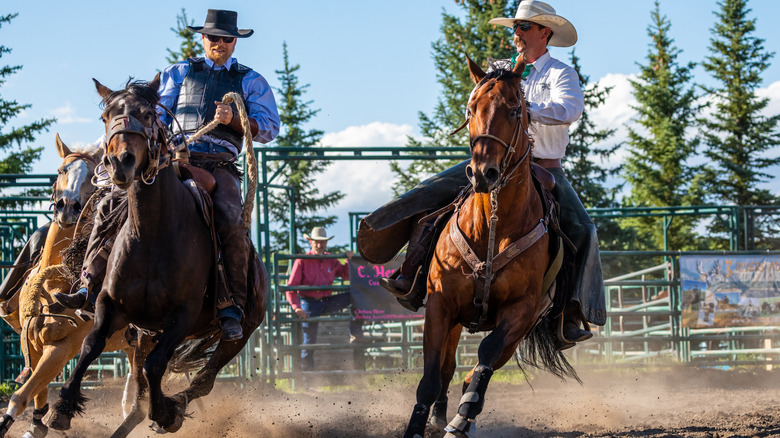
The idea of a Canadian cowboy can startle many Americans, who may claim the archetype of the rugged rancher as their own. Yet the grassy frontier doesn't stop at the border; it stretches deep into Alberta, butting up against the spiky peaks of the Canadian Rockies. Alberta is known as the "Texas of Canada" for good reason; it has its own Great Plains, roiling rivers, and 19th-century boomtowns. Today, more than 14,000 farms in Alberta are dedicated to raising beef cattle, and nearly 400 more are dairy farms.
Alberta's rodeos vary in size and specialty, from the Hardgrass Bronc Match (which is almost entirely bronco-riding) to the easygoing High Prairie event (bull riding, team roping), to the Medicine Hat Exhibition and Stampede, which has entertained fans with its carnival atmosphere since 1887. The tone and events are similar, and many of the same talents travel from one to the next, but each rodeo reflects the unique municipality it's based in. Much of this will look familiar to U.S. regulars, but there are striking differences: Flags with the Canadian maple leaf whip in the wind, and many feature members of the Royal Canadian Mounted Police, better known as the "mounties."
The province has long been home to Indigenous peoples, including First Nations and Métis communities, whose cultures and histories remain a vital part of Alberta today. Today, their presence remains highly visible at the Calgary Stampede, including the crowning of a First Nations Princess. The Stampede also features Elbow River Camp, showcasing Indigenous traditions and culture through education and engagement.
Getting around Alberta and reserving ranch stays
If you're arriving in Alberta by plane, you can fly into Calgary International Airport, which connects to destinations across North America, Europe, and even points in Asia. Most of this region is rural, so the best way to get around the province is by car. There is a limited passenger train service through VIA Rail, but the few stops don't connect destinations that visitors exploring Alberta's cowboy heritage will want to see. Many car-free commuters rely on a complex network of smaller inter-city bus companies.
Staying at an active ranch is almost always a boutique experience, with intimate lodging, unique touches, and personalized, on-site activities. Take a place like Thanksgiving Ranch in Pincher Creek, which sits on 3,000 acres and invites guests to ride horses, fish, hike, and mountain bike in the Canadian Rockies. Or there's Rocking R Guest Ranch in Wheatland County, with its modern cabins and furniture fashioned from pine logs. For each location, it's wise to reserve well in advance, and be aware that the dude ranch experience can be pricier than a regular hotel, especially for longer stays. With so many Wild West adventures in store (combined with spectacular nature and rich culture), it makes sense that Alberta was named 2025's "Most Desirable Region" in the world.