
8 Secret Historic State Parks Tourists Often Miss When Visiting Florida
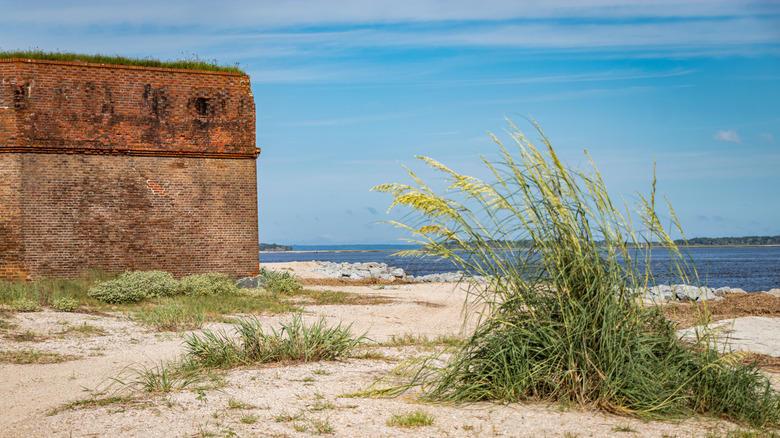
Florida, America's Sunshine State, is home to 175 state parks. While some flock here because of the natural wonders, like beaches, forests, springs, and rivers, others come for a different reason: historic sites. With human habitation in the area dating back 14,000 years, this part of the United States has a lot of history to explore. From ancient burial mounds to the thousand-year Calusa Kingdom along the Gulf Coast to the forts of the Civil War, Florida's state parks preserve thousands of years of history for visitors to enjoy and learn about.
Although Florida has such an expansive history, many of these sites are missed by tourists. Instead, state parks focused on beaches and natural refuges tend to see more visitors. In particular, many of Florida's Pre-Columbian sites don't get many travelers, with some sites having fewer than 100 reviews on sites like Google Maps. In this list, you'll discover some of Florida's secret history-focused state parks.
Edward Ball Wakulla Springs State Park
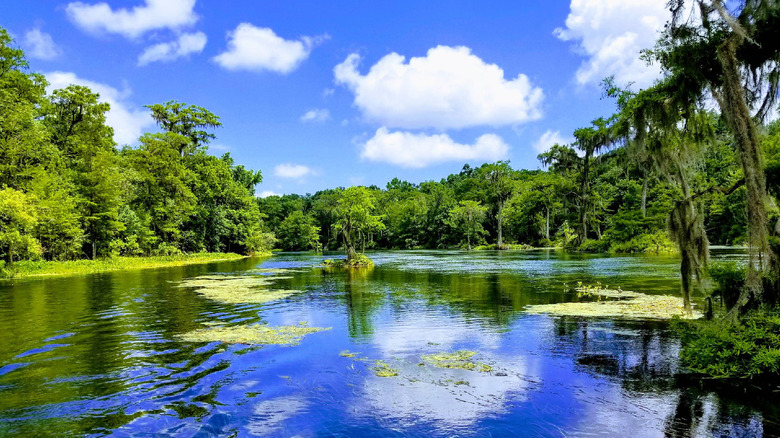
Edward Ball Wakulla Springs State Park is perfect for movie buffs. It was here, amid the park's sprawling swamps, that several Hollywood films, like The Creature from the Black Lagoon, were filmed. This park's history goes beyond movies: The site is also home to a 1930s hotel that's still running. It's an affordable park to visit, with an entry fee of $6, and there are lots of activities, including historic boat tours, manatee and alligator viewing, bicycling, and hiking. Plus, it's a great place to swim at one of the world's largest freshwater springs!
Mound Key Archaeological State Park
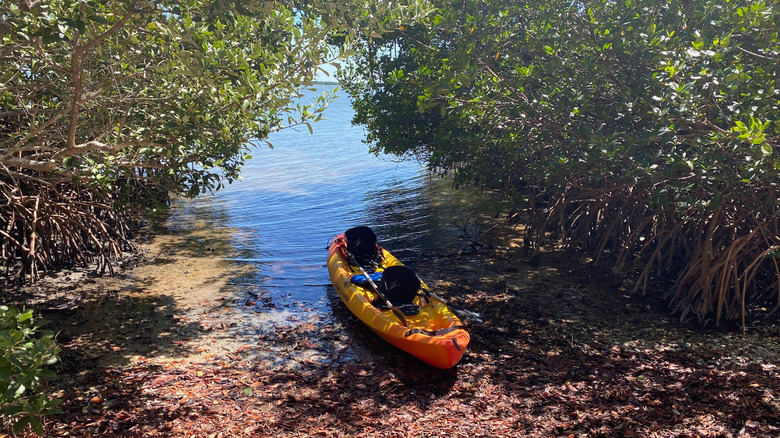
Once the city of Calos, the capital of the Calusa Native Americans, Mound Key Archaeological State Park is a mangrove-topped island situated between Fort Myers and Naples that boasts a 2,000-year history. In its heyday, Calos would have been home to ceremonial centers, canals, and structures, some of which were reported by the 16th century Spanish as fitting 2,000 people inside. Today, visitors will see shell middens (heaps of shell refuse) and burial mounds. This free-to-enter archaeological site has great hiking, kayaking, and wildlife viewing, but is only accessible by boat.
Fort Clinch State Park
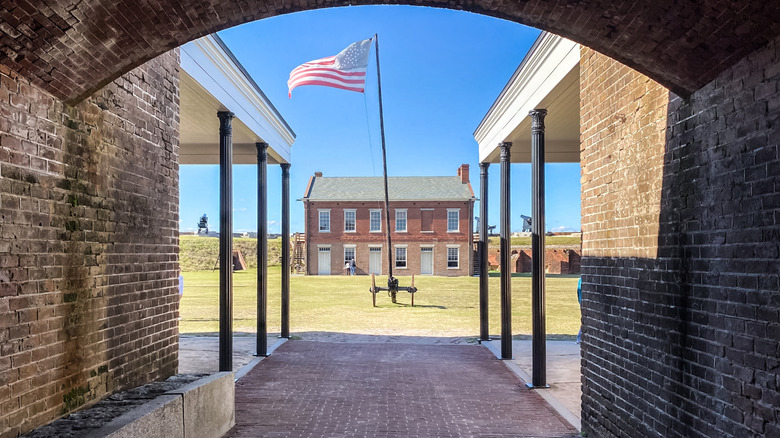
For those who love 19th-century history, Fort Clinch State Park offers a cheap-to-enter (only $6) site with beaches and maritime hammocks. Built during the 1840s and 50s, the fort would become significant during the Civil War, being captured by the Union in 1862. Visitors to this site will not only learn about this history, but can also enjoy the vast bounty of nature that this park offers, from shark tooth hunting to viewing the area's many gopher tortoises to biking through forests.
Letchworth-Love Mounds Archaeological State Park
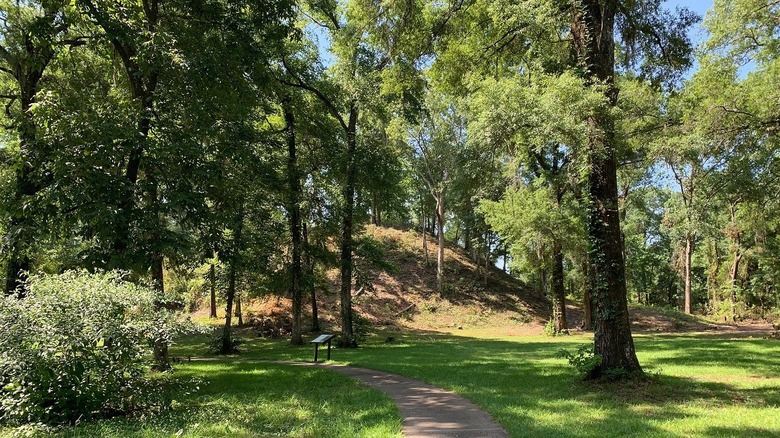
To the untrained eye, Letchworth-Love Mounds Archaeological State Park might seem like a northern Floridian forest like any other. The dense trees here hide one of the Sunshine State's most important historic secrets: Florida's tallest ceremonial mound. Built between roughly 200 and 900 CE, this mound was created using 27 million gallons of soil, shells, and clay and measures 51 feet tall by 300 feet wide. This isn't even the only mound here; there are actually seven discovered so far. Today, the park costs $3 to enter and is a great spot for hiking and birding.
Crystal River Archaeological State Park
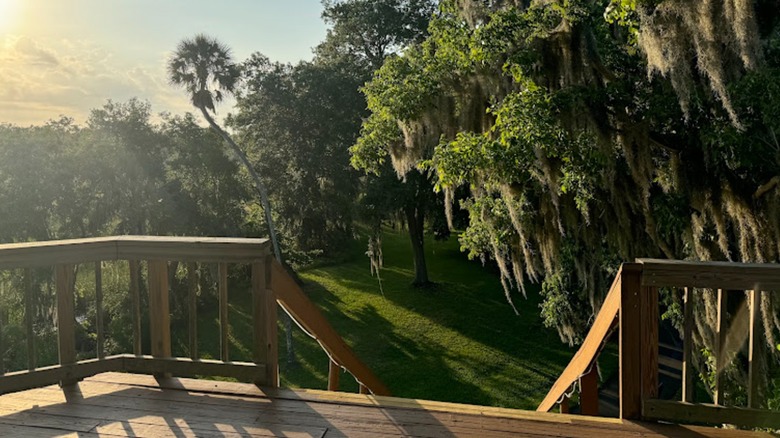
Florida's Crystal River is perhaps best known for being one of America's best snorkeling destinations, attracting tourists hoping to see migrating manatees. What many miss is that there's actually a secret historic state park nearby: Crystal River Archaeological State Park. This $3-to-enter park was first settled by indigenous peoples in 500 BCE. The site itself was a trading hub, with goods coming from as far as the Ohio River, that featured burial mounds, temple platforms, a plaza, and a shell midden. Located in a marshland, the area is now great for birding, fishing, hiking, and wildlife viewing.
Koreshan State Park
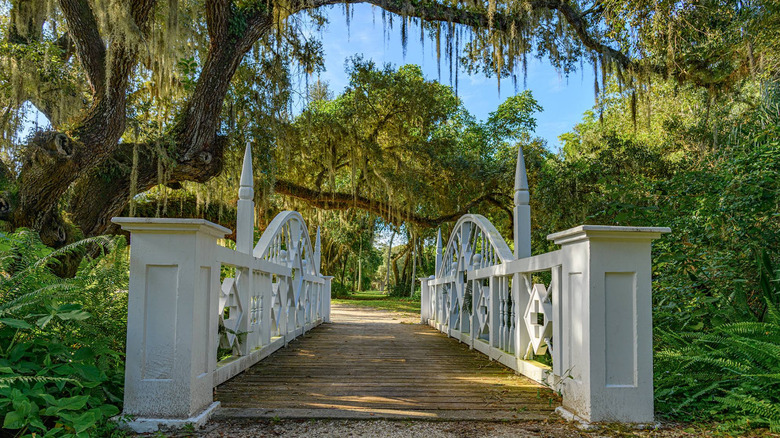
In 1894, Koreshan State Park became the site of a strange occurrence in Florida history when Cyrus Reed Teed decided that the "New Jerusalem" would be settled in the Sunshine State. The founder of a new faith, called Koreshanity, thought that the earth existed inside a hollow sphere. Teed and 200 of his followers maintained a society set apart, with its own infrastructure and stores. The movement fizzled out after their leader's death, and in the 1960s, the land became a $5-to-enter state park with historic buildings, living history demonstrations, tortoises, and bamboo gardens.
Collier-Seminole State Park
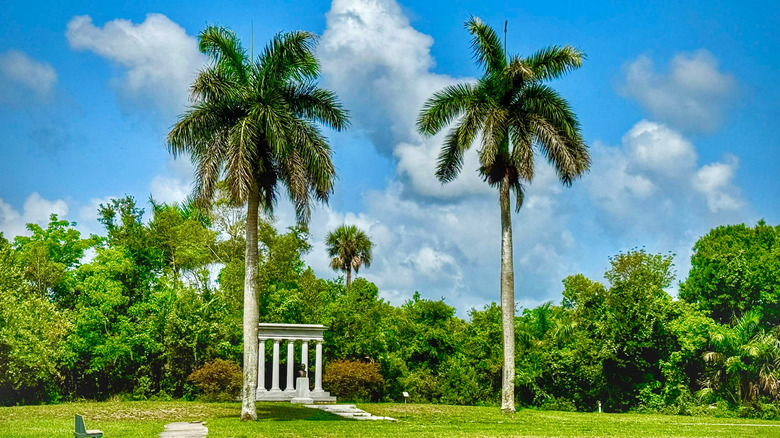
Home to one of the world's largest mangrove swamps, Collier-Seminole State Park was the site of brutal wars, 1920s engineering, and the preservation of local flora. In the 19th century, the area was where the Third Seminole War took place. Later, in the 1920s, it was purchased by Barron Gift Collier, who was pioneering the Tamiami Trail through the Everglades. Visitors can see the Bay City Walking Dredge, which was used to harvest the limestone for the highway's foundation. The park was created in 1947, protecting the area's native royal palms. Today, the park costs $5 to enter.
Hontoon Island State Park
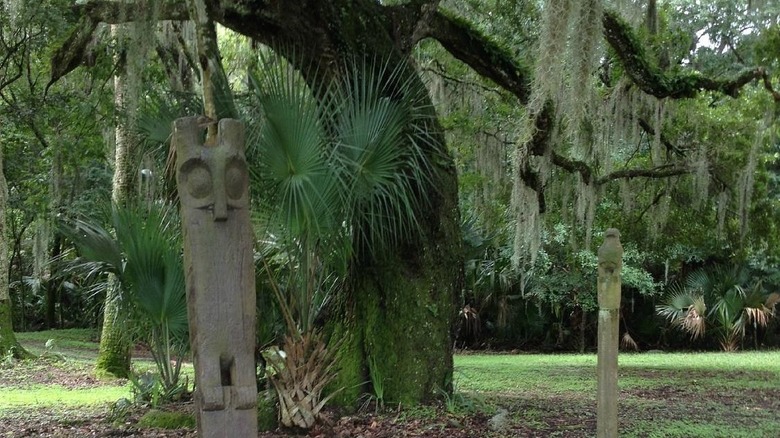
Hontoon Island is one of Florida's off-the-beaten-path secret historic state parks. Located between several rivers, this was the site of a major discovery in 1955. A ten-foot-tall totem carved with an owl head was discovered submerged in the water. After studying the artifact, archaeologists determined that it was made by the Mayaca people. Although the original can be found at Fort Caroline National Memorial, a replica is on display at the park itself. Visitors to the park today can hike, fish, camp, and boat at this free-to-enter park that's only accessible by ferry.