
Between Fort Wayne And Elkhart Is Indiana's Former 'Marshmallow Capital' With A Walkable Downtown And Murals
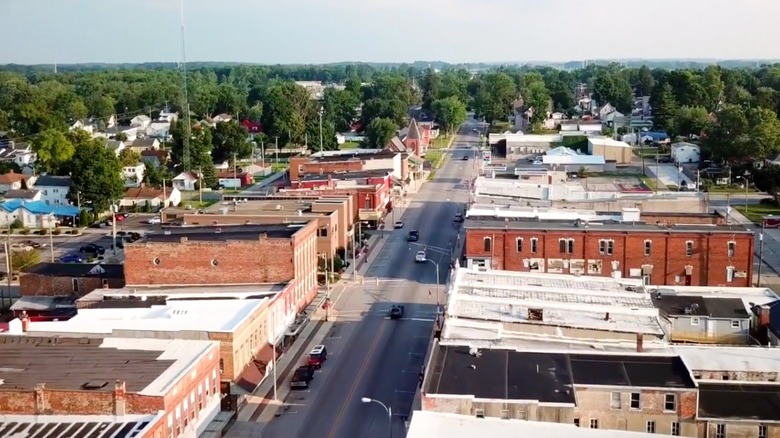
Indiana is known as "the crossroads of America," and if you take a look at one of the state's northeastern communities, you might see why: a city blending historic Jewish heritage with a large Hispanic population, adjacent to Amish Country, self-proclaimed as the "Marshmallow Capital" of the U.S., and boasting dozens of murals throughout a walkable downtown. All that and more is found in Ligonier (pronounced "lig-uh-neer"), a small city with about 4,500 residents in the heart of Noble County. Located 40 miles northwest of Fort Wayne (where you'll find the closest major airport) and 30 miles southeast of Elkhart, Ligonier is a unique little crossroads of its own.
An early settler renamed what was once the Elkhart River Strawberry Valley after his hometown in Ligonier, Pennsylvania. A large Jewish community developed, including notable Prussian-Jewish immigrant Solomon Mier, who manufactured horse-drawn buggies and later, early automobiles. His pink Queen Anne home, built in 1901, is now a bed and breakfast known as the Solomon Mier Manor (the only public lodging in town). Another landmark is Ahavath Sholom, a German-Gothic Jewish temple with stained-glass windows built in 1889, and now a private residence. Many Victorians built in this era can be seen as part of the city's Historic District, as well as dozens of murals depicting historical landmarks and scenes.
Then came marshmallows. Kidd & Company, a Chicago-based confectionery company, moved operations to Ligonier in 1945. WWII sugar shortages sent most sweet treats into scarcity, but marshmallow became a sweetener substitute, a boon for Kidd & Co., which adopted the moniker "Marshmallow Capital." The company also became the first to make Kosher marshmallows. Though Kidd & Co. sold in 1996, Ligonier's Marshmallow Festival still commemorates its history each September, with a themed weekend of marshmallow baking competitions, parades, fireworks, rides, games, and craft and food vendors.
The city prides itself on public art, diversity, and a historic downtown
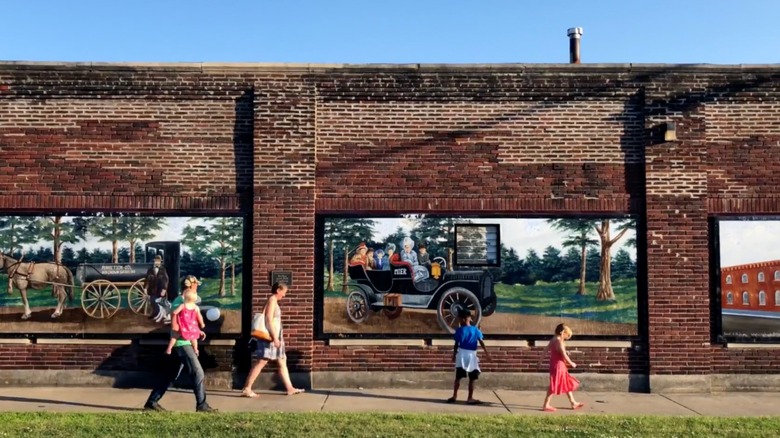
Besides marshmallows, one of the things Ligonier is best known for is its public art — nearly 50 murals have transformed walls and buildings around the city. The first, painted in 2007, depicts a local Indigenous camp along the region's Elkhart River. The collection has since blossomed, with added imagery in all different shapes and sizes showcasing everything from historic Ligonier businesses to its early settlers and city founder. The Mural Trail, a.k.a. the Noble County Public Art Trail, maps them all out for easy access; visitors can catch a few dozen in Ligonier's downtown area, which spans only a few blocks.
While you're downtown, stop into Grounded Coffee Shop for a beverage and a pastry, or grab tacos from Leti's Tacos, a simple but well-regarded restaurant nearby, and one of several local Mexican restaurants. Ligonier is home to a sizable Hispanic community, from immigrants drawn to industrial and agricultural jobs in the area. Ligonier is also part of Indiana's Amish Country – roughly 14 miles south of Shipshewana, one of the largest Amish communities in the U.S., and 22 miles east of Nappanee, another charming Amish enclave filled with antiques, boutiques, and hidden gems. As one former resident quipped in a YouTube video, you may hear more Spanish and Pennsylvania Dutch spoken than English in Ligonier.
Stroll through town to see the Andrew Carnegie-built public library, tour the Annie Oakley perfumery, and check out the Victorian mansions along the 40-block Liognier Historic District, listed in the National Register of Historic Places. Ligonier's Visitor Center, set in a 1920s gas station, is just south of town and houses the Heritage Station Museum. From the perfumery at the north end of town south to the Visitor's Center is about one mile.
Outdoor spaces invite people to get outdoors

Ligonier also boasts a number of parks. One is the G. Martin Kenney Memorial Park, with 40 acres of parkland, basketball and tennis courts, and picnic areas, as well as a 1-mile trail, which links to the longer Strawberry Valley Cultural Trail. The park also hosts the Jennie Thompson Gardens, featuring dozens of scenic flower beds. The Elkhart Riverwalk is a mile-long paved path that runs along the picturesque riverbanks and can be accessed from Woodlawn, another municipal park, which includes a skate park. Downtown, Triangle Park is defined by its century-old city clock, a gift from the city's founder's son.
For easy outdoor strolls and a little more remote nature year-round, the Edna W. Spurgeon Woodland Reserve is a glacially carved, protected woodland with beech and sugar maple forests and vibrant wildflowers that peak during spring, just 4 miles from downtown. The preserve has an easy trail with several branch loops that weave among the knobby hills, formed by ancient glacial movement. If you want to head a little deeper into nature, 60 miles east of the city is Chain O' Lakes State Park, a natural paradise for paddlers, hikers, swimmers, and anglers alike, showcasing some of the best that America's Crossroads has to offer.
Just 3 miles south of town, Stone's Trace is an American time capsule, featuring an interactive museum and original 1839 tavern. It's best known for its annual pioneer festival, held the weekend after Marshmallow Festival and featuring costumed re-enactors. Though Ligonier's downtown is walkable, there's limited public transportation in the area, and having a vehicle is the best way to access all the city offers. Visitors can fly to Fort Wayne or South Bend and drive in via Highway 33. Alternatively, Indianapolis International Airport is about 150 miles away.