
North America's Largest Tree Is A Majestic West Coast Gem Nestled In Sequoia National Park
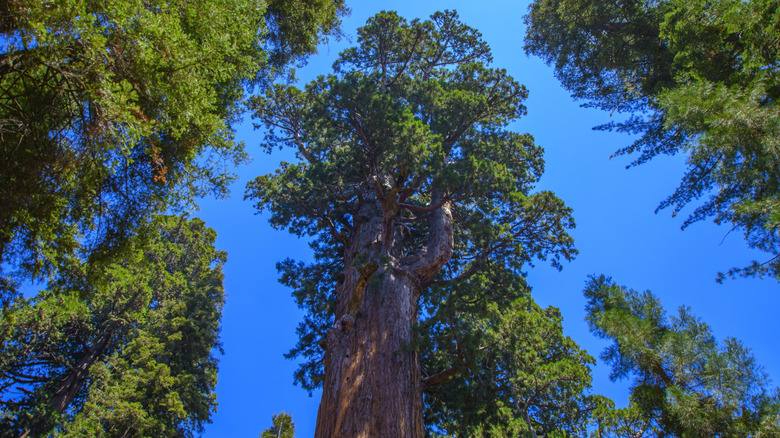
Nestled in the Sierra Nevada mountains, of east-central California, lies Sequoia National Park, America's second-oldest park filled with towering trees. Referred to as the "Land of Giants" precisely for its mammoth inhabitants, this protected area, together with the adjacent Kings Canyon National Park, is jointly managed as one site by the United States' National Park Service. Together, they contain one-third of the world's naturally occurring sequoias within just 75 groves. One of these groves is Giant Forest, a shady spot that hosts about half of our planet's longest-living trees. And here you'll find General Sherman, the largest tree in North America (and the world) and a breathtaking West Coast gem.
General Sherman, named after Union Army commander William Tecumseh Sherman, is a giant sequoia (Sequoiadendron giganteum). It has a volume of roughly 52,000 cubic feet, and its trunk alone weighs about 1,400 tons. At a height of 275 feet, this tree is almost as tall as the Statue of Liberty. It's not quite the highest, though — the Guinness World Records' "Tallest Tree Living" distinction goes to Hyperion, an impressive coast redwood (Sequoia sempervirens) soaring around 380 feet (but you should avoid this majestic California redwood or face a fee and jail time).
While it's rude to ask an elder their age, estimates place General Sherman somewhere between 2,100 and 2,700 years old. It may have been a sapling during the Roman Empire, and it lived through European colonization and the American Civil War. If trees could share memories, this one would regale you with fascinating tales from bygone eras. But until that happens, you'll have to settle for standing at its base in quietude, breathing in its sweet, piney scent and craning your neck up in awe of Earth's largest living organism.
How to visit General Sherman
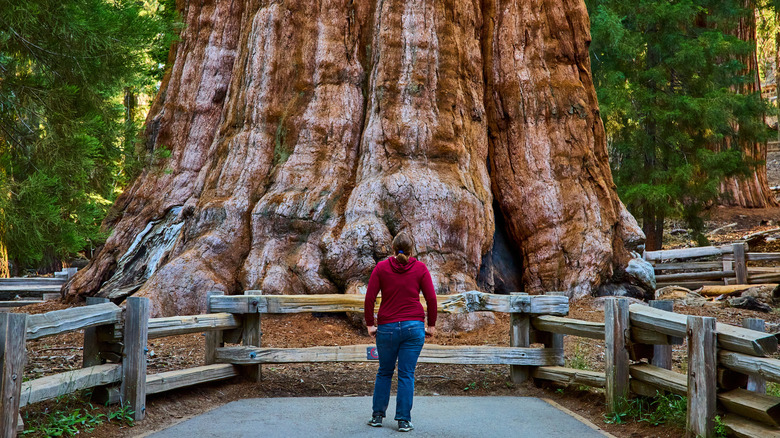
Giant sequoias live as long as they do because of their incredible resilience. Their bark (up to two feet thick) protects them from smaller fires and makes them incredibly challenging to log. And their heartwood is extremely resistant to pests like insects and fungi. However, they've become increasingly vulnerable due to human impacts and climate change, including severe droughts, higher temperatures, and wildfires. So, when visiting General Sherman, it's important to follow all park guidance and remain on the paved trail. California's Sequoia and Kings Canyon National Parks' "no shortcuts" rule isn't just a suggestion: It's a strict policy put into place to preserve these giants. Sequoias' roots are fairly shallow, sometimes just below the ground; hikers constantly traipsing over them can compact the soil, damaging these fragile systems. That's why you'll find protective fencing here, creating a wide berth around the tree's base to ensure it can be enjoyed by future generations.
To see this record-breaking tree, you can follow one of two paths. The General Sherman Tree Trail is a relatively easy out-and-back trek, and you'll reach the giant after a half-mile walk downhill. The closest parking lot is off of Wolverton Road, and shuttles come here every 15 to 20 minutes during the summer. The other option is the 2.7-mile-long, slightly steeper Congress Trail. Because you'll be at an elevation of between 5,000 and 7,000 feet, the hike will feel significantly harder than at sea level. Drink lots of water and rest frequently along the way.
When planning the ultimate California road trip, Sequoia and Kings Canyon National Parks should be among your stops. Standing before this ancient colossus (behind the fence, of course) will certainly be the highlight of your day.