
4 Restaurant Rules In America That Europeans Break Without Even Realizing
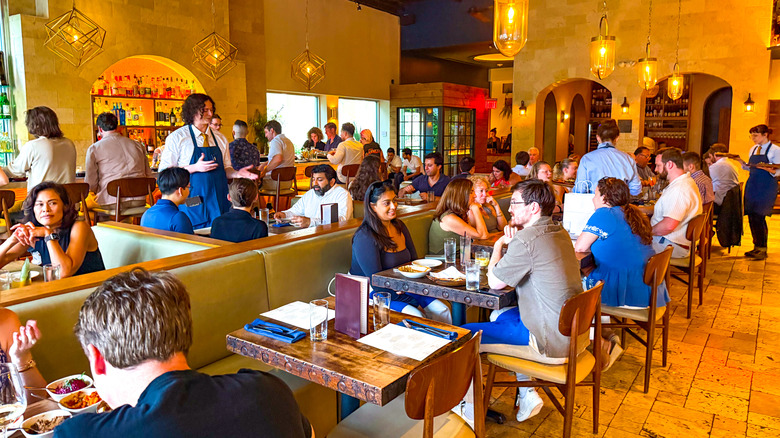
Traveling internationally can be a wonderful experience. There is so much to see in the world and so much culture to experience beyond your own. While immersing yourself in a new area can be rewarding, it's worth remembering that every culture has its own set of unwritten rules, and travelers who don't do their research can find that out the hard way. One person's good manners can be another's mistake. Americans who have traveled to Europe know that there's a litany of unspoken rules revolving around dining culture and etiquette among our friends across the pond. Just as there are common dining blunders to avoid to blend in with European locals, the same goes for Europeans coming to America.
Oversized portions and getting free tap water (as it's unusual to order tap water in Europe) are just one part of what can feel unfamiliar or even ludicrous to a European traveler in a U.S. restaurant. American dining customs can be surprisingly particular for a country so big on being the land of the free, and there's no cheat sheet or explanation given to visitors for these unwritten rules. Etiquette mistakes happen and will hardly cause much commotion beyond a questioning look or two, but knowing some of these social norms can help the European traveler feel less like a tourist and more at home.
Wait to be seated
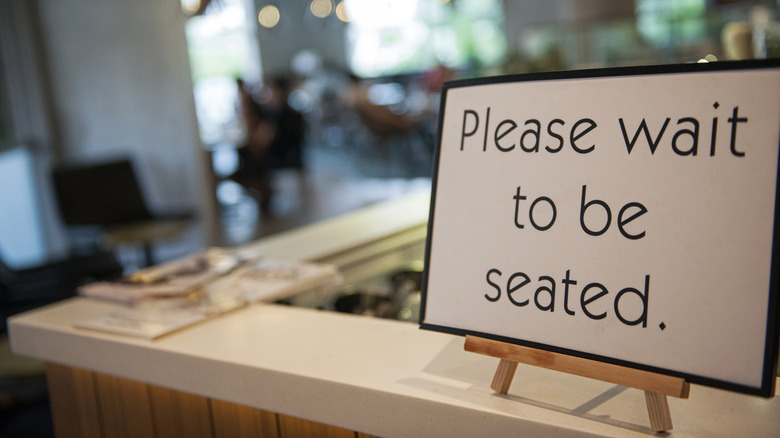
It's typical that in European cafés and restaurants (at least the more casual places) you can take a seat at an empty table without waiting to be escorted to one. In more formal European restaurants, there may be a desk or a sign you can wait at to be seated. In the U.S., it's almost always expected that you wait to speak to a server or host before getting a table. That might come as a surprise for Europeans entering a casual spot that seemingly has many free tables and no front desk. "[M]ost of the times the restaurants aren't even full, and there are plenty of tables. But still you have to wait outside just to be seated," one Reddit user pointed out after traveling to the States.
Even before you sit down, you get a taste of the broader cultural difference between dining in the U.S. and Europe. American restaurants are highly systematized, with emphasis placed on table turnover rate. They want to maximize seating efficiency, keeping tabs on who gets sat and when. "They have a host/hostess just to seat people," one European Reddit user expressed as part of their American culture shock.
Don't try to order with the busser or runner
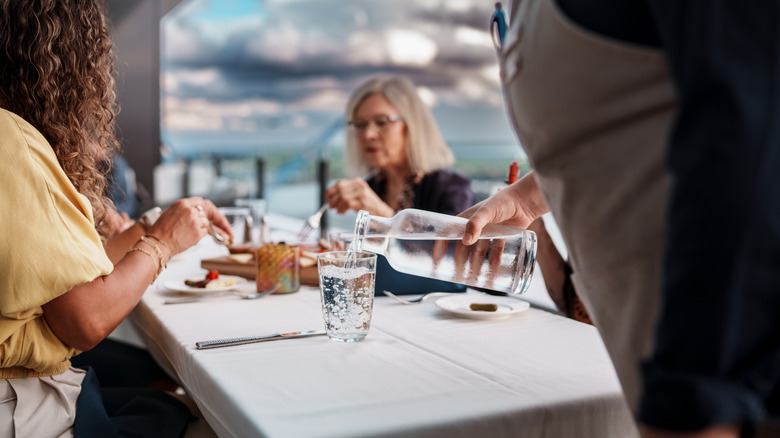
Another gear in the system that powers the American restaurant is the busser. Bussers take care of clearing tables, resetting them, and sometimes bringing water or bread. In the case of many European restaurants, you often have a server that does all of that, or servers share those duties across the restaurant. "It seems like American restaurants have dedicated bus staff and runners – I've never seen this in Europe, all of that is done by the waiters," a user from Ireland shared on Reddit.
Since bussers have a separate role from the person taking your order and handling payments, you don't order food or ask for the check from them. Another role, which you more commonly see in the bigger, busier American restaurants, is that of the food runner. The runner's job is simply to bring food to tables from the kitchen, sometimes only working during rush hours. Again, you don't order with runners — they will likely just get your server to come assist if you try to do so.
Tipping is expected, even for average service
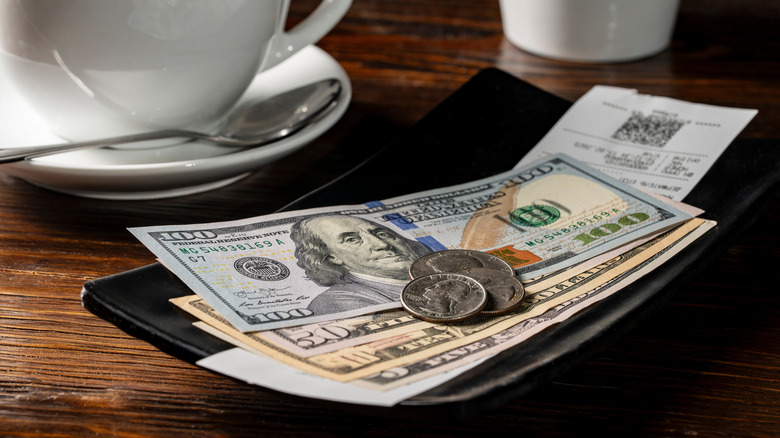
It goes without saying that tipping culture is one of the most glaring differences between American and European dining cultures. Travel expert Rick Steves shared advice regarding tipping in Europe: It's often a small add-on or not even necessary. In the U.S., tipping is expected every time you dine in a restaurant, even if the service was mediocre. A Pew Research Center poll found that 81% of Americans say they always tip at restaurants. Not leaving a tip is one of the things servers get most frustrated about. "[I]f you're visiting the states and don't tip or tip poorly it will not be received well," a Reddit user said.
Tipping is more common in some European countries than others — Germans and Americans tip about equally as often, for example, according to a YouGov survey. Nevertheless, there is a crucial difference in how they tip: the amount. Continuing with the comparison to Germany, the YouGov survey found that over three-fourths of Germans who do tip typically leave a 5% to 10% tip. For Americans, the general expectation is that diners tip 15% to 20% of the bill before tax. While Europeans might view tipping as a thoughtful bonus for the restaurant workers, in the U.S., it's a more obligatory convention, and it compensates servers who may earn less than the minimum wage.
Don't linger too long
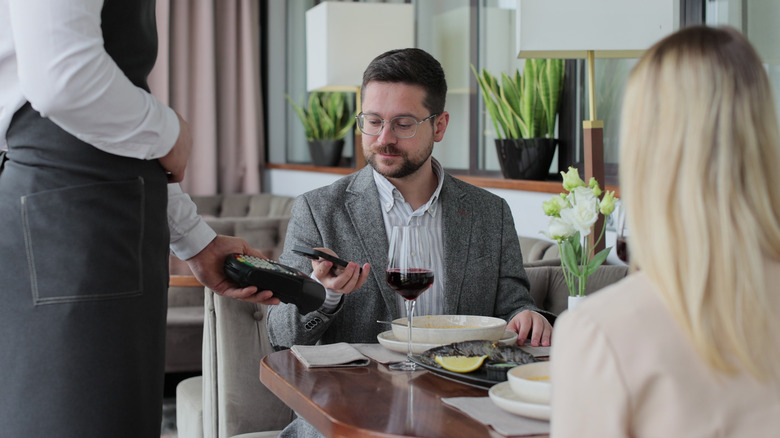
This one might sting for the no-rush European diner. Connecting back to the American emphasis on table turnover, you are generally expected to leave the table and make room for the next patrons once you've paid the bill. Europeans may be used to a culture where dining is slow and unhurried. As a Balkan user on Reddit said, "[It's] very common to just sit for hours and drink coffe[e] or just talk. One time we had unannounced guests and they [sat and talked] for 8 hours." That wouldn't fly in the typical American restaurant.
Tying into the unspoken rules about finishing your meal, Europeans might be surprised that servers bring the check to them without asking. Sometimes, it can feel like the server is trying to get you to leave. "I moved to the US from the UK 22 years ago and still feel I am being rushed in restaurants here!!" a Facebook user said. Though it's true that you're expected not to linger too long at a table in an American restaurant, getting the check doesn't mean you have to leave. It's customary to leave the check on the table while you finish up your post-meal conversation, then pay the check when you're ready to go.