
California's Once-Thriving Ranch Is Now A Scenic State Park Less Than 2 Hours Outside San Francisco
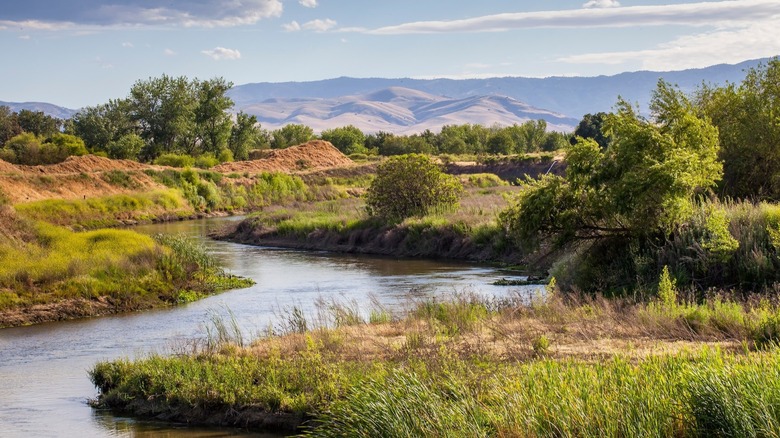
People often talk about California's coasts, mountains, and cities. From the Pacific cliffs of Big Sur to the rugged peaks of the Sierra Nevada to the glamorous red-carpet glitz of Los Angeles, the state boasts outsized landscapes and broad destination appeal. It's so vast that some of its corners get overshadowed — including the Central Valley, a fertile and storied region that has long been critical to U.S. agricultural production. It produces roughly 25% of the country's food, from tangled grape vineyards to rows of almond trees to scented citrus groves and fields of vegetables and cotton. But while agriculture remains vital, so do preservation and flood mitigation — a balance the state takes seriously. California's newest state park, Dos Rios Ranch State Park, formally opened in June 2024, transforming former agricultural fields into native habitat and a restored floodplain. The park encompasses 1,600 acres of ranchland in the San Joaquin Valley and centers on the confluence of the Tuolumne and San Joaquin rivers.
Dos Rios was a working dairy and cattle ranch for much of the 20th century. Rivers that meet here originate from the Sierra Nevada, which flanks the Central Valley's far east side, providing critical water supply for San Francisco, just 90 miles west. Farmers had drained the swamps and modified the land to enhance its farmability, planting almonds, tomatoes, grains, and raising cows for meat and milk. Yet the tampered valley often flooded, risking not just crops but nearby communities. In 2012, the ranch was acquired by nonprofit conservation groups River Partners and the Yosemite Rivers Alliance to begin a long restoration process. Today, the new park is still evolving, but visitors can enjoy hiking, picnicking, swimming, and even fishing in its landscapes.
Visiting the state park
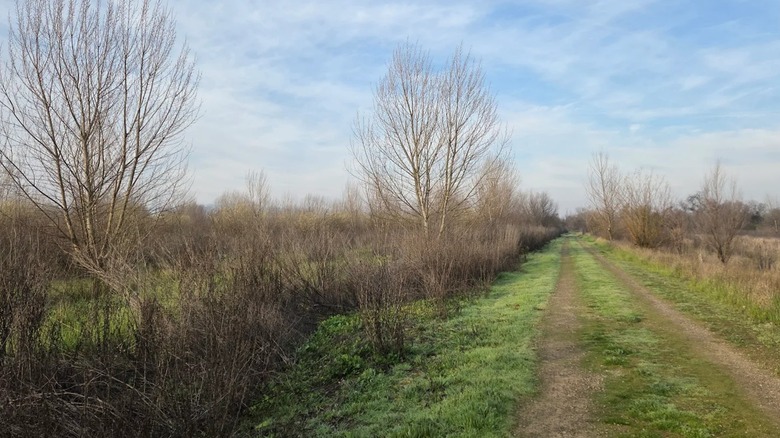
For more than a decade, Dos Rios has been the site of California's largest floodplain restoration project. An estimated 350,000 native trees and other foliage have been planted along 8 protected river miles, restoring riparian forests, natural floodplains, and wetlands. These habitats are vital to wildlife, including threatened species such as the riparian woodrat and riparian brush rabbit, as well as Chinook salmon, steelhead trout, and migratory birds traversing the Pacific Flyway. The park has even helped delist the formerly endangered Aleutian Cackling Goose.
Visitors can keep an eye out for sandhill cranes, yellow warblers, and monarch butterflies while exploring over 16 miles of self-guided hiking trails, including two dog-friendly routes. The nearly 4-mile Confluence Trail winds along the rivers, while the 2-mile Pond Loop links to the Upper and Lower Tuolumne River trails, which lead to fishing-friendly Secret Beach and swim-friendly Willow Beach. The 3-mile out-and-back Beaver Bend Trail offers an opportunity to see dams along the river. Ranger-guided hikes are also available, giving visitors an intimate glance at the park's undeveloped backcountry and the chance to learn about a range of topics, from old ranch structures to river life to blooming wildflowers.
Dos Rios Ranch State Park is a day-use park open Fridays, Saturdays, and Sundays from 7 a.m. to 5 p.m., as well as some federal holidays. Camping and campfires are not permitted. Admission is free as of this writing, and the park hosts monthly events from night sky sessions to cultural celebrations. There's a welcome center and restrooms, as well as redwood "ramadas" — shaded picnic tables, plus grills — and a short, ADA-accessible path. Kayak and paddle access is limited to specific park events, but because Dos Rios is such a young state park, visitor amenities are expected to expand over time, including camping, boating, biking, and more hiking trails.
Dos Rios Ranch State Park will continue to expand and evolve
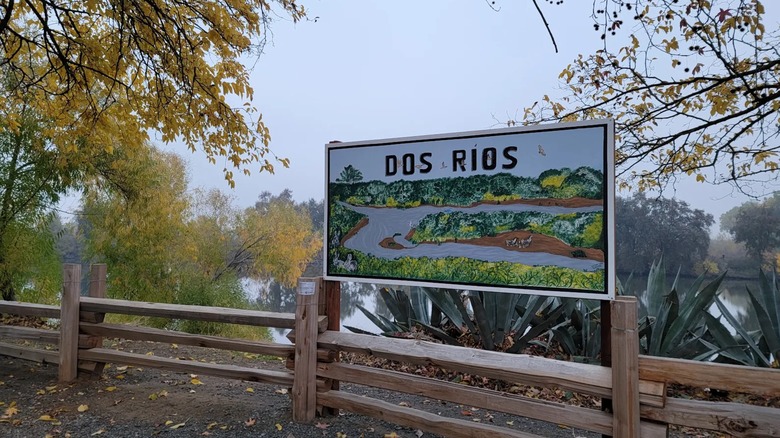
Most recent California state park additions have focused on expansions of existing parks, but Dos Rios Ranch State Park is the first brand-new state park in 15 years and has added much-needed community green space to the Central Valley. The park is also emerging as a model for preserving nature while also protecting local communities. It prioritizes the public in its planning and development, including that of the land's first inhabitants. The park's even designated a 3-acre Native Use Garden for ongoing restoration work and provision of natural resources for use in Native work and cultural arts, from basket-weaving to medicine.
In its first year, California's newest state park saw approximately 10,000 visitors, a number likely to increase. It's less than 10 miles from Modesto, one of the anchor cities of the Central Valley, full of museums, green spaces, and an underrated wine scene. Places like Modesto and Merced, known as the gateway to Yosemite, are integral hubs within the San Joaquin Valley, the Central Valley's southern half (the Sacramento Valley comprises the north).
For camping options close to Dos Rios Ranch State Park, check out Caswell Memorial State Park, just a 20-mile drive, or head to Dos Reis Regional Park for RV hookups or weekend tent camping, about 30 miles north. For non-camping options, Modesto offers the closest food and lodging, with a wide array of major chain hotels. 25 miles northwest of the park lies Tracy, a charming little city with a walkable downtown and artsy vibes, though it has few lodging options. Dos Rios Ranch State Park is about 75 miles from Norman Y. Mineta San Jose International Airport and 86 miles from San Francisco International Airport, both major airports offering access to rental cars.