
Sandwiched Between San Francisco And Sacramento Is California's Wildlife Area With Fishing And Scenic Trails
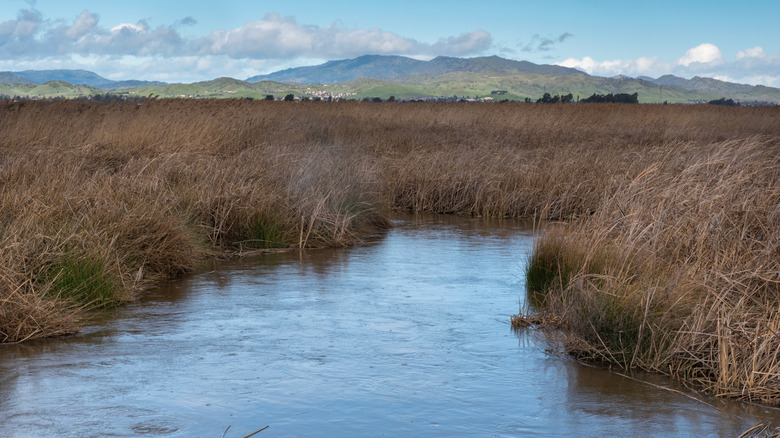
San Francisco and Sacramento are two of the largest and busiest cities in California. However, sandwiched between these two metro areas is 88,000 acres of unspoiled marsh known as the Suisun Marsh. This vast marshland, which is America's largest contiguous estuarine marsh, serves as a haven for a vast variety of wildlife. Within the Suisun Marsh is the Grizzly Island Wildlife Area, which affords visitors the opportunity to explore the marsh along scenic trails and fish for a variety of fresh and saltwater gamefish within the sloughs, ponds, and bays found within its boundaries.
Despite its name, Grizzly Island Wildlife Area is not situated on a singular island of land. Rather, it spans over 12,000 acres of the Suisun Marsh and encompasses a variety of small islands that have been carved by the labyrinth of waterways. However, the entirety of the wildlife area is separated from the mainland by the Montezuma Slough and several bays, which gives it a true island feel.
The grizzly portion of this moniker is also a bit misleading, as there are no grizzly bears in the wildlife area or the state of California, for that matter. While they do appear on the state flag, grizzlies were extirpated from the Golden State more than 100 years ago. There are, however, still large mammals to be seen in Grizzly Island Wildlife Area, including tule elk and wild pigs. Additionally, visitors to the wildlife area are likely to catch a glimpse of smaller creatures such as river otters, beavers, minks, shrews, and rabbits, as well as some of the 200 different species of birds that spend time here.
Fishing at Grizzly Island Wildlife Area
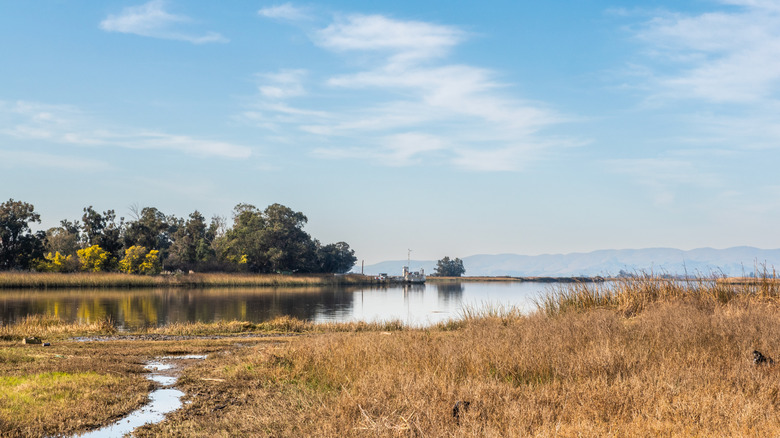
Fishing is a unique experience at Grizzly Island Wildlife Area. That's because, depending on the time of year and prevailing conditions, anglers might catch either fresh or saltwater species. Among the different types of fish that can be caught in the wildlife area are striped bass, sturgeon, catfish, crappie, Chinook salmon, steelhead, and largemouth bass.
Striped bass fishing is typically best in the shoulder seasons, although they can be caught at other times of year as well. Sturgeon fishing tends to be better from late winter through spring, when rain runoff and seasonal high tides occur. Periods of heavy freshwater influx during spring and early summer allow fishermen their best shot at catching largemouth bass and crappie. Catfish, on the other hand, can be caught year-around.
Montezuma Slough, which wraps around much of the wildlife area, along with the various sloughs and waterways within Grizzly Island, are all open to anglers. Fishermen can cast from shore or utilize boats, kayaks, or canoes. Paddle crafts can be launched into the sloughs near the parking areas, while boats can also be launched from just outside the wildlife area at Belden's Landing on Grizzly Island Road.
Trails in the Grizzly Island Wildlife Area
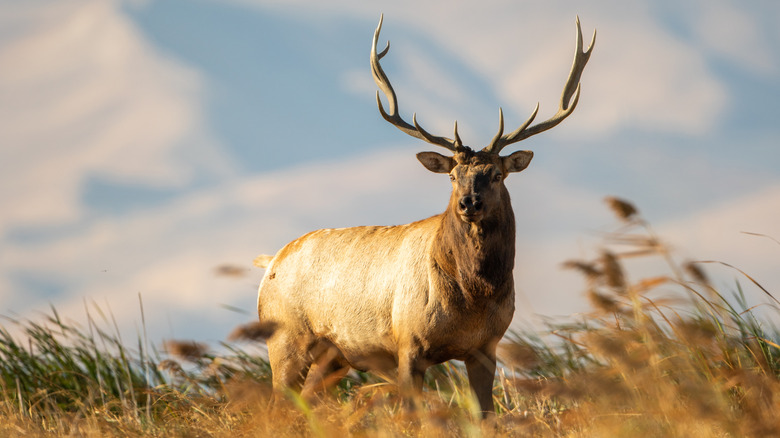
Visitors to Grizzly Island Wildlife Area have access to 75 miles of trails and roadways that they can utilize for day hikes. The pathways wind through the marsh, offering an up-close look at the flora and fauna of the Delta Region. The nearby Vaca Mountains, which lie between the wildlife area and Sacramento, provide a dramatic backdrop. The waters next to the paths are not only lined with the flora that is indicative of the delta, but they are also filled with waterfowl and shorebirds. Hikers are also likely to catch a glimpse of elk and other resident wildlife while walking along the trails and roadways. The combination of scenery and wildlife makes Grizzly Island an ideal setting for nature photography.
Grizzly Island Wildlife Area is open daily from sunrise to sunset. Visitors can obtain a permit upon arrival at the self-registration booth. They should also sign out at the booth when they leave. No overnight stays or campfires are allowed. It is also worth noting that while the wildlife refuge is technically open year-round, it is only open to hunters from the end of July through the beginning of February. The exact dates of the non-hunting closure vary each year based on hunting season dates.
This pristine wildlife area is located 11 miles from the small town of Fairfield, which is known as a serene base right by Napa Valley. It is almost equidistant from both Sacramento, California's City of Trees, and San Francisco. Each of these metro areas is about an hour away, in opposite directions. Visitors traveling from San Francisco can also take a quick detour to check out Mount Diablo State Park, which offers unmatched views of the Bay Area.