
The World's Wealthiest Country Is A European Oasis Known For Its Colorful Cities And Scenic Hiking Trails
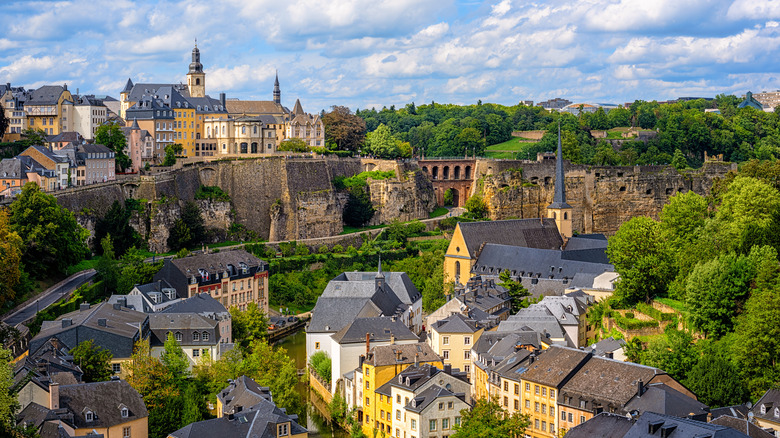
Landlocked between Belgium, Germany, and France, Luxembourg is one of Europe's smallest countries, yet it consistently ranks among the world's wealthiest nations by GDP (per capita adjusted for purchasing power parity). And while Luxembourg is a captivating destination with dramatic river valleys, medieval fortifications, and charming colorful towns, it's better known for its financial sector and its position as one of the world's leading financial hubs than it is for tourism. But this beautiful nation has a lot to offer visitors, including postcard perfect towns and plenty of picturesque hiking trails.
At its heart lies Luxembourg City, where centuries-old buildings perch atop cliffs above the deep gorges of the Alzette and Pétrusse rivers. The city's UNESCO-listed old quarter combines atmospheric cobbled streets, fortified walls, and sweeping viewpoints across elevated plateaus that stack the city into vertical layers. Districts such as Grund unfold below in a maze of historic houses, cafés, and narrow lanes.
Luxembourg's comparatively small size is one of its greatest advantages for visitors. Distances between towns are short, making it convenient to experience its historic cities, castle-studded countryside, and celebrated hiking regions within a single trip. Travelers arriving via Paris can reach Luxembourg in just over two hours aboard direct TGV services, making Luxembourg an effortless addition to a wider European itinerary.
Luxembourg's colorful cities blend medieval charm with dramatic scenery
Luxembourg City is packed with landmarks, from the Grand Ducal Palace and Notre-Dame Cathedral to Place Guillaume II, where cafés spill onto the square. Visitors can explore the UNESCO-listed Old Quarter, including the Bock Casemates, a vast network of underground tunnels carved into the rock, and the Chemin de la Corniche, a scenic promenade referred to as "Europe's most beautiful balcony" owing to its sweeping views of the fairytale-like Grund (Lower Town) district below. Additionally, the capital is exceptionally easy to navigate on foot and by Luxembourg's extensive, free public transportation network.
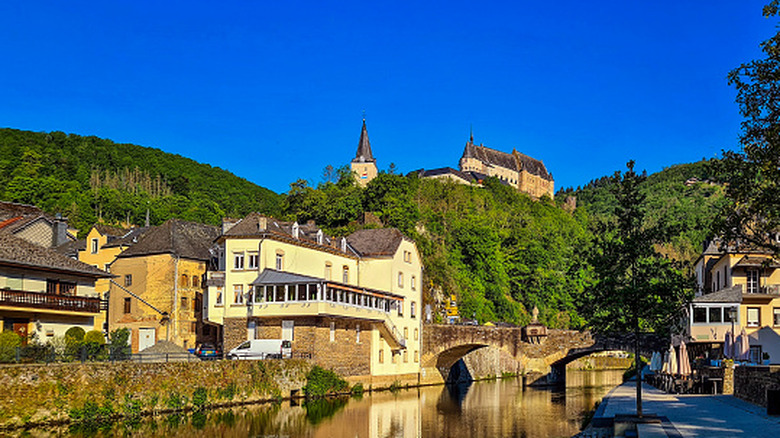
Vianden is one of Luxembourg's most picturesque towns, where colorful houses, waterside cafés, and pedestrian walkways are built around the banks of the Our River. Above the village, Castle Vianden dominates the skyline from its forested hilltop. Built between the 11th and 14th centuries, the restored castle is home to grand halls, chapels, and period collections that are open to the public every day. Visit in late July and you'll see the castle come alive with the sights and sounds of medieval Luxembourg as the Medieval Festival takes over the grounds with battles, entertainers, and a marketplace featuring food and crafts.
Echternach is Luxembourg's oldest town, founded in 698 by Saint Willibrord, the centerpiece of which is the Lothringen style Abbey of Echternach, around which the city grew. Today the abbey is a museum where visitors can explore the beautiful basilica and collections of religious artifacts and colorful manuscripts. Beyond the abbey, Echternach's historic market square is anchored by a former Palace of justice dating from the 14th century, and lined with traditional townhouses and cafés where visitors mingle with tourists. If you're exploring across Europe, a fascinating route to Echternach is via Trier, Germany's oldest city, 30 minutes away by car.
Scenic hiking trails reveal Luxembourg's forests, rock formations, and river valleys
With a staggering 1,128 trails in a country smaller than Rhode Island, Luxembourg is crisscrossed by a vast network of trails. Ranging from challenging long-distance routes to gentle nature walks — including 'comfort trails' suitable for wheelchair users and visitors with reduced mobility — the options here open paths to every kind of outdoor adventurer. Scenery across the country unfolds with dense forests, waterfalls and rivers, castles and villages.
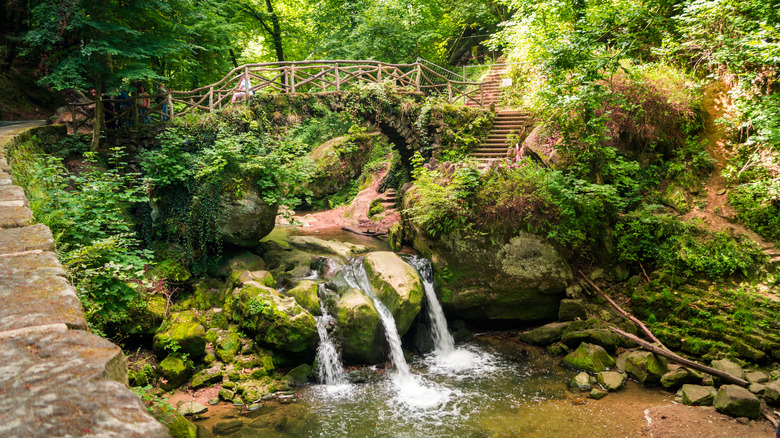
One of the country's most renowned routes is the Müllerthal Trail, a roughly 70-mile route through eastern Luxembourg, a region often referred to as "Little Switzerland" owing to its rugged, cinematic terrain. One of Little Switzerland's best-known landmarks is Schiessentümpel, a picturesque waterfall flowing beneath a distinctive stone bridge surrounded by woodland punctuated with stones green with lichen and moss. Hikers navigate narrow rock passages and towering sandstone outcrops sculpted by millions of years of erosion, including the remarkable formations found around Berdorf and the towering Wollefsschlucht gorge.
For a different perspective, the Éislek region in northern Luxembourg offers trails through the Ardennes, passing castle ruins, forested hills, river valleys, and scenic viewpoints. Visitors looking for a shorter outing can opt to follow circular walks around Upper Sûre Nature Park, where paths skirt Luxembourg's largest reservoir. Luxembourg's hiking network also forms part of a wider system of long-distance walking routes, making it possible for experienced hikers to continue beyond the country's borders. For those inspired to tackle an even more ambitious journey, try the Camino de Santiago, a centuries-old pilgrimage that draws walkers across the continent toward northwestern Spain. Known as 'The Way of St. James' in Luxembourg, the trail begins in the north and passes through Vianden, Echternach, and Luxembourg City on its way south to the French border.