
South Carolina's Former Plantation Is Now A Historic Nature Preserve With Unique Wildlife And Unspoiled Beaches
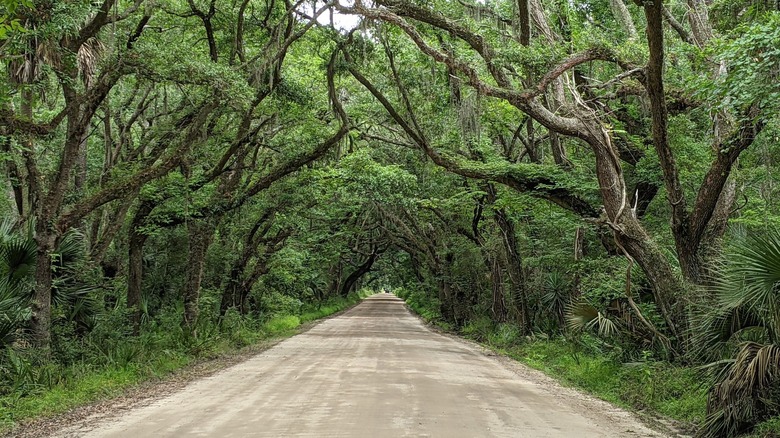
Hidden away on South Carolina's Edisto Island is a historic nature preserve called the Botany Bay Heritage Preserve and Wildlife Management Area. The preserve spans 4,600 acres and is teeming with diverse wildlife among lush wetlands and unspoiled beaches.
In addition to its natural landscapes, the preserve offers a look into the past. It is the site of two former timber and cotton plantations, Bleak Hall and Sea Cloud, and the cotton grown here was prized by European dressmakers due to its quality. Several structures on the property, including buildings at Bleak Hall, are listed on the National Register of Historic Places.
Botany Bay is located an hour's drive southwest of North Charleston, and it is open from one hour before sunrise to one hour after sunset every day, but is closed on Tuesday, and no admission is required. There are other occasional closures that can be found on its calendar.
From thriving plantations to a protected preserve
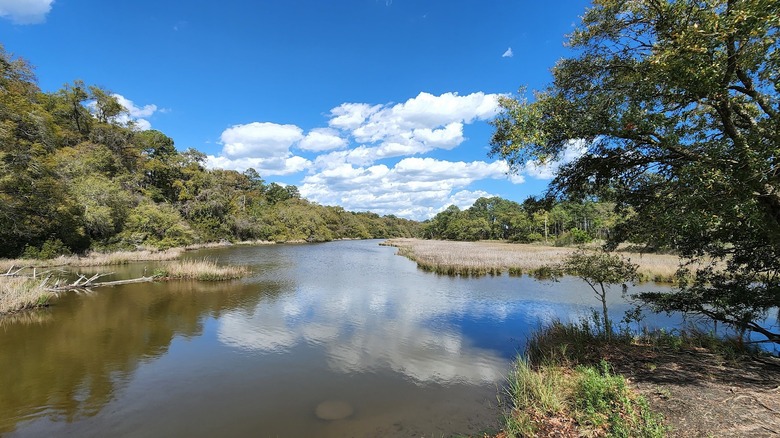
Botany Bay is home to two historic plantations: Bleak Hall and Sea Cloud. In 1798, Bleak Hall was constructed by Daniel Townsend, III. His son, John, later bought Sea Cloud and grew Sea Island cotton on both plantations until pest infestations devastated the crop in 1917. It then focused on timber production.
During the 1930s, both Bleak Hall and Sea Cloud came under the ownership of Dr. James Greenway, who joined the properties and gave the area its current name, Botany Bay. The plantation complex was later donated to the state, following the passing of its final private owner, John E. Meyer, and his wife in 2007.
Several plantation buildings still stand, including a well, an ice house, and a barn. Botany Bay became a nature preserve in 2008 and is part of the protected ACE Basin Focus Area, one of South Carolina's seven natural wonders.
Wildlife preservation in the wetlands and on the beach
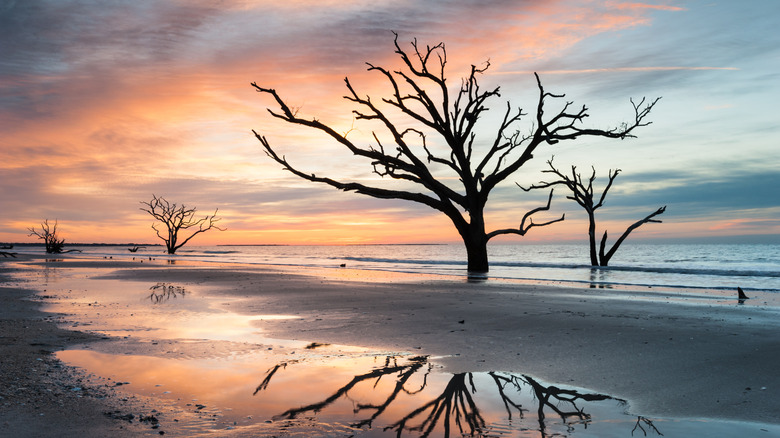
Botany Bay is home to a protected beach that provides an important habitat for coastal species. Nicknamed Boneyard Beach due to the skeletons of ancient trees that are seen all along the shoreline, this beach is best visited at low tide. According to the Nature Conservancy, up to 100 sea turtles nest in Botany Bay each year, resulting in several thousand hatchlings.
Various other marine species are found at Boneyard Beach, including mollusks like scallops and clams and several species of crabs. For avid birdwatchers, the area also provides an environment for vulnerable seabirds like the least tern.
To keep the area unspoiled, collecting shells or taking fossils from the beach is prohibited, according to the SCDNR. While the beach is popular for walking and wildlife viewing, neither pets nor bicycles are allowed on the sand. Botany Bay is part of South Carolina's larger ACE Basin, an underrated wildlife refuge for outdoor lovers. For a nearby recreational beach, the town of Edisto Beach is a short 16-minute drive away.