
The 3 International Airlines That Have The Most Legroom In Economy Class In 2026
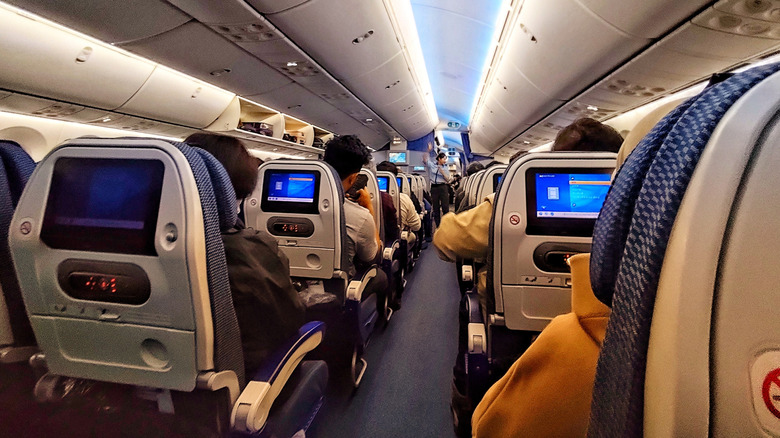
Weary travelers today are happy enough if their flights aren't canceled due to high jet fuel prices, but gripes about their less-than-spectacular flying experiences are valid. One notable frustration is the economy class' shrinking legroom (or seat pitch), which has declined by roughly 15% to about 30 inches since the 1970s, per the business blog VisualCapitalist. Some Asian and Middle Eastern airlines, however, are bucking trends and going the extra mile for passenger comfort. Per Simple Flying's comparison, three international airlines tied for the most legroom: Japan Airlines (JAL), All Nippon Airways (ANA), and Emirates all provide a whopping 34 inches.
JAL's generous seat pitch is on many of its Boeing 787, 777-300ER, and 767-300ER models on select long-haul, domestic, and international flights. The JAL Sky Wider seats feature broader seat widths, power ports, and mobile phone holders, and on the JAL Sky Suite 787, the typical nine-seat per row arrangement is reduced to eight for added comfort. Fellow Japanese airline, ANA, is investing in even better passenger ergonomics with the roll-out of new economy seating this summer, featuring an extra inch of knee space and an increase in total recline, according to the company's website. Known for luxury perks, Dubai-based Emirates also claims to offer some of the "best seats at 40,000 feet" in all cabins (via the airline's website), with a seat pitch up to 34 inches on its Airbus A380s and 5-inch recline.
Simply Flying's study is based on data from aircraft certifications and equipment specifications. Only one American carrier cracked the top five, with JetBlue Airways ranking at No. 4 with 32.3 inches, ahead of Cathay Pacific's 32 inches. Missing from the list is ultra-low cost carrier, Frontier Airlines, the U.S. airline with the least legroom at just 28 inches.
Legroom is no joke on airplanes
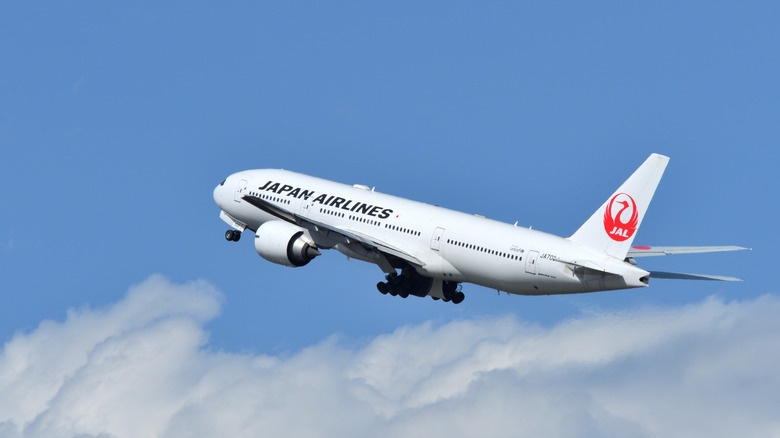
It may sound wonky, but figuring out seat pitch, which measures the row distance between seat headrests, is serious business in the aviation industry. By tweaking economy-class spacing over the years, airlines such as American Airlines have added nearly a dozen extra seats on planes, providing additional revenue to offset rising costs, per CNBC. And, since legroom isn't regulated, airlines have little incentive to change course. It's an ethos that contrasts with Japan's customer-first culture, which focuses on traveler well-being and enhances the company's brand reputation. According to the airline's website, JAL has consistently earned a five-star airline rating by Skytrax World Airline Awards for nearly a decade, delivering a high-quality experience.
However, some airlines are starting to feel the backlash for cutting out legroom. WestJet was recently in the hot seat when a woman's TikTok video went viral of her and her dad sardined into their seats, prompting the budget Canadian carrier to reverse the plane's seat configuration, as reported by Global News. United Airlines is even launching beds for economy in 2026, offering new seating where guests can lie flat in economy for long flights. Expanding cramped cabin quarters is welcome news for flyers, especially those with medical concerns. Larger individuals, those with joint and circulation issues, and pregnant travelers can benefit from more space for flexibility and ease of shifting positions.
So how else can you stay comfy on those double-digit hour trips? If you can't fly these legroom winners, you can bump up to the roomier premium economy and economy plus tiers for a fee. Or skip the upgrade and try nabbing those back row seats for the most space.