
Forget The Caribbean, This Under-The-Radar Island Haven Is Gaining Travelers' Attention In 2026 So Far
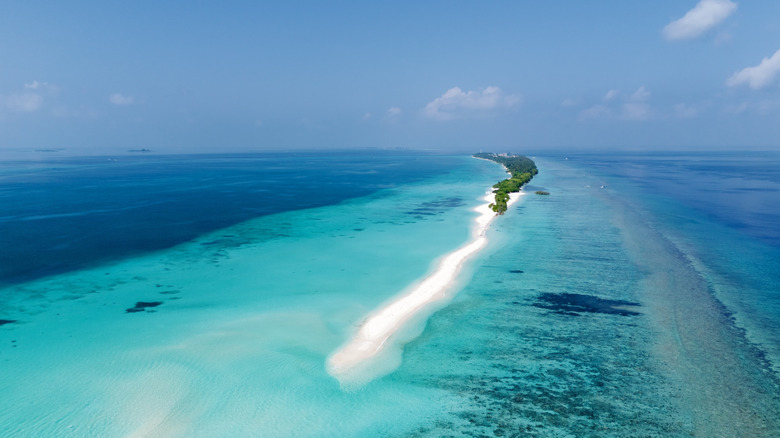
Among the Maldives' 1,190 islands, only 198 are actually inhabited, making the archipelago an idyllic destination for anyone wanting to feel worlds away from civilization. Dhigurah Island is a ribbon of alabaster sand jutting into the azure waters of the Indian Ocean, its interior a long strand of coconut palms and equatorial forest. About 62 miles south of the Maldives capital city of Malé, visitors are transported to the crystal shores of Dhigurah by boat or ferry.
There has been an influx of interest from luxury brands planning to add Maldives locations to their portfolios, but Dhigurah Island is not one of the Maldives' resort destinations boasting infinity pools and overwater bungalows. Instead, it's a small, off-radar swath of land occupied by about 600 locals who share their culture, food, and cozy accommodations with visitors in what happens to be an stunningly scenic setting. And that's perhaps its biggest appeal.
Dhigurah translates to "long island" in Dhivehi, the Maldivian language, and is aptly named given it's a bit over two miles long and just under 1,000 feet wide. On shore, find highly rated accommodations, local cuisine, and water toys to rent. Island lovers may find it's size, serenity, and abundance of beaches and marine life to be heaven on earth.
Dreamy Dhigurah Island and its deep waters
For a little island, Dhigurah has plenty of activities to keep visitors entertained, as well as tranquil lagoons to lull people into utter relaxation. It's one of those getaways where time underwater may rival time on shore due to the tremendous amount of marine life found here. Dhigurah Island has some of the best beaches to watch bioluminescent waves.
Bioluminescent plankton, among other delectable seafaring treats fed on by megafauna, attract whale sharks. These docile, endangered behemoths are extremely rare to spot in the wild, as they can swim to extraordinary depths. Whale sharks, along with manta rays, dolphins, and parrotfish, frequent the waters of Dhigurah, which lies in the South Ari Marine Protected Area (SAMPA) that protects the local ecosystems and encourages sustainable tourism.
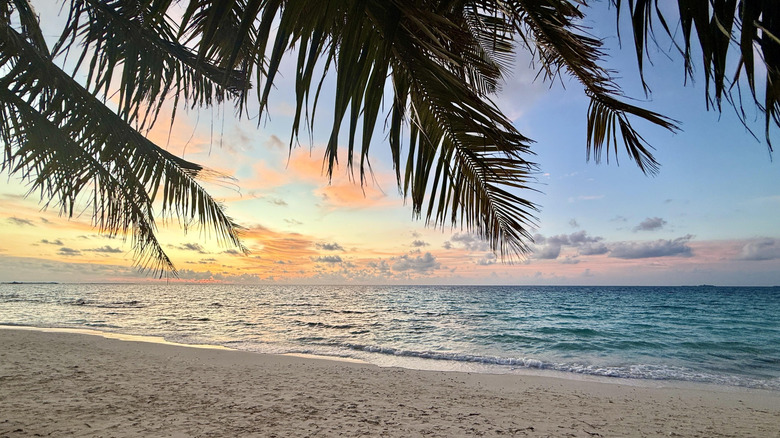
Above water, silky opaline sands run the entire western length of the island, enchanting sunset seekers each evening. A sandbar extends into the turquoise lagoon at its south end. Beaches at this lesser-known island getaway are postcard perfect and extolled by hundreds of Google reviewers. Just be respectful of the local culture, which only allows swimming and sunbathing while scantily clad in areas called "bikini beaches." Dhigurah's is called North West Beach.
How to travel to and around Dhigurah Island
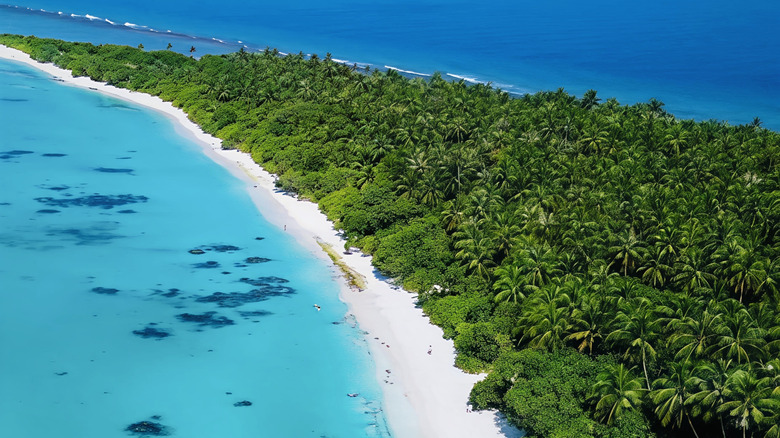
There are some crucial details to know before visiting Dhigurah Island. First, fly into Velana International Airport (MLE) near the Maldives capital of Malé. Then take a speedboat, which your lodging property can often help arrange, for a little under two hours to Dhigurah. The island is easy to walk given its small size, and if breaks are needed, find random hammocks or swings hanging from the trees across the island. Bicycles can also be rented on-island to get around more swiftly.
The best time of year to visit the Maldives is during the dry season from November through April, versus the island's wet season between May and October when prices may be lower but weather conditions are more unpredictable. Inter-island transportation may be adversely affected by tropical storms during the wet season. No matter the time of year, temperatures here are ideal for beach-going, generally only swinging between 77 and 90 degrees Fahrenheit.
Despite its small size, dozens of lodging properties are available across the island. Try the local cuisine — often involving seafood, curry, and coconuts — at several beachside or rooftop restaurant options. Then relax into the sounds of lapping waves and blissful sights on this dreamy oasis.