
One Of North America's Largest Abandoned Mansions Near Philadelphia Is Undergoing A Major Transformation
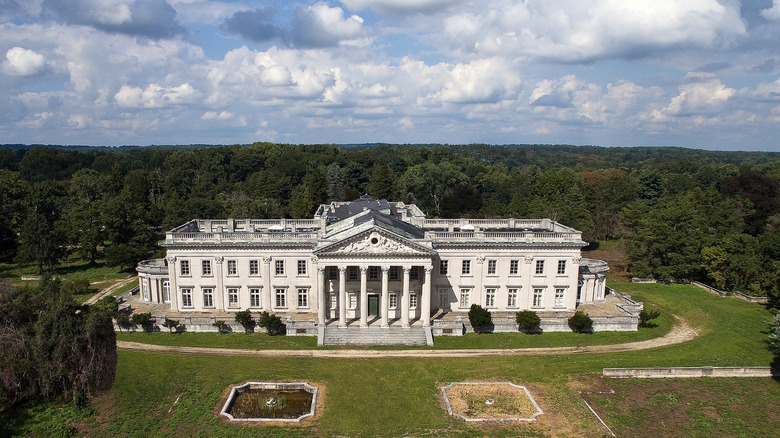
America's Gilded Age, which began in the late 19th century, was a period of extreme wealth that led to the construction of lavish homes, often inspired by the palaces and villas of Europe. While Biltmore in Asheville, North Carolina, is America's largest home, the second-largest is Lynnewood Hall, which lies about 13 miles north of Philadelphia in Elkins Park, Pennsylvania. This impressive estate, which has long been abandoned, is now undergoing a massive restoration.
Lynnewood Hall was commissioned in the 1890s by Peter A.B. Widener, who made a fortune through his holdings in the country's railways and utilities. Designed by architect Horace Trumbauer, Lynnewood Hall was built as a Palladian-style mansion, spanning 100,000 square feet with 110 rooms. The interiors reflected the European influence, from the gilded Louis XIV-inspired ballroom to a museum-worthy art gallery filled with masterpieces. In 1912, tragedy struck the family when Widener's eldest son and grandson perished in the sinking of the Titanic. Lynnewood Hall was then entrusted to Widener's second son, Joseph Widener. After his death in 1943, Lynnewood Hall was sold, and the mansion's prolific art collection was donated to the National Gallery of Art in Washington, D.C.
Over the following decades, the estate's land was sold off, dwindling to 34 acres. The mansion fell into disrepair and was eventually abandoned. Realizing Lynnewood Hall's architectural and historical value, the Lynnewood Hall Preservation Foundation was formed, and it purchased the property in 2023 for $9 million, per WFMZ-TV 69 News. In 2025, Lynnewood Hall was placed on the National Register of Historic Places. The Foundation is now restoring the Gilded Age mansion to its former glory and plans to open it to the public after a multi-phase renovation.
The grand interiors and French gardens of Lynnewood Hall
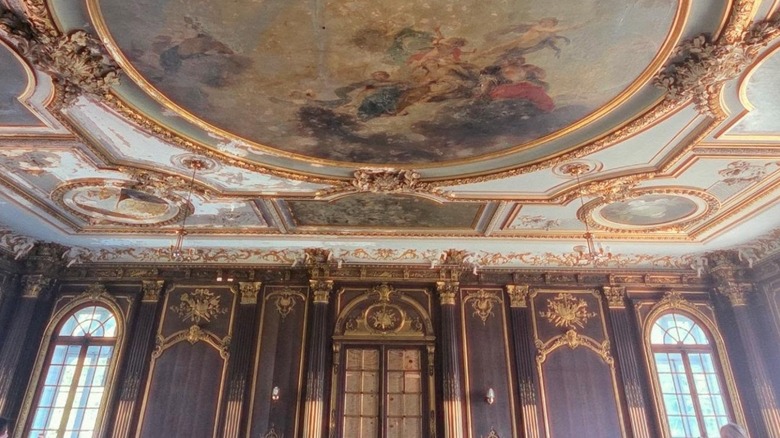
Before Lynnewood Hall was an eerily abandoned mansion, it was the pinnacle of Gilded Age splendor. According to American Aristocracy, the massive home's design was inspired by both Prior Park, a mansion in the English countryside, and the White House. The exterior, with its symmetrical facade and grand pillars, was stately, while the interiors were ornate, befitting a royal European residence. In fact, much of the art and antiques were sourced from Europe, such as furniture that once stood in Versailles and bronze doors fashioned in Florence. The double-height entrance hall, clad almost entirely in marble, set the stage for the opulence to come. Widener's world-class art collection, which featured works by European masters such as Raphael, Johannes Vermeer, and Anthony van Dyck, was prominently displayed in the mansion's top-floor art gallery. The mansion's luxurious ballroom, crowned by a painted ceiling and adorned with recessed columns, gilded accents, and a marble fireplace, played host to society balls. In fact, Widener's grandson later referred to Lynnewood Hall as the "last of the American Versailles," per the Foundation.
Lynnewood Hall's nearly 500-acre grounds matched the grandeur of its interiors, from its gardens to its polo field. In the early 1900s, Joseph Widener redesigned the original Italianate gardens into classical French gardens. Anchored around a central fountain built by a famed French sculptor, the gardens were a verdant symphony of fanciful parterres, cone-shaped bushes, flower-lined paths, and blooming rose gardens.
The plans for Lynnewood Hall's transformation
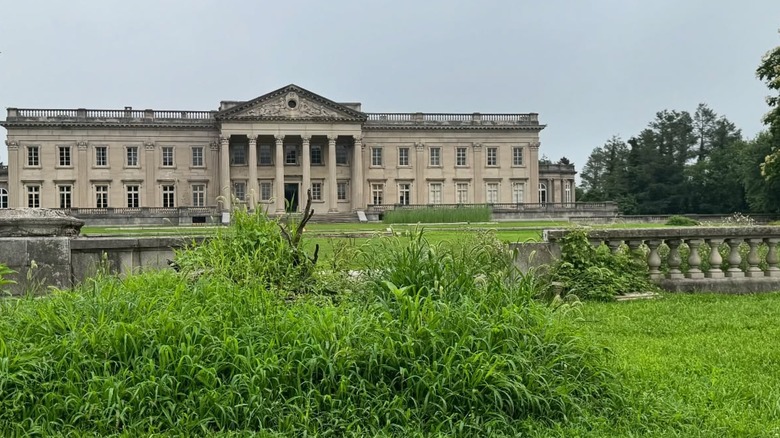
Today, the Lynnewood Hall Preservation Foundation has laid out a multi-phase plan for Lynnewood Hall's major transformation. The multimillion-dollar effort focuses on stabilizing and preserving the interiors of the massive mansion and restoring the French gardens. The plan is to eventually open Lynnewood Hall to the public as a space for art galleries, community events, and dining. However, the Foundation already hosts occasional events at the mansion. In April 2026, they hosted a reception and conversation about the Titanic and its connection to the Widener family. In the fall of 2026, they will host a flower show on the estate's property. There are also exclusive events and tours of the mansion for members of the Friends of Lynnewood Hall, where membership starts at $125 per year. "I'm glad it's being saved – it was beautiful in its day and I'm glad it's finally in the right hands," wrote a commenter on Reddit.
For those eagerly awaiting the reopening of Lynnewood Hall, there is still plenty of history to discover nearby. About a 20-minute drive from Lynnewood Hall is Bryn Athyn, a Pennsylvania village with cathedrals, castles, and craftsmanship. Here you can visit two grand Gilded Age estates: the French chateau-inspired mansion Cairnwood and the Glencairn Museum, which was designed like a medieval fortress and now exhibits religious art. If you want to explore lovely gardens, head about 5 miles from Lynnewood Hall to Flourtown, a hidden gem suburb with lush gardens and small-town charm. It features the nearly 100-acre property of the Morris Arboretum & Gardens, which brims with blooming flowers and groves of diverse trees.