
New York's Largest Wilderness Area Is A Sprawling Adirondacks Escape With Mountain Trails, Wetlands, And Camping
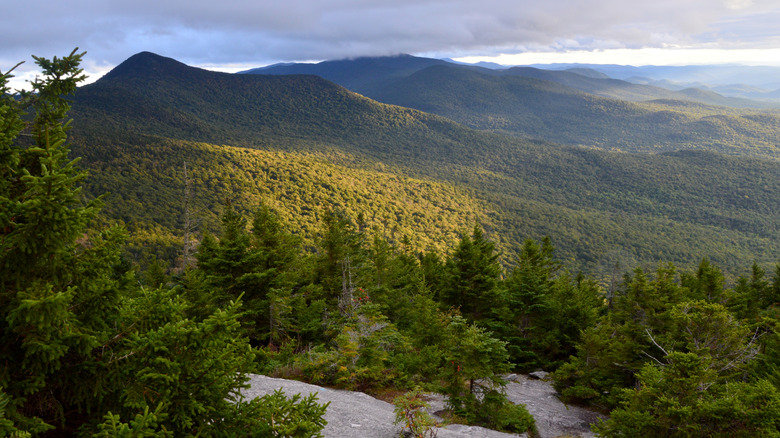
A significant portion of the state of New York — more than 4.5 million acres of public land — is managed by the Department of Environmental Conservation (DEC). Some of that land is officially protected as Wilderness Areas, including the sprawling High Peaks Wilderness Area. Tucked away in the Adirondacks, the 275,460-acre reserve is a paradise for hiking and camping.
It's difficult to grasp the sheer scale of the state's largest wilderness area. Part of New York's Forest Preserve, it includes parts of the Boreas Pond Tract, the MacIntyre East Tract, and the former Casey Brook Tract, as well as the region formerly known as the Dix Mountain Wilderness Area. For many travelers, the primary attraction is the Adirondack 46 High Peaks, a series of mountain peaks that outdoor adventurers tackle as a popular hiking challenge. Those who climb all 46 peaks earn the widely respected title of "Adirondack 46ers."
Climb a few of the Adirondacks' High Peaks
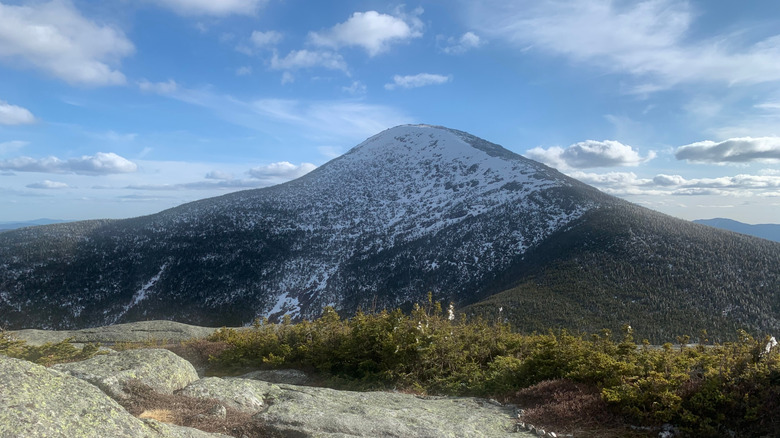
All of the 46 Adirondack High Peaks rise at least 3,800 feet. Standing above all is Mt. Marcy (5,344 feet), the highest peak in the Adirondacks, accessible via a strenuous 15-mile round-trip hike. From the summit, hikers will enjoy views of 43 other high peaks, as well as Montreal's Mount Royal in the distance. "A beautiful but tough trail with great views from the top!" said one recent hiker on AllTrails. In total, the trek takes about 10 hours to complete. Some hikers stop partway along the trip, pitching a tent at the campground near mile three. Backcountry camping is free at designated sites, but campfires are not allowed.
The second-highest mountain in the wilderness area is Algonquin Peak (5,114 feet). You can ascend it on a steep 8.6-mile round-trip hike. "Clear trail, spectacular views," said one hiker on AllTrails. "Trail gets very steep near the top so be prepared for a challenge." The trailhead begins near the High Peaks Information Center and Adirondack Loj, a wilderness lodge on the edge of Heart Lake.
In addition to a campground with simple tent sites, traditional lean-tos, and canvas cabins, the Adirondack Loj offers private rooms and shared dormitory-style bunk rooms. The complex also has dining facilities and offers access to the lake, which is open for swimming in summer. The Adirondack Mountain Club, which runs the lodge, also has canoe, kayak, and paddleboard rentals in warmer weather. And in winter, the area turns into a winter camping getaway with cross-country skiing and hiking trails, and is also a popular spot for snowshoeing.
Explore wetlands in the High Peaks Wilderness Area
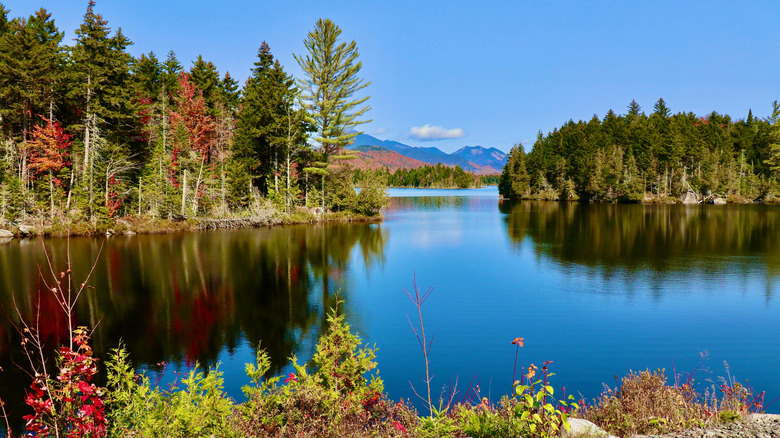
Beyond its famous mountain trails, the High Peaks Wilderness is home to extensive wetlands. One to explore is the Boreas Ponds Tract, a lowland region beneath the Boreas Mountain Ranges. The 320-acre Boreas Ponds, surrounded by dense forest and facing striking views of the surrounding peaks, is a popular spot for paddling and fishing. The area provides a habitat for loons, bald eagles, great horned owls, and great blue herons, so it's a good spot for wildlife watching, and there's free backcountry camping — just be sure that you place your tent at least 150 feet from roads, trails, and any water source.
Intrepid hikers can trek to more remote wetlands, the scenic if comically named Duck Hole. A difficult 12.8-mile out-and-back adventure leads to an old dam and pond (after which the hike is named) that's since transformed into lush wetlands. It is a gorgeous hike, passing beautiful meadows and the pristine Cold River along the way.
Since the wilderness area is huge, there are many ways to access it. But a convenient jumping-off point for many travelers is Lake Placid, New York, the idyllic lakefront Adirondack town with the most walkable main street in small-town America. You'll find food and lodging there — if you're not camping in the wilderness — and Albany International Airport (ALB) is just a 2.5-hour drive away.