
Between Chattanooga And Huntsville Is An Ex-Mining Site That's Now A Nature Preserve With Stunning Cave Scenery
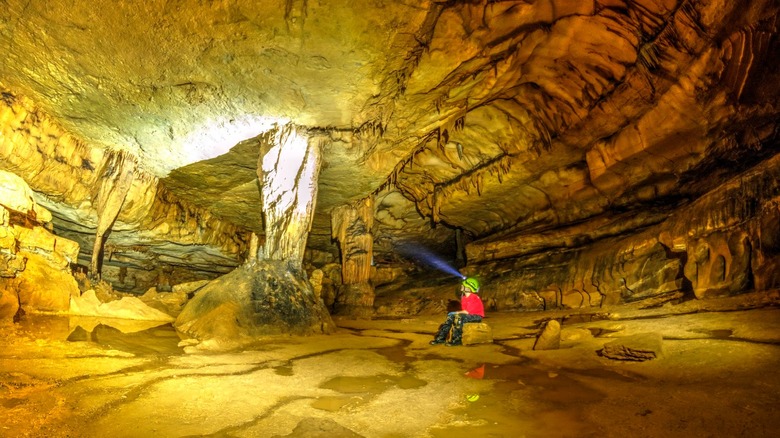
In the heart of Alabama's most cave-dense county is a place where history and stunning natural elements meet in six miles of underground passages in one of Alabama's longest caves. John T. Dolberry Tumbling Rock Cave Preserve — known as Tumbling Rock Cave — is halfway between Huntsville and Chattanooga and offers an off-beat way to dive (and occasionally crawl) into history. Impressive geological formations like a mystical 400-foot waterfall, a cavernous stream, and stalactites and stalagmites with names like the Elephant's Foot and Christmas Tree have all attracted adventurers to this former Jackson County mining site that's now a nature preserve.
For some, it's this limestone cave's history that makes it worth the journey. While Alabama has significant Civil War sites like the abandoned Fort Gaines, Tumbling Rock played a more subtle but still important role in the war. When the Civil War began, the Confederate government needed gunpowder, which is made of charcoal, sulfur, and saltpeter (potassium nitrate). Cave-heavy Southern states like Alabama could provide saltpeter, since this chemical is found in bat guano.
Tumbling Rock was turned into a saltpeter mine in 1863, and you can still see the vats from that time. Guano is rich in calcium nitrate, so water was filtered through the guano-filled dirt and its concentrate was then turned into saltpeter. You can also see dirt mounds left over from this process, along with names of soldiers and others who visited the cave in the 1800s (both before and during the Civil War) scratched into the walls. By one of the vats, here's even a human footprint that was left when the cave was a mine.
Visiting the Tumbling Rock Cave
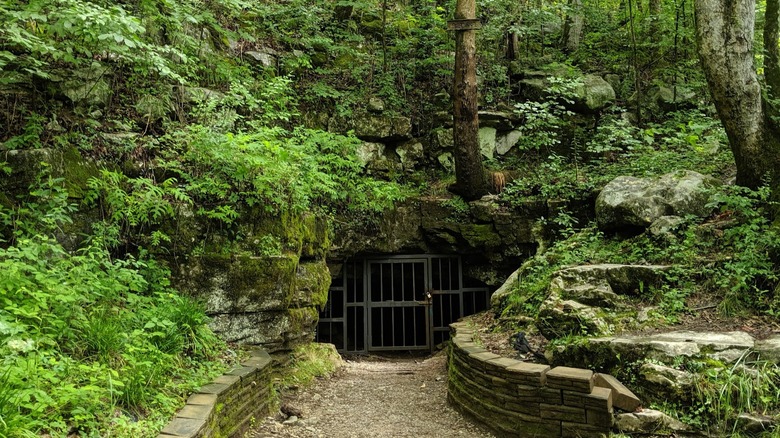
Tumbling Rock is a wild cave, so there aren't (contemporary) human interferences or developments like a maintained trail or lights. While it's a good cave for beginners, it's not recommended for small kids, and it's always wise to go with an experienced guide. The site is managed by the Southeastern Cave Conservancy (SCCi), which conserves the cave as a nature preserve. You're on your own to explore it with your own equipment, although you do have to get a permit from SCCi in order to open the gate at the cave's entrance. The cave is free, but donations are a welcome help in maintaining the site.
SCCi is also a great resource for finding more information about the cave. They sometimes have events for more casual cavers, like semi-self-guided tours, where docents are positioned throughout to give you further information about the site. You will get wet and dirty, as at various points you have to crawl, climb, and cross the stream, so be sure to pack a change of clothes for after and don't wear anything extra expensive or meaningful either. It's about 56-58 degrees Fahrenheit in Tumbling Rock year-round, so layers are a good idea.
Tumbling Rock is typically only open on the weekends or by appointment, so contact the SCCi when planning your trip. Be sure to check the weather, as the cave can flood, and after a rain, it can be quite slippery. Tumbling Rock is just an hour drive from the outdoor activities and space center of Huntsville, and it's an hour and 15 minutes from Chattanooga. This scenic and artsy city in Tennessee has the domestic Chattanooga Metropolitan Airport (CHA), and the closest major international airport to Tumbling Rock is Birmingham (BHM), just under 2.5 hours away by car.