
Colorado's High-Elevation Lake Oasis In Rocky Mountain National Park Is A Scenic Gem With Crystal-Clear Waters
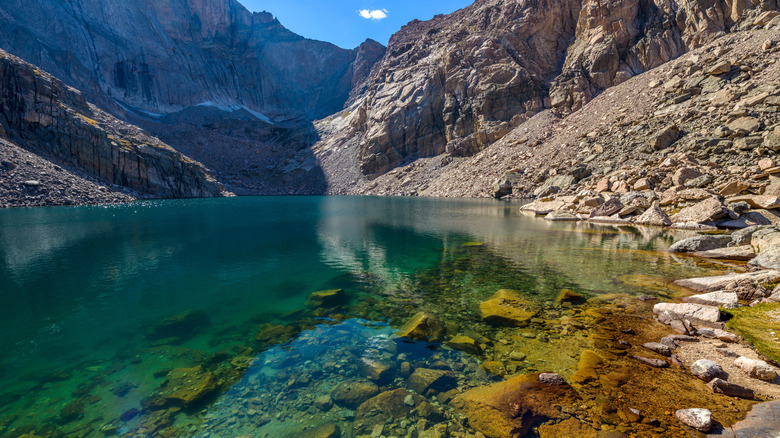
Featuring snow-capped mountains and glacially-carved scenery, Rocky Mountain National Park in Colorado is a hiker's paradise. While some adventurers spot elk at Moraine Park or admire Longs Peak from Upper Beaver Meadows, others embark on trails to some of the park's 147 lakes. Formed by glaciers during the last ice age, Chasm Lake is a liquid mirror, glistening beneath jagged mountain tops and the towering behemoth of Longs Peak, the highest point in the park at 14,259 feet.
When hikers talk about Chasm Lake (and the strenuous hike to get there), superlatives abound. Trekkers on r/coloradohikers call it one of the best hikes in Rocky Mountain National Park, while prominent outdoor blogs, like Earth Trekkers, rank Chasm Lake among the park's "most spectacular" lakes. Perched at around 11,800 feet, Chasm Lake boasts crystal-clear, turquoise waters contrasted by a grayscale of jagged rock faces, boulder fields, and other alpine tundra features. The lake has no streams flowing into it. Instead, glacial melt and rain fill the bowl-like depression, creating a lake devoid of sediment and cool enough that algae can't grow.
Between October and late June, snow blankets the boulders and ice forms thick sheets. Regardless of the season, you won't glimpse Chasm Lake until you're right at the shore, so it truly feels like stumbling upon an oasis of color between gray peaks. Devoid of facilities or man-made elements of any kind, it's a place to marvel at the majesty of nature and admire Longs Peak's 1,000-foot cliff face across the water.
What to expect and how to get to Chasm Lake
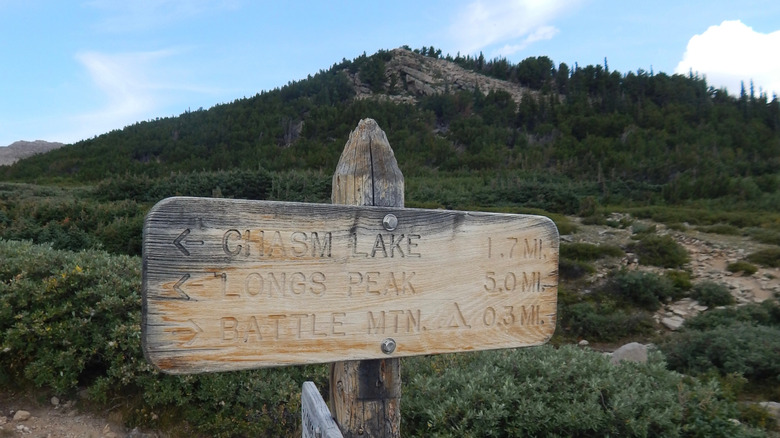
As is true for any natural oasis, the difficult journey only makes the reward sweeter. To reach Chasm Lake, you'll need to hike 8.4 miles (out and back) via the Longs Peak Trailhead. This route requires over 2,500 feet of elevation gain, and because the lake itself sits at nearly 12,000 feet above sea level, some hikers may experience altitude sickness. It's not a beginner-friendly route, and hikers have fallen to their deaths, so you need to know your personal limits and be prepared to alter your plans depending on the conditions.
Starting at approximately 9,400 feet, the first section takes hikers through the montane forest's ponderosa pines before entering more open subalpine forests. Here, gnarled limber pines have evolved to survive in harsh, windy conditions. At around the 2.3-mile mark, you'll reach the edge of the treeline and enter the open-sky expanse of the alpine tundra. Blue alpine forget-me-nots and other hardy wildflowers bloom briefly during the summer, but otherwise you'll find few colorful plants. Just below the lake, the trail passes Columbine Falls, a plunging cascade that feeds Peacock Pool. The final segment requires hikers to scramble up boulders cradling the lake, adding one last test before you're rewarded with jaw-dropping lake views.
In terms of directions, follow the Longs Peak Trailhead for about 3.5 miles until you reach the turnoff for the Chasm Lake Trail. Generally speaking, hikers find the trail easy to follow, but in sections where there's no clearly defined path, look for rock cairns to guide your way.
Things to know before hiking to Chasm Lake
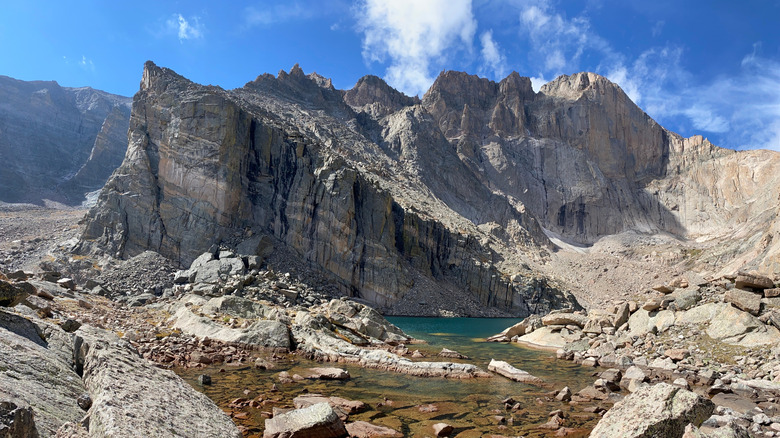
The best time to trek to Chasm Lake is between July and October, when active snowfall is less likely. During snowy or icy conditions, previous winter hiking experience and proper gear are essential — in general, winter hiking is highly discouraged for most visitors. However, the National Park Service warns hikers to expect possible snow and ice on the summit routes even during the summer months. "Any venture beyond the trailhead will require proper winter equipment, route-finding skills, and knowledge of winter travel," per the National Park Service (NPS).
In addition, summer rains bring slippery conditions and sudden afternoon thunderstorms. The NPS recommends exiting the exposed alpine zone by midday to reduce your chances of being struck by lightning. When there's still snow on the ground, microspikes or other removable traction devices will be your best friend, and some hikers suggest bringing trekking poles year-round.
If you're coming from sea level, locals recommend spending one night in Denver or a gateway town like Colorado's storybook escape of Estes Park to acclimate to the high altitude. You can also avoid getting altitude sickness by taking lots of breaks and packing at least 3 liters of water. As for paperwork, anyone visiting the park between May 22 and mid-October (9 a.m. and 2 p.m.) needs to purchase a timed entry permit via Recreation.gov. However, the parking lot is often full by 6:30 a.m. due to hikers embarking on the trail to Longs Peak's summit.