
Montana's Southeast Gem Is A State Park With Starlit Camping, Unique Rock Formations, And Diverse Wildlife
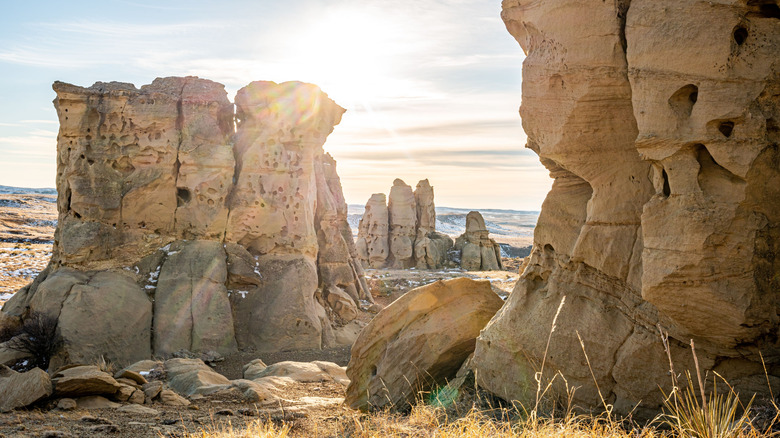
While Montana's two national parks, Yellowstone and Glacier, get the most attention, its 55 state parks also offer remarkable landscapes and fewer crowds. In fact, Montana's state parks saw a cumulative 3.3 million visitors in 2025, while Yellowstone alone received 4.7 million visitors in the same year. In the remote southeastern corner of the state, about 250 miles from Billings, lies Medicine Rocks State Park, whose Great Plains terrain is marked by unique rock formations. Rising up to 80 feet tall, these ancient sandstone compositions are renowned for their surrealist shapes and gaping caves. According to Project Archaeology, these rocks were originally a meeting place for Native Americans, whose paintings and petroglyphs still remain on the rocks today. By the late 19th century, the rocks had become a destination for intrepid tourists, such as the future president Theodore Roosevelt, who said it was "As fantastically beautiful a place as I have ever seen."
However, Medicine Rocks State Park didn't become a state park until the land was acquired in 1957, and the park was then listed on the National Register of Historic Places exactly 60 years later. In 2020, the park was designated as an International Dark Sky Sanctuary due to its incredibly dark skies and lack of light pollution. Today, the 330-acre park draws travelers to its secluded setting to explore these prehistoric rock formations, hike on trails, spot diverse wildlife, and camp year-round beneath starlit skies.
Medicine Rocks State Park is located in Ekalaka, Montana, and is open year-round from 7 a.m. to 10 p.m. There is parking in the park, and fees are $9 per car. If you're flying in, the park is a 3.5-hour drive from Billings-Logan International Airport (BIL). You can also fly from Billings into Glendive's Dawson Community Airport (GDV), which happens to be America's smallest airport, and then make the 1.5-hour drive to the park.
What to see in Medicine Rocks State Park
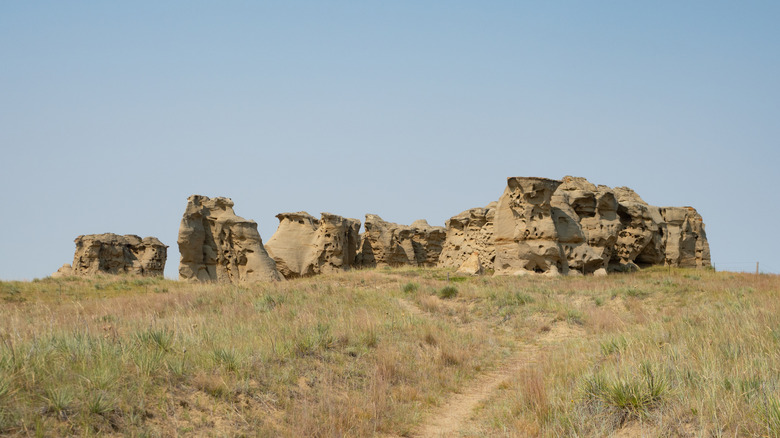
To reach Medicine Rocks State Park, you'll turn off on Park Entrance Road from Highway 7. The park has three main parking lots and facilities such as bathrooms and group picnic areas. Rising from the park's grassy landscape are the eponymous Medicine Rocks, geological wonders that were first shaped about 60 million years ago after the sandbars of an ancient river turned to sandstone by erosion, according to the Montana State Parks Foundation. The natural elements have fashioned these towering rocks into whimsical sculptures, and now some of the rocks even have interior caverns that you can explore and climb into. You can spot some of the ancient petroglyphs carved by the Native Americans who visited here centuries ago; however, many of the rocks have been defaced by modern graffiti.
To reach the rocks, you can set out on three short trails that wind through the wide-open plains dotted with pine trees. The 0.8-mile Dalton Trail runs through the southern part of the park. Here, you'll bypass Dalton Rock, which offers panoramic views. The North Rock Trail is a 0.3-mile grassy trail that leads to the park's northern border, where you'll see a cluster of rock formations. The Sunset Loop is another 0.3-mile trail that meanders to the western border of the park for stunning vistas at sunset.
As you wander along the park's trails, you will likely spot some of the diverse wildlife that congregate near these sandstone pillars and throughout the prairie. Here, you may spot mule deer or pronghorn ambling along and sharp-tailed grouse, a type of prairie bird native to Montana, flitting through the grasses. Overhead, you may spot the vibrant red-headed woodpecker or bald eagles soaring.
Camping in Medicine Rocks State Park, Montana
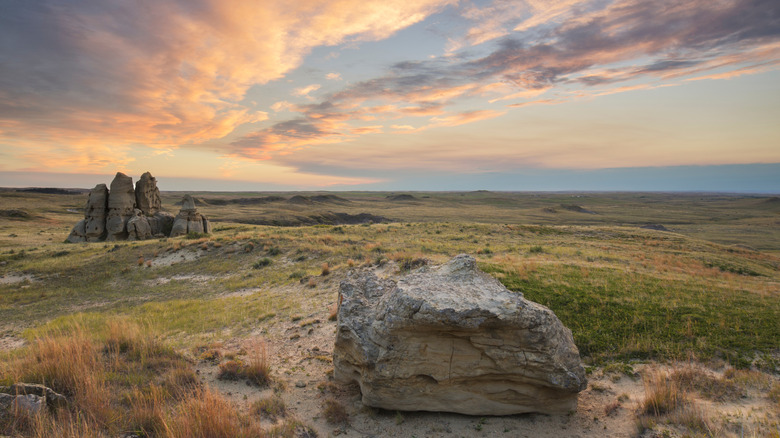
While Medicine Rocks State Park should first be explored by day, after nightfall it becomes all the more extraordinary. The park was Montana's first to earn International Dark Sky Sanctuary status, and the park's remote location ensures inky black skies and unobstructed stargazing. For prime stargazing opportunities, consider camping overnight. The park's eight campsites offer plenty of amenities, including vault toilets, drinking water, grills, and picnic tables.
While camping is permitted year-round, the best time for comfortable weather is between June and August, when average high temperatures hover between 76 and 85 degrees Fahrenheit. Throughout the summer, public events are held at the park, such as guided night hikes and group stargazing. "It is out of the way, but the scenery is amazing, and the campsites are spread out, so it is nice and quiet," raved a reviewer on Google. "The stars at night were vibrant."
After you've explored Medicine Rocks State Park, head about a 1.5-hour drive northwest to Glendive, a city sandwiched between Montana's Badlands and the Yellowstone River. The city is a convenient base for more state park adventures as it directly borders the over 11,500-acre Makoshika State Park, Montana's largest state park and a wildly underrated gem.