
The World's Tallest Volcano Is A Jaw-Dropping Destination With A High-Elevation Lake And A Scenic Mountain Trail
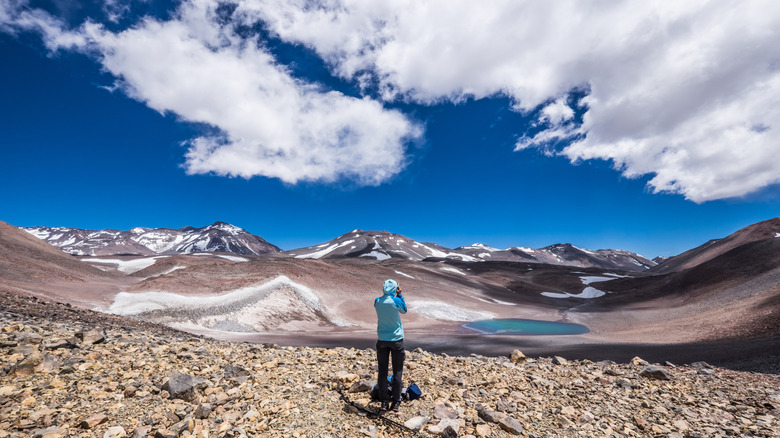
Mount Everest may be the world's tallest and most famous mountain, but when it comes to volcanoes, one particular peak looms high above all the rest — and is considered far more accessible than Everest for experienced high-altitude climbers. Part of the Andes mountain range, Ojos del Salado borders Argentina and Chile and stands at an impressive 22,615 feet above sea level (that's less than 6,500 feet shy of Everest). That elevation makes it the world's highest active volcano and the second-highest mountain in the Americas. Ojos del Salado, which means "Eyes of the Salty One," is a sacred site in Andean culture, and gets its name from the volcano's high concentration of salt deposits. These salt deposits and lagoons are said to resemble "eyes" when seen from above.
Ojos del Salado is a complex stratovolcano, with craters, lava domes, and lava flows. Depending on the time of year, its peak is blanketed in a sheet of snow, starkly contrasting with the arid landscape below. Despite its remote desert location near the Atacama Desert, this jaw-dropping mountain has been attracting mountaineers and curious travelers since it was first successfully summited in 1937. Surprisingly, Ojos del Salado is considered relatively accessible for such a high-elevation peak, though it's still a serious expedition. Much of the ascent is nontechnical, but the final summit section can require scrambling or rope-assisted movement at extreme altitude, often in strong winds. The total climb takes at least eight to 10 days, per AllTrails, depending on your expedition and whether you begin your trek on the Chilean or Argentinian side. Those who visit will be rewarded with dramatic landscapes and impressive natural wonders, including what is often cited as the world's highest crater lake.
Hiking the Ojos del Salado Volcano
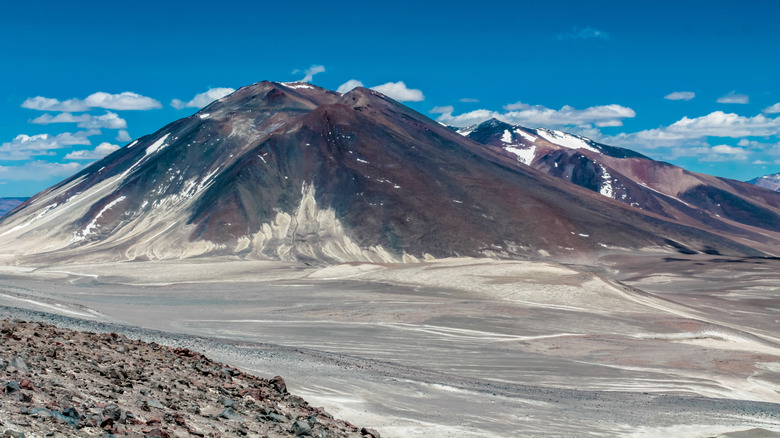
While comparatively easier to climb than some of the world's other tallest mountains (some of which are even more dangerous to climb than Everest itself), Ojos del Salado is still a formidable feat requiring preparation. Depending on the route and itinerary, the total trek spans more than 30 miles with over 8,000 feet in elevation gain. Summit hopefuls should plan to ascend the volcano with an experienced guide, dedicating anywhere from one to two weeks. This amount of time allows the body to acclimatize gradually to higher elevations and accounts for planned rest stops along the way. You can access the volcano's mountain trails from both Chile and Argentina, but more than 90% of expeditions depart from the Chilean side, which is considered both easier and shorter.
Most travelers on the Chilean route fly into Copiapó Airport, also known as Desierto de Atacama Airport, before continuing by road toward the volcano. From Copiapó, Chile Travel recommends traveling by 4x4 toward the base of Ojos del Salado, a drive that takes about five hours.
Well-rated international mountaineering operators like Adventure Consultants and Madison Mountaineering offer gradually paced 12- to 15-day Ojos del Salado expeditions costing roughly between $8,000 and $10,000. Those with limited time may consider Alpenglow Expeditions, which is similarly priced but fits the climb into nine days by employing pre-trip acclimatization conditioning involving hypoxic training. Alternatively, local operator Andes Specialists offers 14-day expeditions at a fraction of the price of the international operators (around $4,000) and a modular trek program called AndesFlex that allows you to choose and pay for specific peaks along the way.
The Chile tourism board also has a recommended two-day itinerary for exploring the base of Ojos del Salado from the mining town of Copiapó, including scenic highlights like Laguna Verde, Refugio Tejos, and the Puna de Atacama along the way.
Home to the world's highest altitude lake and other natural wonders
A mountain of many superlatives, Ojos del Salado is not only the world's highest active volcano, but it is also home to the world's highest-altitude lake. The Ojos del Salado lake is a permanent crater lake that sits at an impressive 20,965 feet, roughly 1,600 feet shy of the summit. While it is anything but grand in size — the lake is less than 350 feet wide — it's still a fascinating experience to witness how an alpine lake can exist at such a high elevation.
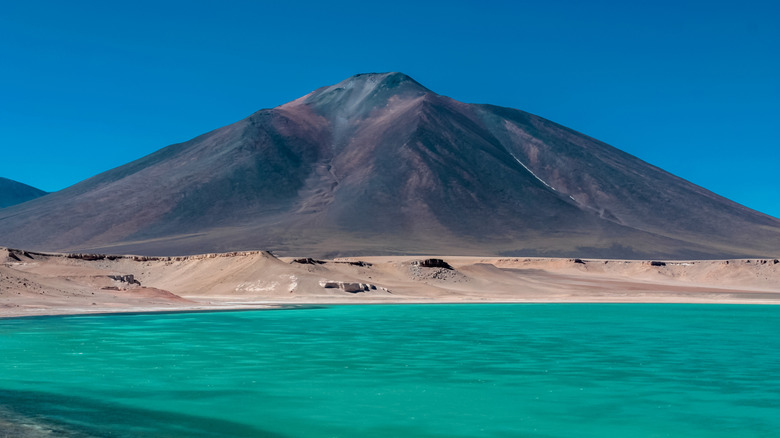
Other points of interest on expeditions may include sights like Laguna Verde, a stunning natural wonder featuring warm turquoise waters, hot springs, flamingoes, and panoramic views of the surrounding mountain range. Laguna Verde is a popular acclimatization stop and recreational area used by Ojos del Salado summit hopefuls on mountaineering expedition itineraries departing from Chile. Weather and road conditions permitting, visitors may also reach the road to Refugio Tejos, one of the highest motorable roads in the world, which leads to a mountain hut at about 19,000 feet.
Chile has been increasingly attracting more and more hikers seeking beautiful landscapes and remote natural wonders (like the Yosemite-like landscapes of Cochamó Valley). Argentina is also already on the map for high-quality wine and cuisine, with establishments like this elegant winery in the Andes with worldwide recognition. So, whether you visit this impressive peak from the Chilean or Argentinian side, you're bound to find plenty of incredible things to do as you acclimatize and take in the scenery along the way.