
A Half-Hour From Des Moines Is Iowa's Tallgrass Haven With Native Plants And Roaming Bison
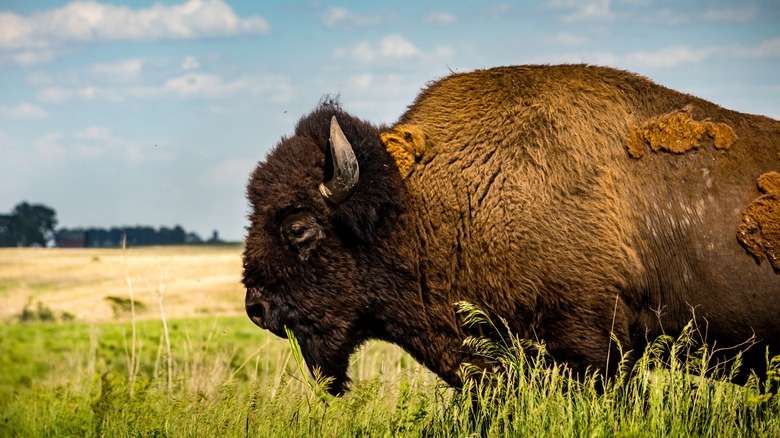
If you've ever wondered what Iowa looked like before the plow, you can get a taste of it at the Neal Smith National Wildlife Refuge (NWR). Just around a 30-minute drive from Des Moines, travelers can leave behind the city and enter Iowa's rural, native landscape. The Neal Smith NWR appears as broad, rolling prairieland, one of the few prairie habitats left in the state. Waves of tallgrass and local wildflowers hint at the ecosystem that once dominated the Midwest before settlers cleared it for agriculture. You'll spot bison grazing it in the distance, while grassland birds like sandpipers and meadowlarks rise and dip above the grass.
Since its founding in 1990, the aim of the Neal Smith National Wildlife Refuge has been to restore one of North America's most endangered ecosystems, the tallgrass prairie. While tallgrass prairie once blanketed 85% of the state, only 0.1% of that cover remains today. Around 4,000 acres of it are in the Neal Smith NWR, which was replanted in the area by people both working and volunteering for the refuge. Only 90 acres of original prairie survived through eras of farming and settlement in the refuge. Meanwhile, other parts of the designated land host a blend of oak savanna (also endangered) and sedge meadow habitats.
Visitors spending a day outside Des Moines can see these habitats that showcase the natural beauty of the affordable Midwestern state, with the native plants and wildlife that thrive among them. You can do a driving tour through the refuge, or take on one of its hiking trails, with easy and moderate options available.
Native plants and wildlife of the Neal Smith National Wildlife Refuge
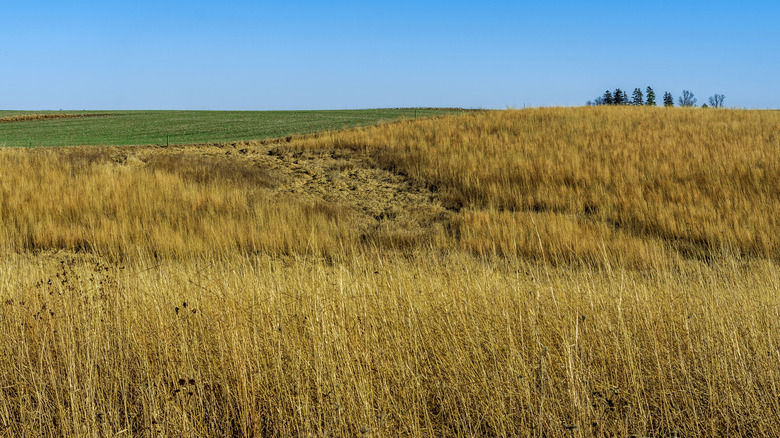
At first glance, the Neal Smith NWR appears to be an endless sea of grass. But tallgrass prairies, as explained by the National Park Service (NPS), are a low-lying ecosystem composed of hundreds of types of plants. Only a few areas in Iowa still contain them, including the Broken Kettle Grasslands, the state's largest remaining prairie, and the Neal Smith NWR. Over 200 native plant species make up the refuge's prairie, and the replanted seeds are all sourced from within the 38 counties surrounding the refuge to keep the species truly local. Among them are wildflowers like golden Alexander and blue-eyed grass, which bloom in springtime. Summer brings orange butterfly milkweed and white prairie clover flowers, while in the fall, the grasslands gain a yellow hue with sunflowers and goldenrods. A good option for seeing the wildflowers, cited by numerous AllTrails reviewers, is along the 2-mile Tallgrass Trail.
Like the prairie itself, bison are a native North American species that became seriously endangered after westward expansion, though they've since rebounded, according to the NPS. Bison are one of the featured species of the Neal Smith NWR. They roam in an 800-acre enclosure, shared with elk, in the middle of the refuge. Visitors can get the best views of them along the Tallgrass Trail or, for an easier option, the 0.5-mile Overlook Trail. Both set off from the visitor center — the center, as of this writing, is closed from storm damage, but the trails remain open. There's also a wildlife auto tour that passes through the enclosure. If you're extending a day trip beyond Des Moines, consider driving onward 30 minutes to Newton, an Iowa city with historic courthouses and botanical gardens.