
The Tallest Point In Wyoming Can Be Reached Via A Rigorous, High-Elevation Mountaineering Route
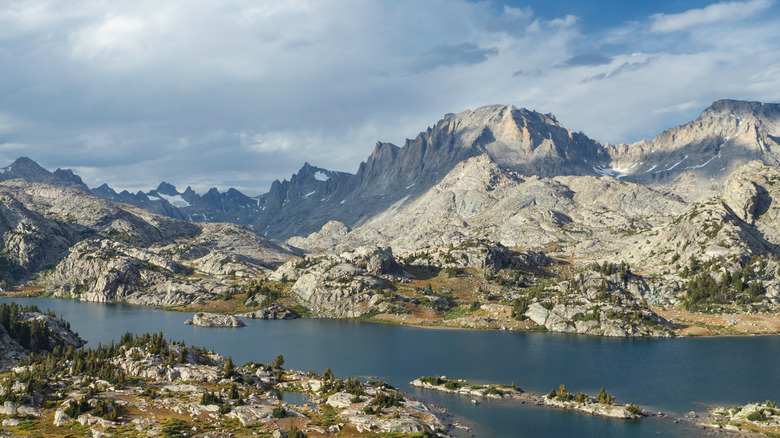
The ascent of Wyoming's highest point is far from a casual walk in the woods. A glacier crossing, hauling gear, and a multiple-day expedition are involved in getting to the top of Gannett Peak. At just over 13,800 feet up in the air, Gannett Peak is taller than any other in Wyoming. It's widely regarded as one of the most rigorous high-point climbs in the country, typically taking three to five days and covering over 50 miles. It's a serious technical undertaking, not a recreational hike. For experienced mountaineers, though, the reward is an unequalled view across the knife-edged ridges of the Wind River Range, rugged glaciers, and crystalline alpine lakes.
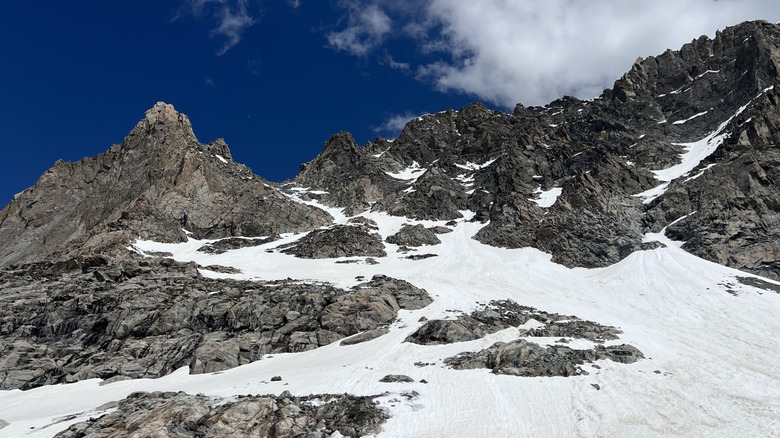
Gannett Peak's difficulty is twofold. On one hand, there's the terrain — talus, crevasses, steep snow slopes, stream crossings, and switchbacks are all part of the expedition in a remote corner of Wyoming. To navigate these obstacles, you'll need special equipment like crampons, ice axes, and rope, not to mention a backpack to carry all of it in. The route ends with a technical summit push — a final leg up the steepest part of the peak with roping involved and a bergschrund crossing that the outdoors blogger Shalee Wanders called an "infamous" and "large gaping trench."
On the other hand, there's Gannett Peak's volatile weather. Even in the summer, the weather can be brutal, with intense wind and cold. You might get unpredictable thunderstorms, hail, and snow. All of which is to say, mountaineers need to be prepared for sudden weather changes and have sturdy camping equipment to bear through potential storms. Taken together with the terrain, Gannett Peak is a challenging undertaking that requires extensive preparation and experience.
The rigorous but scenic expeditions to Gannett Peak
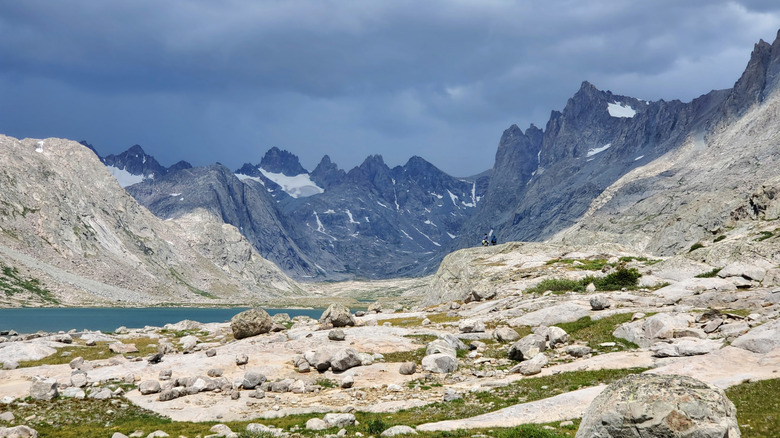
There are two main mountaineering routes up to Gannett Peak. Both end in the technical summit push ascending the glaciated peak, but they differ in length and scenery. One option approaches from the east via the Glacier Trail. This route is the longer option — around 50 miles out-and-back — and has a higher elevation gain, but its advantage is having a high camp closer to the summit, meaning mountaineers have a slightly quicker summit push. Beginning near Dubois, Wyoming's mountain town not far from Yellowstone National Park, the trail leads climbers into the Fitzpatrick Wilderness through expansive plateaus and forested lakesides before reaching the Dinwoody Glacier. Climbers typically set up high camp at the base of Dinwoody Glacier, then push onward to the summit from there.
Alternatively, you could approach from the west by way of the Pole Creek Trail and Titcomb Basin. The route is a little shorter at 40 miles round-trip, but it does require an added hurdle to the summit push. Another advantage of this route is its scenery: Starting near Pinedale, a hidden gem town with western charm, the trail winds past a chain of sparkling alpine lakes. Then, it enters the Titcomb Basin, where you can camp in a glacially carved valley ringed by towering peaks. The added stretch to the summit push is climbing over Bonney Pass, a very steep mountain pass that then leads to the final ascent up Gannett Peak itself.
Planning a Gannett Peak climb with a guide
For adventurous climbers with the fitness and determination to take on Gannett Peak but who don't have extensive high-alpine or technical experience, hiring a mountain guide is a practical way to approach the climb safely. Trips with mountain guides are led by professionals who can handle the logistical demands of the difficult, glaciated terrain and navigate the isolated environment. Jackson Hole Mountain Guides, based in the town of Jackson, is a reputable option with five stars from Google reviews. They offer guided climbs up Gannett Peak that span either five or six days. Another five-star outfitter based in Bozeman, Montana, Montana Alpine Guides, offers five- or six-day guided climbs with an option for a private guide. Both operators note that you don't need prior technical training to join, but you need to be physically fit for several days of steep, snowy mountain travel.
Climbers who are flying in will likely land in Jackson, with the Jackson Hole Airport being the closest arrival option to Gannett Peak. It's around an hour and a half by car from either the Pinedale or Dubois approaches. The ideal time to climb is between June and September, as this is when weather conditions are most reliable. If Gannett Peak is ultimately too ambitious or weather conditions too risky, a viable alternative hike in the Wind River Range is the uncrowded, glistening Green River Lakes.