
3 Spanish Restaurant Rules American Tourists Break Within The First 10 Minutes
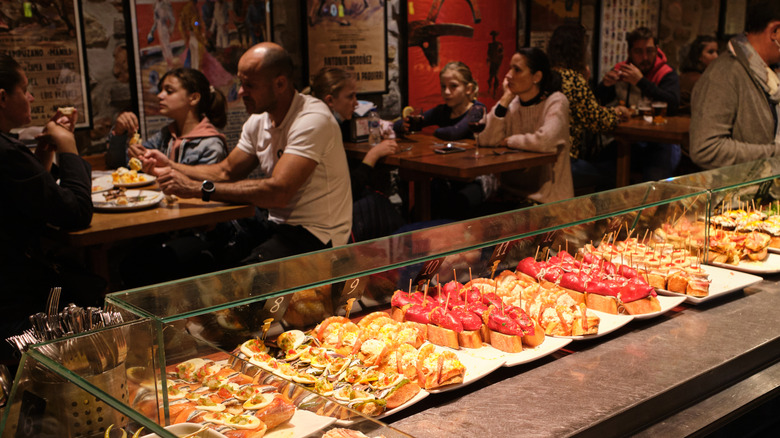
It's not without reason that Spain is a perennial favorite destination among foodie travelers. Tapas, paella, churros con chocolate — for many, the bold flavors and slowed-down experience of dining in Spain are among the country's greatest pleasures. There's a reason tapas at a Spanish restaurant is "one of the most wonderful" adventures for foodies. But with a superb food scene very different from what you might be used to come a handful of unspoken rules American travelers don't always know. So if you're hoping not to stand out as an obvious tourist, read up on Spanish dining-out norms.
As locals across Spain contend with increasing frustration at the often-bumbling crowds of tourists flocking to the world's second-most visited country, it's important to know what to make of a menu, how to conduct yourself, and what mistakes to avoid when you're dining in a Spanish restaurant. And though the ins and outs of etiquette can seem complex, there are a few simple rules that will make a huge difference in how your behavior is perceived. Avoid making a mistake by following these rules when you're setting off for a foodie paradise city, like San Sebastián, home to the world's most famous cheesecake, and you can rest assured your efforts will be appreciated.
Table bread is not free
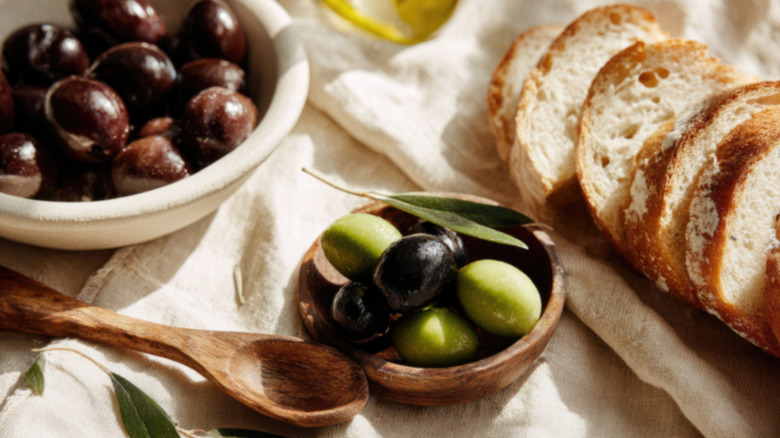
When you're eating out in Spain and you first sit down, you're almost certain to see bread on the table. This is a standard element of most meals and you're free to eat it, as you would in an American restaurant, but unlike in America, it's not complimentary. If you choose to enjoy it, do so knowing you'll be charged for it; if you don't want to pay a cover charge, ask the waitstaff to remove it.
If you decide to dive into the bread, there probably won't be any accompanying butter either. Although you'll likely be given olive oil, it's not there for you to dip your bread in; olive oil is there to drizzle as a dressing. In fact, dipping bread in anything isn't standard when eating out in Spain, so also avoid dipping bread in your soup. On the other hand, using bread to scoop food onto your fork is totally acceptable in more casual restaurants. Unless you're eating at a particularly posh restaurant, don't be afraid to treat a side of bread like an extra utensil if you need to. But you will be charged for it.
Expect less interaction with waitstaff
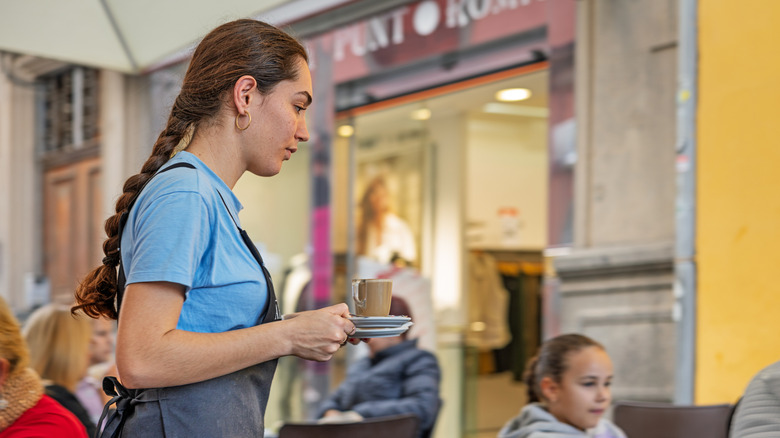
Super-attentive customer service might be the standard in the U.S., but to Europeans, the friendly attention of the waitstaff is likely to feel more intrusive than welcoming, so don't expect workers in Spanish restaurants to provide the same kind of "service with a smile." Not only do local diners not expect chatty waitstaff, but they're also not usually tipping either, so waitstaff doesn't have to worry about leaving a good impression in quite the same way as in the U.S. As such, if tip fatigue has you down, Spain is one place where gratuities are not expected.
What you'll get in Spain is service that might feel impersonal, yet is just professional, compared to what you might experience in the U.S. Be prepared for minimal interaction with the waitstaff and know you'll have to be the one to get their attention if you need something. You also shouldn't expect anyone to come by and see how your food tastes. You're not being snubbed or insulted — this is just Spain's cultural standard that differs and happens to lean in the hands-off direction. This includes bringing the check to your table when you're done eating. When it's time to pay for your meal, get your waitstaff's attention and ask for the check — that's the cue they'll need to get things moving. But it's best not to be in a rush to get your check, either: Leaving right after you finish your food isn't standard practice in Spain.
Eat on Spanish time
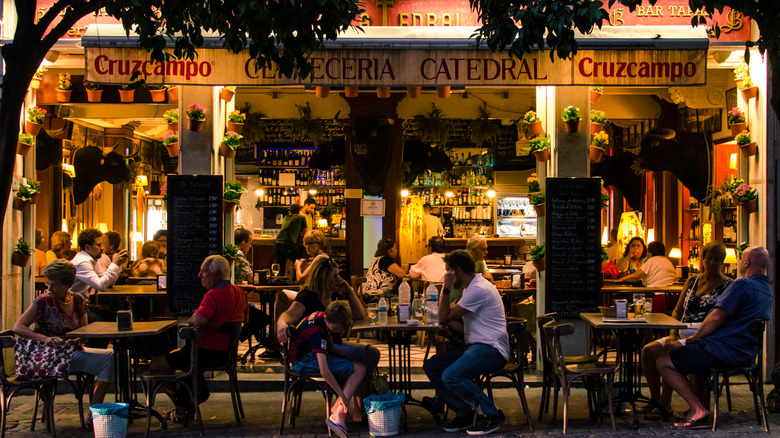
Eating out in Spain isn't just about the food. The Spanish concept of sobremesa, meaning "over the table," is the idea of lingering after the plates are cleared to converse, connect, and strengthen social ties. This plays into deciding when to eat. So when in Spain, do as the Spanish do — and that includes eating much, much later than you might be used to taking your meals back home. We're talking lunch at 2 p.m., dinner after 8 p.m. and maybe even as late as 11 p.m., and a variety of opportunities to tide yourself over in between. But there will be fewer full-meal options if you're sticking to a typical American eating schedule, with breakfast at 9 a.m., lunch at noon, and dinner at 6 p.m.
If you do try to eat at the time intervals you're used to back home, you'll likely find the only restaurants open are those catering to tourists, because locals aren't keeping those dining hours. If you're looking for a more authentic Spanish dining experience and want to ensure the best restaurants are actually open when you stop by, prepare to adjust your dining schedule.