
Forget Florida, Retire To This Underrated Midwest State With Colorful Cities, Wetland Trails, And Scenic Parks

If you're careening towards your career's finish line with a workable retirement fund in place, you'd be forgiven for eyeing Florida. The Sunshine State has spent decades drawing retirees to its tropical shores and golf-course-laden landscape. But if you want colorful cities, scenic parks, and wetland trails, forget Florida. Kansas, an underrated Midwest state many retirees rarely consider, merits consideration.
Affordability makes Kansas's cities cheap to live in, but the state's complex history has left behind a rich cultural scene with colorful urban areas. Wichita, the state's largest city, also has one of America's lowest costs of living, ranking third on the U.S. News and World Report's list of the Most Affordable Places to Retire in 2025. Yet a cultural dollar goes a long way in the city; its botanical gardens and public arts give sibling institutions in Florida a run for their money. If you want a literal burst of color, head over to the sunflower fields orbiting the city's outskirts. The state's food scene is equally colorful.
Consider Pittsburg (population 20,569), which offers an ideal mix of bang for the buck and character. The charming, overlooked, affordable gem is known for its thriving cultural scene and a bizarre fried chicken war, with the greater Crawford County area housing six of the state's oldest chicken houses. That broad palate goes beyond the menus, as the "colorful" designation becomes quite literal in a city like Hiawatha. Known as the "City of Beautiful Maples," it has earned a reputation for putting on a show every autumn when the city's green canopy turns to a psychedelic mix of orange and red. Those hues have competition in Milford, nicknamed the "City of Beautiful Sunsets." It's the same broad spectrum of colors, just coming from a different source, all in the same state.
Revel in the state's scenic parks
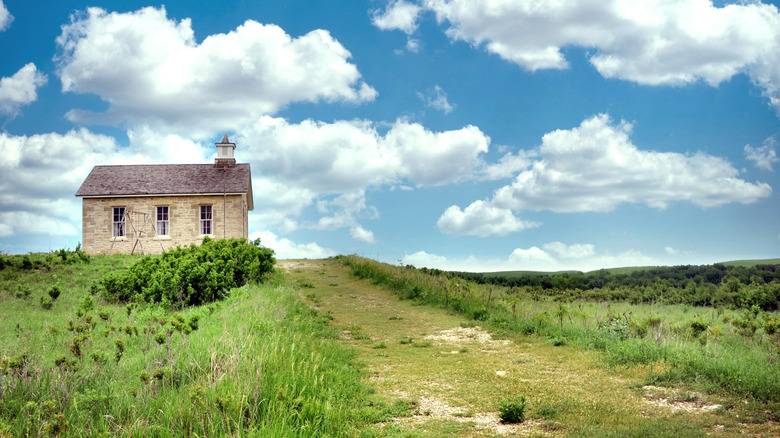
Kansas's wealth of urban gems is balanced by its scenic countryside. The state's 29 state parks offer a wide palette of outdoor adventure, from lakeside fun to engrossing trails. Perhaps it's best to start with the largest state park, El Dorado. Lying 40 miles northeast of Wichita, its 2,000 acres give travelers plenty to explore, with vistas that range from river channels to timber forests. The sprawling getaway offers cabin rentals and outdoor adventure, and even 98 miles of shoreline along its eponymous lake (take that, Florida's coast). In fact, those hoping to live or travel near water won't find Kansas lacking. Its 24 big reservoirs, with over 120,000 lakes, give visitors plenty of opportunity to enjoy lakeside life, with some state parks taking advantage of their proximity to the water.
Clinton State Park, near Lawrence, offers an alternative to Florida's turquoise beaches, with clear waters and beachside fun. It's home to the state's largest full-service marina, making it a prime destination for boating and fishing enthusiasts. The trails zig-zagging through the park help explore its thick forests and wide array of wildlife. Looking for a more niche wildlife experience with a picturesque background? Head over to Prairie Dog State Park, home to 300 of its eponymous rodents, set in a 1,150-acre scenic park that mixes shoreline fun with trails and camping. Visitors can even find a history lesson there, with two 19th-century structures still standing on the premises: a school and an adobe house.
One of the state's national parks also pulls off grandeur, as well as providing arresting vistas. The Tallgrass Prairie National Preserve conserves what little remains of the greenery that once covered 170 million acres across North America, with about 11,000 acres stalked by a roaming bison herd.
Spend your sojourn exploring wetland trails
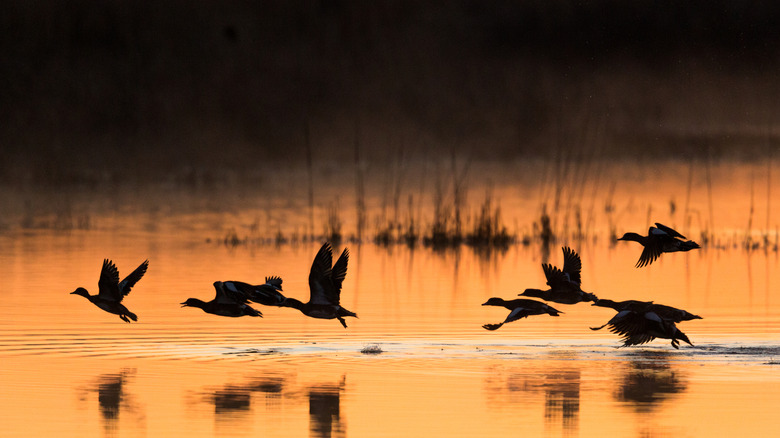
Bison aside, Kansas is a Midwest state and not part of the Great Plains. Disagree? Ask the locals, over 90% of whom told Emerson College Polling and the Middle West Review they're part of the Midwest. But the Sunflower State's avoidance of the Great Plains may have more to do with its 435,000 acres of wetlands, many of which are crisscrossed by trails that turn a typical hiking experience into a deep dive into natural diversity.
That variety can best be explored at the Baker University Wetlands, about 45 minutes outside of Kansas City. The serene wetland offers educational experiences that'll color the usual daytime trek. Considered one of the state's most diverse habitats, its 927 acres include hundreds of species of birds, vertebrates, and plants. It's an ideal stop for biologists, both retired and active, who can encounter its diverse wildlife along the wetlands' 11 miles of trails. That diversity expands to the terrain at Sand Hills State Park. The 1,123-acre chunk of Eden offers a grab bag of terrain, from wetlands to sand dunes. A typical hike along some of its 14 miles of trails may include 40-foot-high dunes, woodlands, and wetlands. Its three-mile pond trail winds out to a chunk of wetland and back, giving visitors an up-close look at Kansas's wetlands. Birders can find a wetland paradise at the Quivira National Wildlife Refuge, its 22,000 acres including inland salt marshes that are home to over 300 varieties of birds; bring binoculars!
(That said, the most famous trail associated with Kansas is perhaps the fictional Yellow Brick Road from "The Wizard of Oz." Interestingly, you can actually find it in the Kansas town of Wamego.)