
West Virginia's Charming Town With A Hilariously Peculiar Name Offers History And Outdoor Fun By Maryland's Border
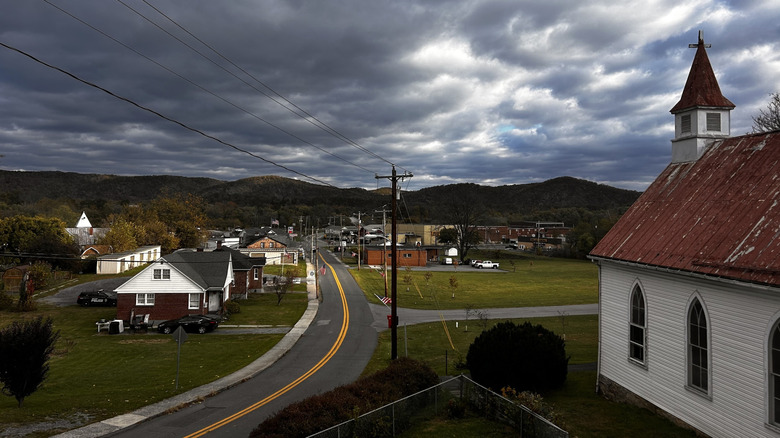
Hoosier banana, Quaker delight, custard apple — whatever you call it, the pawpaw is arguably the tastiest American fruit that you won't find in any supermarket. Grown across the Midwest and Appalachian regions, the pawpaw's black-mottled green exterior protects yellow flesh with a custard-like texture and the bright citrus flavor of tropical fruit. It also has a notoriously short shelf life and can be challenging to cultivate, stymying attempts to make it a commercial crop. To try a pawpaw, usually you need to go right to the source, and one of the best places to do that is the small town named for this elusive delicacy: Paw Paw, West Virginia.
Paw Paw is a tiny town of around 450 people, covering about half a square mile of land tucked into a bend of the Potomac River in West Virginia's eastern panhandle, right along the Maryland border. Every September, it holds the one-day Pawpaw Festival, where you can taste varieties of what it calls "West Virginia's sweetest hidden gem" while enjoying live music and perusing the wares from local artisans. The festival also features presentations from pawpaw growers and experts, where you can learn more about the fruit's history and cultivation, along with other edible wild plants from the region.
Similar to its namesake, Paw Paw, West Virginia, can require a bit of a quest to find. The closest major transportation hub is Washington, D.C., which is a little over two hours away. You can also drive there in about three hours from Pittsburgh, Pennsylvania, or Baltimore, Maryland, if those are more convenient starting points. Even if you're not there for the Pawpaw Festival, the town's unique local history and the many outdoor adventures surrounding it give visitors more than just fruit to enjoy while they're here.
Paw Paw's unique history
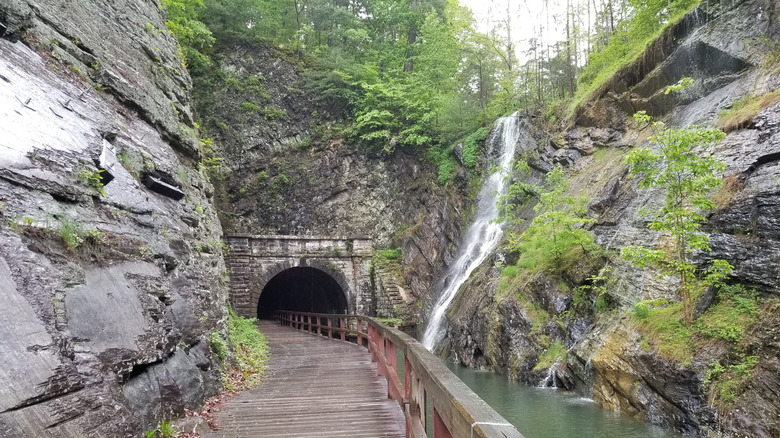
Similar to the nearby historic spa town of Berkeley Springs, Paw Paw's roots stretch back more than 200 years. The first settlers arrived around 1800, establishing farms along the Potomac River. The 1830s brought the Chesapeake & Ohio Canal and the Baltimore & Ohio Railroad, transforming Paw Paw into a transportation hub. In 1836, work started on the 3,118-foot Paw Paw Tunnel, the largest manmade structure along the C&O Canal, which cut 6 winding miles off the route once it opened in 1850. Visitors can still explore the tunnel, though you'll want to bring a flashlight, especially in the winter when the southern end is covered to prevent weather damage.
Paw Paw was a strategic transportation corridor during the Civil War. The Union Army established Camp Chase to defend it, with up to 16,000 troops stationed in the area. While Camp Chase hasn't been preserved like the historical sites of Harpers Ferry, its location on Camp Hill is now a cemetery that offers beautiful views of the town and river.
After the Civil War, Paw Paw was known for two exports: leather from the tannery that operated until 1951, and apples grown by Consolidated Orchards. The latter's packing plant can still be seen near the old B&O tracks. The town was also notable for its racial equality, and in 1954 became the first West Virginia school district to integrate. The old two-room Black schoolhouse is still standing in Paw Paw, along with 19th-century structures like the B&O Railroad Depot and St. Charles Catholic Mission Church. Together, these structures give Paw Paw one of the region's most intact historic cores. Some old buildings have been renovated into new businesses, like the 1898 farmhouse belonging to Dr. B.W. McBee that opened in 2024 as the McBee House Airbnb.
Enjoy the outdoors in Paw Paw
Walking through the Paw Paw Tunnel gives visitors a glimpse into history, but hikers have another way to explore the area: the Tunnel Hill Trail, a 2-mile path that starts on the downstream side of the tunnel and goes over the mountain. Originally part of the road workers took to the camps atop the mountain, this steep path makes for a fairly strenuous hike, with uphill switchbacks and narrow trails. The reward for that effort is a bird's-eye view of the Paw Paw Bends, the winding portion of the Potomac River that the tunnel was built to circumvent. To spend the night under the stars, the Paw Paw Tunnel Campground has 10 walk-in tent camping sites that can be reserved year-round, with potable water available from April through November.
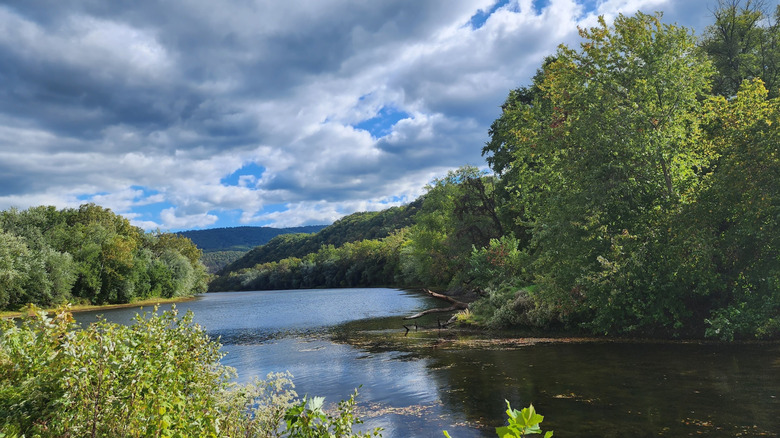
The Paw Paw Bends are another attraction for outdoor lovers. The water here is flat enough for paddlers of all skill levels to navigate. You can rent a canoe or kayak at Greenridge Canoe Outfitter, which also offers bike and camping gear rentals. The Potomac River passes through Green Ridge State Forest, one of Maryland's best-kept camping secrets and the state's largest contiguous stretch of public land at over 49,000 acres. Crossing that expanse are more than 80 miles of trails for hiking, biking, or horseback riding. Anglers can catch species like bass and catfish in the Potomac River or fish for trout in the forest's streams and ponds. There are also about 100 primitive campsites throughout the forest, many located near these waterways. To explore history as well as nature, follow the canal path to sites like the Town Creek Aqueduct, one of 11 such structures along the C&O Canal and a popular spot for fishing or taking in views of the river.