
Not Arizona, Not Utah — This Is The Driest State In The US
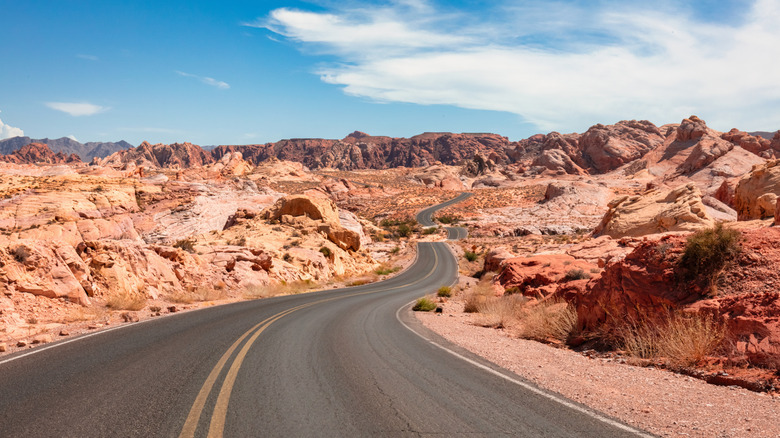
When picturing the driest state in the country, images of cacti, sand dunes, and barren landscapes may come to mind, and many people are quick to name Arizona or Utah as places with a serious lack of moisture. So it may surprise you to learn that Nevada is actually the driest state in the United States. On average, Nevada gets less than 10 inches of rain annually, which is much less than the national average of 30 inches. Arizona and Utah receive around 12.2 inches of annual rainfall each, meaning they both come up well below the national average, too, but still get noticeably more precipitation than the Silver State.
Because of Nevada's size (it's the seventh-largest state by square miles) and geography, precipitation varies quite a bit between its different regions. The southern part of the state, which includes Las Vegas, has less rain and snowfall than the northern part, where you'll find Reno to the west and Elko to the east. In fact, Las Vegas typically only has about four inches of rainfall every year, but if you head farther north to Reno, the average rain and snowfall jumps to 7.4 inches annually. In Elko, the average precipitation is 10 inches, but Great Basin, America's most underappreciated national park, gets the most moisture in the Silver State, at just over 14 inches a year.
What causes Nevada's dry climate?
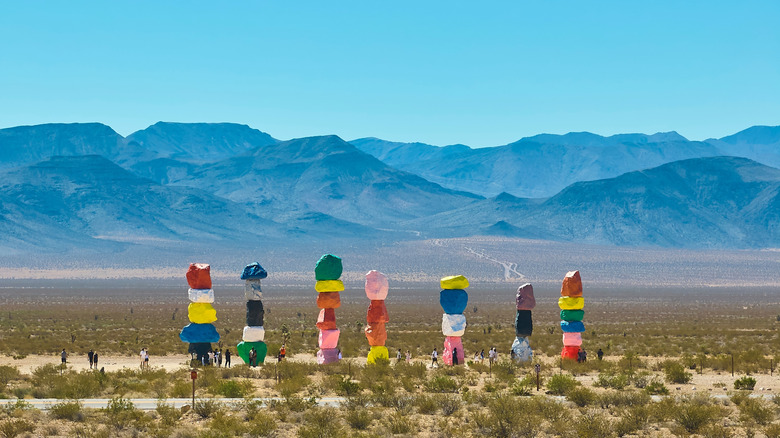
Several factors contribute to the dry climate in Nevada, but its proximity to the Sierra Nevada Mountain Range plays a major role in the limited annual precipitation. The impressive peaks of the Sierra Nevada Mountains create a rain shadow that blocks most moisture from making it into Nevada. Of course, over 300 named mountain ranges and 35 mountain peaks that reach heights of more than 10,000 feet help shape the extreme weather across the state. And while most of Nevada is part of what's known as the Great Basin — which means any water that flows into the state has no outlet to the ocean — the lack of precipitation keeps it unbelievably dry. This doesn't mean you can't find water in the state if you want to, though. Nevada actually has one of the best hidden hot springs hikes in America. And Lake Tahoe, one of America's coldest lakes and the largest alpine lake in North America, is quite a sight to behold.
Despite being the driest state in the country, the wide variation in elevations across Nevada, created by the mountainous terrain, allows many unique plant and animal species to exist. The peaks and valleys create microclimates where flora and fauna must adapt to live in everything from deserts to alpine forests. These microclimates can also cause interesting weather patterns that shift wind, rain, and temperatures, so changes are noticeable and dramatic even between places only separated by a few miles. If you're planning a visit to the Silver State, it's best to check weather conditions before setting out, especially if you plan to travel between different elevations or regions.